Begin of page section:
Page sections:

  • Go to contents (Accesskey 1)
  • Go to position marker (Accesskey 2)
  • Go to main navigation (Accesskey 3)
  • Go to sub navigation (Accesskey 4)
  • Go to additional information (Accesskey 5)
  • Go to page settings (user/language) (Accesskey 8)
  • Go to search (Accesskey 9)

End of this page section. Go to overview of page sections

Begin of page section:
Page settings:

English en
Deutsch de
Search
Login

End of this page section. Go to overview of page sections

Begin of page section:
Search:

Search for details about Uni Graz
Close

End of this page section. Go to overview of page sections


Search

Begin of page section:
Main navigation:

Page navigation:

  • University

    University
    • About the University
    • Organisation
    • Faculties
    • Library
    • Working at University of Graz
    • Campus
    Developing solutions for the world of tomorrow - that is our mission. Our students and our researchers take on the great challenges of society and carry the knowledge out.
  • Research Profile

    Research Profile
    • Our Expertise
    • Research Questions
    • Research Portal
    • Promoting Research
    • Research Transfer
    • Ethics in Research
    • Commission for Scientific Integrity
    Scientific excellence and the courage to break new ground. Research at the University of Graz creates the foundations for making the future worth living.
  • Studies

    Studies
    • Prospective Students
    • Students
    • Welcome Weeks for First Year Students
  • Community

    Community
    • International
    • Location
    • Research and Business
    • Alumni
    The University of Graz is a hub for international research and brings together scientists and business experts. Moreover, it fosters the exchange and cooperation in study and teaching.
Topics
  • Sustainable University
  • Researchers answer
  • Work for us
Close menu

End of this page section. Go to overview of page sections

Begin of page section:
You are here:

University of Graz News Beziehungsgeflecht in Südosteuropa

End of this page section. Go to overview of page sections

Thursday, 24 September 2015

Beziehungsgeflecht in Südosteuropa
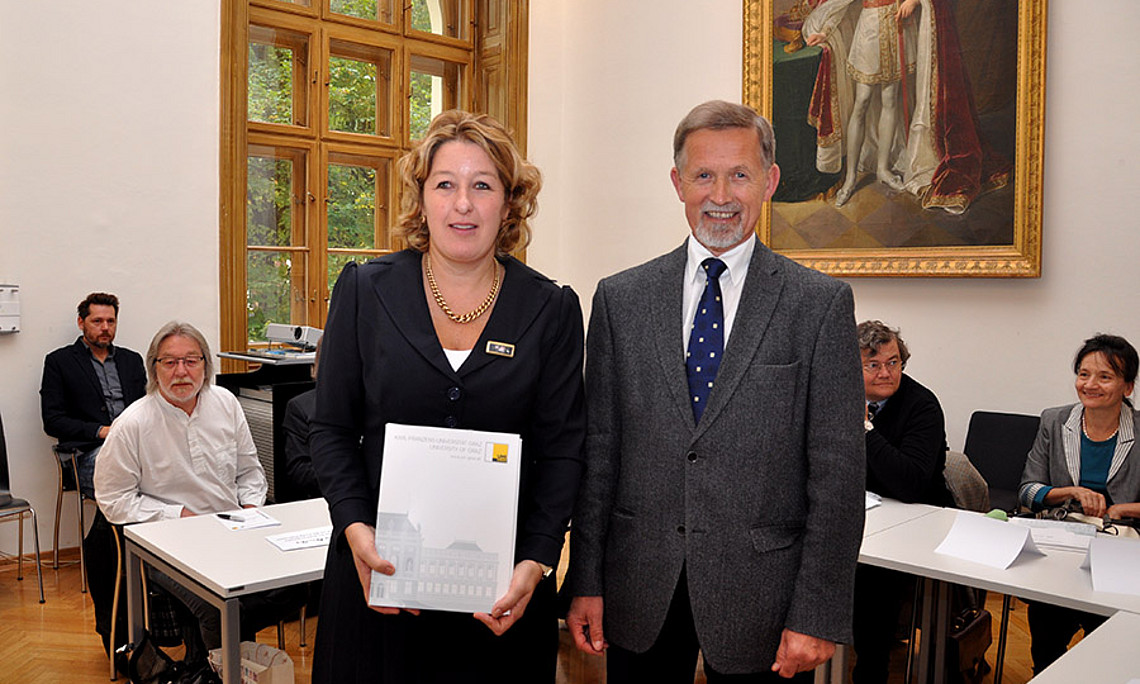
HistorikerInnen beleuchten and er Uni Graz das Beziehungsgeflecht in Südosteuropa.


HistorikerInnen beleuchten and er Uni Graz das Beziehungsgeflecht in Südosteuropa.
HistorikerInnen zeigen, warum Staat und Provinz einander brauchen

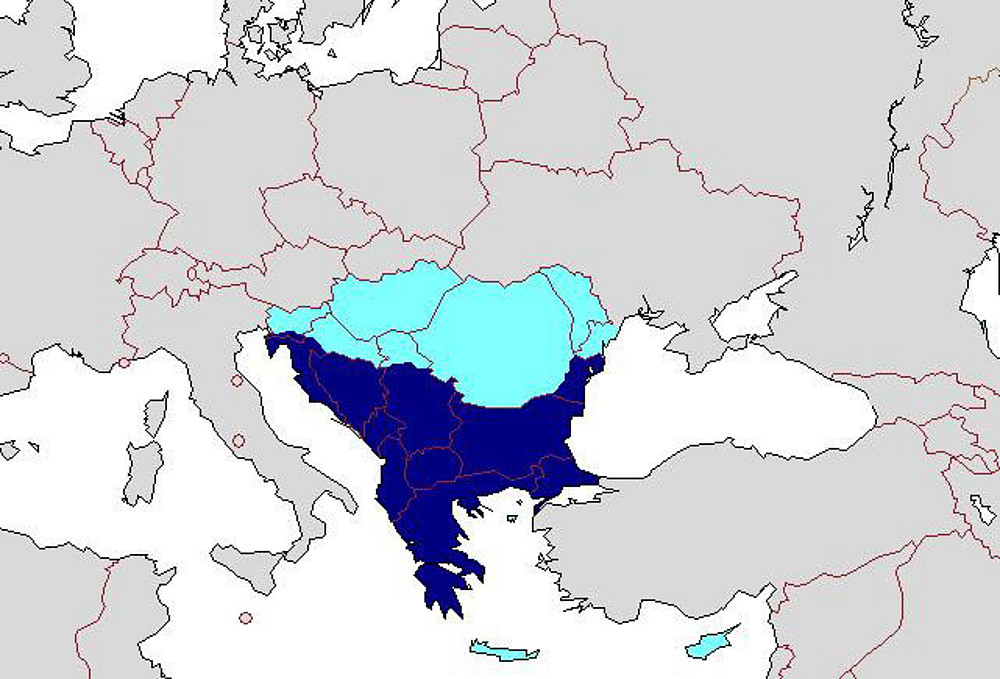
In welcher Weise und unter welchen Voraussetzungen Provinz und Staat im südöstlichen Europa aufeinander einwirken, aber auch aneinander geraten – darauf will die Tagung „Provincial Turn“ am 1. Oktober 2015 an der Karl-Franzens-Universität Graz Antworten finden. HistorikerInnen aus Griechenland, Bulgarien, Slowenien, Deutschland und Österreich liefern dazu Beispiele aus den Bereichen von Literatur, Musik, Kunst, Brauchtum und Demographie und spannen einen zeitlichen Bogen von der Vormoderne des 18. Jahrhunderts bis hin zur Gegenwart.

„In den Ländern Südosteuropas ist der Provinzialismus bis heute stark ausgeprägt“, weiß die Historikerin und Tagungs-Initiatorin Dr. Ulrike Tischler-Hofer. Ihre aktuellen Forschungen über die in Zentraleuropa kaum bekannte, im äußersten Winkel Südosteuropas gelegene Region Thrakien haben ihre Aufmerksamkeit auf die „Provinz“ in ihren vielfältigen Funktionen für den Staat gelenkt und die Idee zur Tagung geliefert.

Denn oft, so Tischler-Hofer, befinden sich die Regionen aufgrund der politischen Zerschlagung nach 1878 in einem dichten Spannungsfeld. So wirken nach wie vor imperiale Machtgefüge aus der Zeit der Habsburger bzw. Osmanisches Reiches nach. „Darüber hinaus handelt es sich nicht um den einen Staat und die eine Provinz, sondern um das Überbleibsel eines religiös, ethnisch und sprachlich komplexen Geflechts, auf das gleich mehrere nationale, regionale oder lokale Zentren Anspruch erheben“, erklärt Tischler-Hofer.

Die Tagung ist sowohl in den gesamtuniversitären Schwerpunkt Südosteuropa eingebettet als auch einem der Forschungsthemen des Historikers Ao.Univ.-Prof. Dr. Dr.h.c.(mult.) Harald Heppners gewidmet, der am 30. September 2015 in den Ruhestand wechselt.

created by Andreas Schweiger

Related news

Jurassic Sounds: Biologist reconstructs insect songs from 165 million years ago

It was apparently not just the roars of the dinosaurs that made up the soundscape of the animal world during the Jurassic period. Crickets and grasshoppers communicated through a variety of songs and high-pitched sounds, as Thorin Jonsson from the Institute of Biology at the University of Graz discovered together with colleagues from the universities of Lincoln, Bristol (UK), Beijing (China) and Tempe (USA). The findings on what are so far the oldest traces of sound on Earth have just been published in the journal PNAS.

EU funding boosts international exchange between universities

The University of Graz is further expanding its international study opportunities through the European university alliance Arqus and is taking the lead in two key projects. In future, students will benefit from even more joint degree programmes and from simplified recognition of academic achievements through the Joint European Degree Label.

Rescue and risks: Researchers have surveyed public perceptions of AI

The use of artificial intelligence has had to be made transparent since 2 August 2026. The EU’s AI Act, which has been in force since then, also sets out how risky an application is and which security measures apply as a result. However, the assessment of risks by the legislation differs in some cases significantly from the perceptions of the Austrian public. This is the finding of a representative study carried out by data scientist Stefan Thalmann from the University of Graz and his team.

Neue Hüte

Südosteuropa-Tagung „Provincial Turn“ zu Ehren des Historikers Harald Heppner

Begin of page section:
Additional information:

University of Graz
Universitaetsplatz 3
8010 Graz
Austria
  • Contact
  • Web Editors
  • Moodle
  • UNIGRAZonline
  • Imprint
  • Data Protection Declaration
  • Accessibility Declaration
Weatherstation
Uni Graz

End of this page section. Go to overview of page sections

End of this page section. Go to overview of page sections

Begin of page section:

End of this page section. Go to overview of page sections