Begin of page section:
Page sections:

  • Go to contents (Accesskey 1)
  • Go to position marker (Accesskey 2)
  • Go to main navigation (Accesskey 3)
  • Go to sub navigation (Accesskey 4)
  • Go to additional information (Accesskey 5)
  • Go to page settings (user/language) (Accesskey 8)
  • Go to search (Accesskey 9)

End of this page section. Go to overview of page sections

Begin of page section:
Page settings:

English en
Deutsch de
Search
Login

End of this page section. Go to overview of page sections

Begin of page section:
Search:

Search for details about Uni Graz
Close

End of this page section. Go to overview of page sections


Search

Begin of page section:
Main navigation:

Page navigation:

  • University

    University
    • About the University
    • Organisation
    • Faculties
    • Library
    • Working at University of Graz
    • Campus
    Developing solutions for the world of tomorrow - that is our mission. Our students and our researchers take on the great challenges of society and carry the knowledge out.
  • Research Profile

    Research Profile
    • Our Expertise
    • Research Questions
    • Research Portal
    • Promoting Research
    • Research Transfer
    • Ethics in Research
    Scientific excellence and the courage to break new ground. Research at the University of Graz creates the foundations for making the future worth living.
  • Studies

    Studies
    • Prospective Students
    • Students
  • Community

    Community
    • International
    • Location
    • Research and Business
    • Alumni
    The University of Graz is a hub for international research and brings together scientists and business experts. Moreover, it fosters the exchange and cooperation in study and teaching.
  • Spotlight
Topics
  • Our digital Advent calendar
  • Sustainable University
  • Researchers answer
  • Work for us
Close menu

End of this page section. Go to overview of page sections

Begin of page section:
You are here:

University of Graz News Beziehungsgeflecht in Südosteuropa

End of this page section. Go to overview of page sections

Thursday, 24 September 2015

Beziehungsgeflecht in Südosteuropa
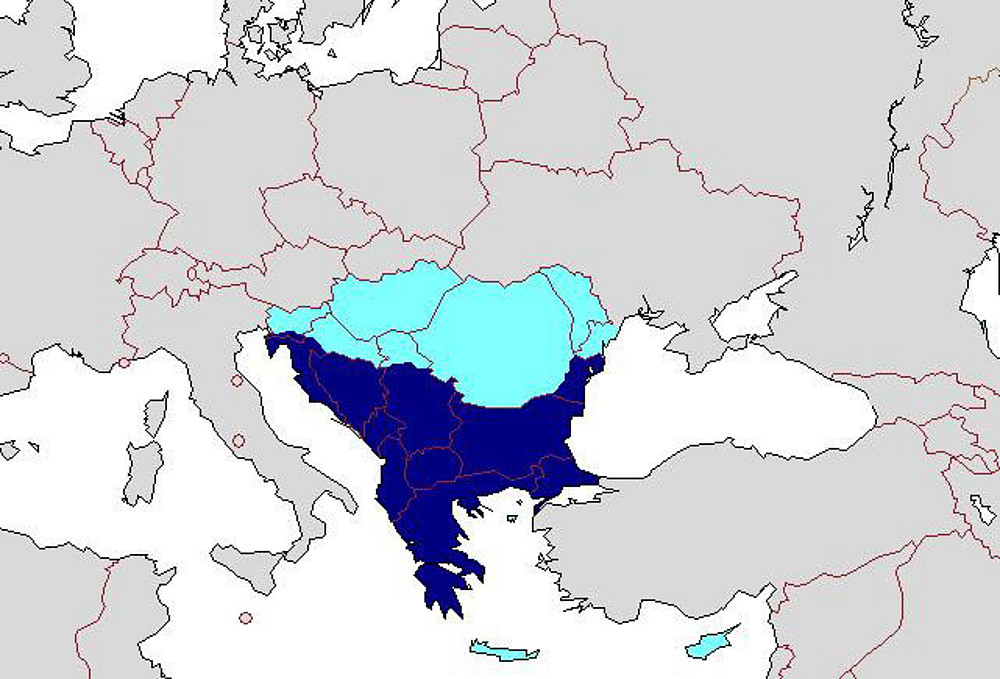
HistorikerInnen beleuchten and er Uni Graz das Beziehungsgeflecht in Südosteuropa.

HistorikerInnen beleuchten and er Uni Graz das Beziehungsgeflecht in Südosteuropa.

HistorikerInnen zeigen, warum Staat und Provinz einander brauchen

In welcher Weise und unter welchen Voraussetzungen Provinz und Staat im südöstlichen Europa aufeinander einwirken, aber auch aneinander geraten – darauf will die Tagung „Provincial Turn“ am 1. Oktober 2015 an der Karl-Franzens-Universität Graz Antworten finden. HistorikerInnen aus Griechenland, Bulgarien, Slowenien, Deutschland und Österreich liefern dazu Beispiele aus den Bereichen von Literatur, Musik, Kunst, Brauchtum und Demographie und spannen einen zeitlichen Bogen von der Vormoderne des 18. Jahrhunderts bis hin zur Gegenwart.

„In den Ländern Südosteuropas ist der Provinzialismus bis heute stark ausgeprägt“, weiß die Historikerin und Tagungs-Initiatorin Dr. Ulrike Tischler-Hofer. Ihre aktuellen Forschungen über die in Zentraleuropa kaum bekannte, im äußersten Winkel Südosteuropas gelegene Region Thrakien haben ihre Aufmerksamkeit auf die „Provinz“ in ihren vielfältigen Funktionen für den Staat gelenkt und die Idee zur Tagung geliefert.

Denn oft, so Tischler-Hofer, befinden sich die Regionen aufgrund der politischen Zerschlagung nach 1878 in einem dichten Spannungsfeld. So wirken nach wie vor imperiale Machtgefüge aus der Zeit der Habsburger bzw. Osmanisches Reiches nach. „Darüber hinaus handelt es sich nicht um den einen Staat und die eine Provinz, sondern um das Überbleibsel eines religiös, ethnisch und sprachlich komplexen Geflechts, auf das gleich mehrere nationale, regionale oder lokale Zentren Anspruch erheben“, erklärt Tischler-Hofer.

Die Tagung ist sowohl in den gesamtuniversitären Schwerpunkt Südosteuropa eingebettet als auch einem der Forschungsthemen des Historikers Ao.Univ.-Prof. Dr. Dr.h.c.(mult.) Harald Heppners gewidmet, der am 30. September 2015 in den Ruhestand wechselt.

created by Andreas Schweiger

Related news

Preserving knowledge: Book sponsorship success story cracks the 100,000 euro mark

The special collections of Graz University Library comprise around 300,000 valuable objects from 25 centuries: Papyri, manuscripts, incunabula, maps and printed books. The sensational find from 2023 is also kept here: the Graz Mummy Book, the world's oldest known book fragment in codex form.

Semester abroad without barriers: University of Graz wins award for promoting inclusion

The University of Graz has been awarded the Internationalization Award for its new inclusion initiative. Students with fewer opportunities now also receive financial support for their semester abroad outside Europe.

Fair distribution: Researchers determine just greenhouse gas budgets for all EU regions

Ten years ago, on 12 December 2015, the Paris Climate Agreement was signed at the UN Climate Conference. In order to limit global warming to well below two degrees, only a certain amount of CO2 may be emitted worldwide. While the focus was originally on national emission targets, more than 200 subnational regions and almost 300 cities have now adopted their own targets. But how many emissions are they fairly entitled to? Researchers at the University of Graz have now developed transparent criteria for fair distribution at the subnational level for the first time and determined corresponding greenhouse gas budgets for all European regions. The paper was published today in the scientific journal Nature Communications.

Neue Hüte

Südosteuropa-Tagung „Provincial Turn“ zu Ehren des Historikers Harald Heppner

Begin of page section:
Additional information:

University of Graz
Universitaetsplatz 3
8010 Graz
Austria
  • Contact
  • Web Editors
  • Moodle
  • UNIGRAZonline
  • Imprint
  • Data Protection Declaration
  • Accessibility Declaration
Weatherstation
Uni Graz

End of this page section. Go to overview of page sections

End of this page section. Go to overview of page sections

Begin of page section:

End of this page section. Go to overview of page sections