Begin of page section:
Page sections:

  • Go to contents (Accesskey 1)
  • Go to position marker (Accesskey 2)
  • Go to main navigation (Accesskey 3)
  • Go to sub navigation (Accesskey 4)
  • Go to additional information (Accesskey 5)
  • Go to page settings (user/language) (Accesskey 8)
  • Go to search (Accesskey 9)

End of this page section. Go to overview of page sections

Begin of page section:
Page settings:

English en
Deutsch de
Search
Login

End of this page section. Go to overview of page sections

Begin of page section:
Search:

Search for details about Uni Graz
Close

End of this page section. Go to overview of page sections


Search

Begin of page section:
Main navigation:

Page navigation:

  • University

    University
    • About the University
    • Organisation
    • Faculties
    • Library
    • Working at University of Graz
    • Campus
    Developing solutions for the world of tomorrow - that is our mission. Our students and our researchers take on the great challenges of society and carry the knowledge out.
  • Research Profile

    Research Profile
    • Our Expertise
    • Research Questions
    • Research Portal
    • Promoting Research
    • Research Transfer
    • Ethics in Research
    Scientific excellence and the courage to break new ground. Research at the University of Graz creates the foundations for making the future worth living.
  • Studies

    Studies
    • Prospective Students
    • Students
  • Community

    Community
    • International
    • Location
    • Research and Business
    • Alumni
    The University of Graz is a hub for international research and brings together scientists and business experts. Moreover, it fosters the exchange and cooperation in study and teaching.
  • Spotlight
Topics
  • Our digital Advent calendar
  • Sustainable University
  • Researchers answer
  • Work for us
Close menu

End of this page section. Go to overview of page sections

Begin of page section:
You are here:

University of Graz News Moleküle berechnen

End of this page section. Go to overview of page sections

Wednesday, 09 June 2021

Moleküle berechnen

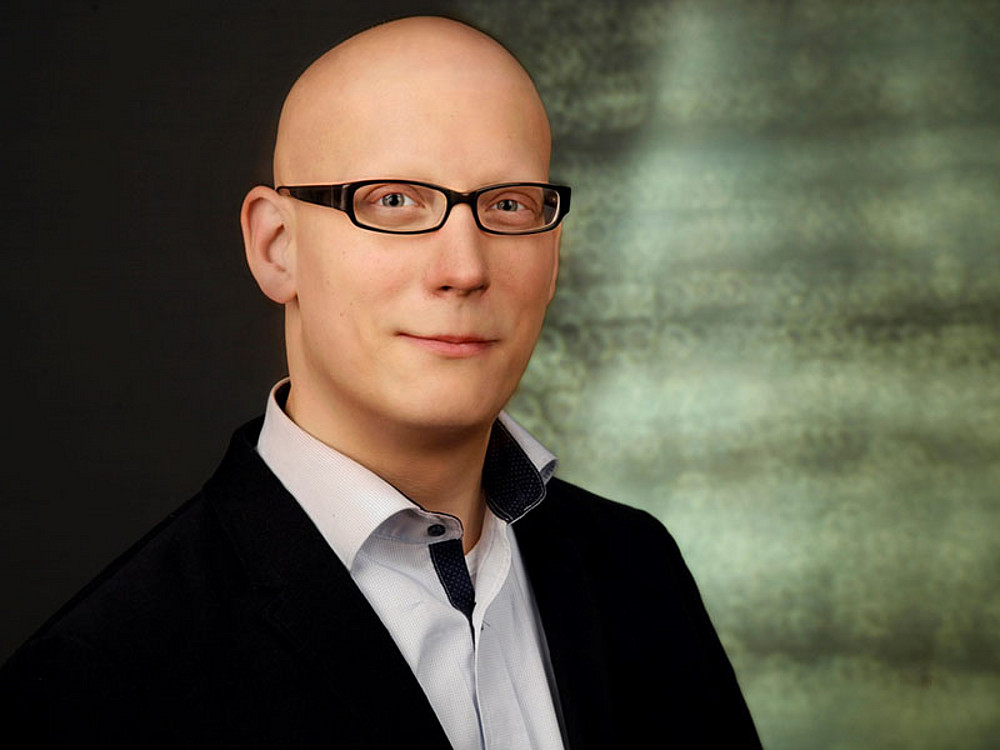
Chemiker Adrian Daniel Boese forscht in den nächsten vier Monaten am Weizmann-Institut in Israel an neuen Berechnungsmethoden von Molekülen. Foto: Furgler.

Chemiker Adrian Daniel Boese forscht in den nächsten vier Monaten am Weizmann-Institut in Israel an neuen Berechnungsmethoden von Molekülen. Foto: Furgler.

Chemiker Adrian Daniel Boese forscht in den nächsten vier Monaten am Weizmann-Institut in Israel an neuen Berechnungsmethoden

Das Weizmann-Institut für Wissenschaften ist eine der weltweit führenden Hochburgen naturwissenschaftlicher Grundlagenforschung und vergleichbar mit den Max-Planck-Instituten in Deutschland. Daniel Boese erhielt in Israel als theoretischer Chemiker der Universität Graz einen Forschungspreis, das renommierte „Weston Visiting Professorship". Dort will er neues Dichtefunktional für intermolekulare Wechselwirkungen entwickeln. Diese Methode wird eingesetzt, um die Eigenschaften von Molekülen und Materialien am Computer zu ermitteln. Die hohe Relevanz dieses Forschungsthemas zeigt sich dadurch, dass die meist zitierten und somit wichtigsten Veröffentlichungen in der Chemie bzw. Physik jeweils Dichtefunktionale sind.
 
Adrian Daniel Boese wurde 2014 als Professor für Computational Physical Chemistry an die Universität Graz berufen - im Rahmen von NAWI Graz, einer Kooperation zwischen der Universität Graz und der TU Graz in den Naturwissenschaften. Er studierte Chemie in Deutschland und den USA, promovierte in Großbritannien und absolvierte Forschungsaufenthalte in Deutschland und Israel. Er ist Sprecher der Academy „Functional Nanostructures in Physics, Chemistry and Life Sciences“ (NanoGraz), einem Netzwerk von Forschungspersönlichkeiten, die grundlegende Fragen der Miniaturisierung für  Medizin und Industrie auf interdisziplinärer Ebene diskutieren und Lösungswege beschreiben. 

Auf theoretischer Ebene entwickelt Daniel Boese Einbettungsmethoden und Dichtefunktionale, bei denen er komplexe Systeme in einfacher Umgebung berechnet, zum Beispiel eingeschlossene Gasmoleküle in Eiskristallen. Dichtefunktionale könnten unter anderem verwendet werden um zu berechnen, wie man Erdgas aus Sedimenten am Meeresboden gewinnt und klimaneutral durch Kohlendioxid ersetzt. 

>> Weitere Informationen


Chemist Adrian Daniel Boese to spend the next four months researching new computational methods at the Weizmann Institute in Israel

The Weizmann Institute of Science is one of the world’s leading strongholds of basic research in the natural sciences and is comparable to the Max Planck Institutes in Germany. Daniel Boese received a research award in Israel as a theoretical chemist at the University of Graz, the prestigious “Weston Visiting Professorship”. There he wants to develop a new density functional for intermolecular interactions. This method is used to determine the properties of molecules and materials on the computer. The high relevance of this research topic is shown by the fact that the most cited and thus most important publications in chemistry or physics are density functionals, respectively.

Adrian Daniel Boese was appointed Professor of Computational Physical Chemistry at the University of Graz in 2014 - as part of NAWI Graz, a cooperation between the University of Graz and TU Graz in the natural sciences. He studied chemistry in Germany and the USA, earned his PhD in the UK and completed research stays in Germany and Israel. He is the speaker of the Academy “Functional Nanostructures in Physics, Chemistry and Life Sciences” (NanoGraz), a network of research personalities who discuss fundamental questions of miniaturization for medicine and industry on an interdisciplinary level and describe possible solutions.

On a theoretical level, Daniel Boese develops embedding methods and density functionals where he calculates complex systems in simple environments, for example trapped gas molecules in ice crystals. Density functionals could be used, among other things, to calculate how to extract natural gas from sediments on the ocean floor and replace it with carbon dioxide in a climate-neutral way.


created by Gerhild Leljak

Related news

Semester abroad without barriers: University of Graz wins award for promoting inclusion

The University of Graz has been awarded the Internationalization Award for its new inclusion initiative. Students with fewer opportunities now also receive financial support for their semester abroad outside Europe.

Fair distribution: Researchers determine just greenhouse gas budgets for all EU regions

Ten years ago, on 12 December 2015, the Paris Climate Agreement was signed at the UN Climate Conference. In order to limit global warming to well below two degrees, only a certain amount of CO2 may be emitted worldwide. While the focus was originally on national emission targets, more than 200 subnational regions and almost 300 cities have now adopted their own targets. But how many emissions are they fairly entitled to? Researchers at the University of Graz have now developed transparent criteria for fair distribution at the subnational level for the first time and determined corresponding greenhouse gas budgets for all European regions. The paper was published today in the scientific journal Nature Communications.

Chemical Christmas show at the University of Graz: An explosive evening at the Schauspielh

At the beginning of December, the University of Graz transformed the theater into a laboratory: as part of “Chemical Life,” teacher training students staged a chemical Christmas show for Styrian school classes—complete with ethanol rockets, nitrogen snow, and glowing effects. An evening designed to inspire interest in studying chemistry.

Train by train: Koralm railway accelerates exchange between the Universities

Lectures at the University of Klagenfurt in the morning, seminars at the University of Graz in the afternoon: Austria's longest tunnel and a journey time of around 45 minutes make it easy. The Koralm railway increases the speed of networking between the two university locations. The collaboration builds on existing cooperation - for example in the areas of teacher training, Slavic studies and as employers, the universities are well coordinated.

Begin of page section:
Additional information:

University of Graz
Universitaetsplatz 3
8010 Graz
Austria
  • Contact
  • Web Editors
  • Moodle
  • UNIGRAZonline
  • Imprint
  • Data Protection Declaration
  • Accessibility Declaration
Weatherstation
Uni Graz

End of this page section. Go to overview of page sections

End of this page section. Go to overview of page sections

Begin of page section:

End of this page section. Go to overview of page sections