Begin of page section:
Page sections:

  • Go to contents (Accesskey 1)
  • Go to position marker (Accesskey 2)
  • Go to main navigation (Accesskey 3)
  • Go to sub navigation (Accesskey 4)
  • Go to additional information (Accesskey 5)
  • Go to page settings (user/language) (Accesskey 8)
  • Go to search (Accesskey 9)

End of this page section. Go to overview of page sections

Begin of page section:
Page settings:

English en
Deutsch de
Search
Login

End of this page section. Go to overview of page sections

Begin of page section:
Search:

Search for details about Uni Graz
Close

End of this page section. Go to overview of page sections


Search

Begin of page section:
Main navigation:

Page navigation:

  • University

    University
    • About the University
    • Organisation
    • Faculties
    • Library
    • Working at University of Graz
    • Campus
    Developing solutions for the world of tomorrow - that is our mission. Our students and our researchers take on the great challenges of society and carry the knowledge out.
  • Research Profile

    Research Profile
    • Our Expertise
    • Research Questions
    • Research Portal
    • Promoting Research
    • Research Transfer
    • Ethics in Research
    Scientific excellence and the courage to break new ground. Research at the University of Graz creates the foundations for making the future worth living.
  • Studies

    Studies
    • Prospective Students
    • Students
  • Community

    Community
    • International
    • Location
    • Research and Business
    • Alumni
    The University of Graz is a hub for international research and brings together scientists and business experts. Moreover, it fosters the exchange and cooperation in study and teaching.
  • Spotlight
Topics
  • StudiGPT is here! Try it out!
  • Sustainable University
  • Researchers answer
  • Work for us
Close menu

End of this page section. Go to overview of page sections

Begin of page section:
You are here:

University of Graz News All beginnings are easy: psychologist Sabine Bergner on a successful start to your studies

End of this page section. Go to overview of page sections

Tuesday, 05 August 2025

All beginnings are easy: psychologist Sabine Bergner on a successful start to your studies

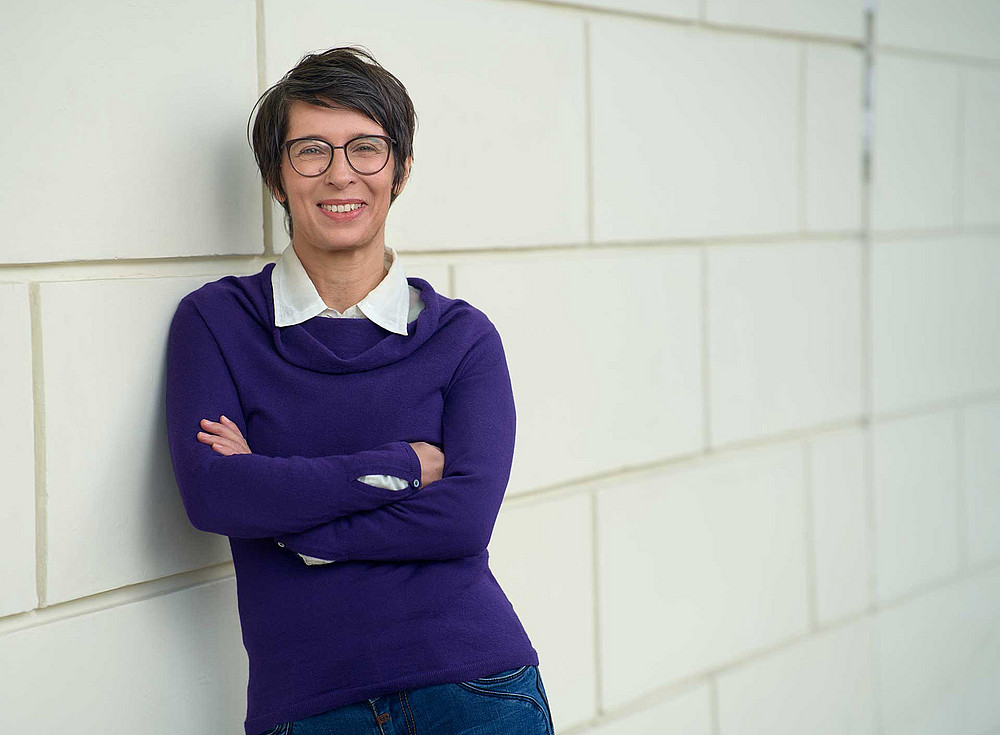
Sabine Bergner

Sabine Bergner is a psychologist and business economist. She knows how to get off to a successful start in a company or in your studies. Photo: Uni Graz/wildundwunderbar

Starting a degree programme means a new stage in your life. And it is also a new working environment. Sabine Bergner knows how first-semester students get off to a good start at university. The psychologist and business economist recognises parallels between onboarding in a company and starting a degree course.

"As a rule, a degree programme is like a full-time job," confirms Sabine Bergner, lecturer and Chair of the Curriculum Commission for Psychology. It is therefore not so far-fetched to compare starting a degree programme with a new career start. "The values between the applicant and the company or organisation must match," Bergner adds. So a university also attracts those who share similar principles. But the process also works the other way round. "People are shaped by the organisation. Like when the sea grinds a stone," the psychologist draws a vivid picture.

BASTA - with this acronym, the scientist summarises four key tips for a successful start - whether at work or at university:

⇒ Observe: "Every workplace has its own rules. The best way to learn them is through observation," advises Sabine Bergner. She recommends looking for colleagues in a new environment who can serve as role models. This process is called social learning in technical jargon.

⇒Take upoffers: The best way for newcomers to learn the values and norms of an organisation is to attend events, for example. Bergner: "This not only gives you information, but also an impression of what the institution stands for." Applied to the University of Graz, Bergner recommends that first-year students take part in the Welcome Weeks.

⇒Acceptstress: Despite the magic inherent in every beginning. "You have to realise that you will face stressful situations," says the researcher. Because it is clear that an unfamiliar environment brings with it unfamiliar processes. Young people are therefore confronted with a lot of new things in their first semester. How do I organise my time resources? How do I behave towards professors? Where is the seminar room? These and many other challenges have to be faced. "But getting out of your comfort zone," emphasises Sabine Bergner, "allows you to grow."

⇒ Incentives: "Maintaining motivation is just as important," says the business economist and psychologist, recalling her own studies. "To complete several years of training, there has to be a purpose to what you do." At university, good grades or a scholarship can support this motive.

And what does Sabine Bergner wish all first-year students in the winter semester of 2025? "Despite all the challenges, they should also enjoy starting their studies - after all, it's the start of a new phase of life!"
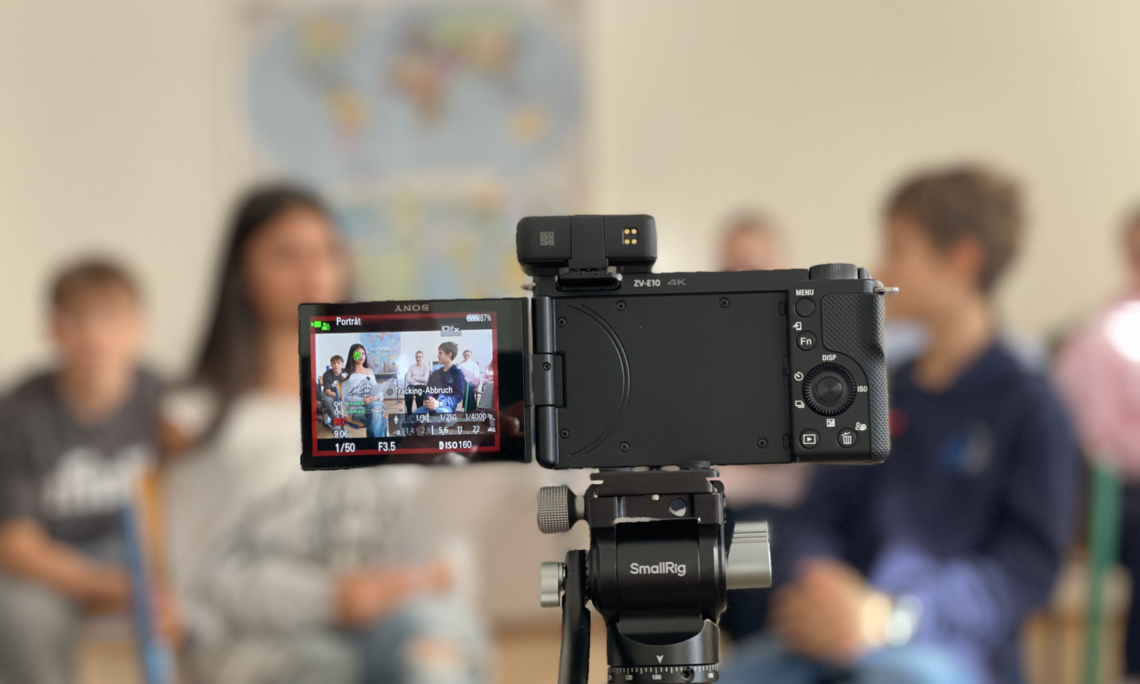

created by Andreas Schweiger

Related news

Bio-plastics and baroque theatre: Awards for two researchers from the University of Graz

Chemist Katalin Barta Weissert received this year's "Forschungspreis des Landes Steiermark", while Germanist Christian Neuhuber received the "Erzherzog-Johann-Forschungspreis". The awards are endowed with 12,000 euros each and are presented for outstanding achievements in the field of science and research. Provincial Councillor Willibald Ehrenhöfer presented the awards on 7 November 2025 in the White Hall of Graz Castle.

EU supports team led by molecular biologist Brigitte Pertschy with around ten million euro

The European Research Council (ERC) is funding the snoOPERA project with around ten million euros to research the structure of cellular protein factories. The four researchers involved want to clarify how tiny RNA-protein complexes control the formation of ribosomes—a key to understanding diseases such as cancer and Alzheimer's.

Maths made easy: how gaming elements motivate children to practise

Where does the six belong on a number line from one to ten? This task is a challenge for children with dyscalculia. For fear of failure, many are reluctant to tackle the exercise in the first place. A playful approach can remove this obstacle and give the affected pupils more self-confidence, as psychologist Manuel Ninaus found out in a study.

How artificial intelligence is changing the digital future in Europe

On November 20, 2025, the Technology Impact Summit at the Seifenfabrik in Graz will bring together experts from politics, business, and science. The focus will be on how artificial intelligence is transforming our working world and which specific AI solutions are already being used successfully today.

Begin of page section:
Additional information:

University of Graz
Universitaetsplatz 3
8010 Graz
Austria
  • Contact
  • Web Editors
  • Moodle
  • UNIGRAZonline
  • Imprint
  • Data Protection Declaration
  • Accessibility Declaration
Weatherstation
Uni Graz

End of this page section. Go to overview of page sections

End of this page section. Go to overview of page sections

Begin of page section:

End of this page section. Go to overview of page sections