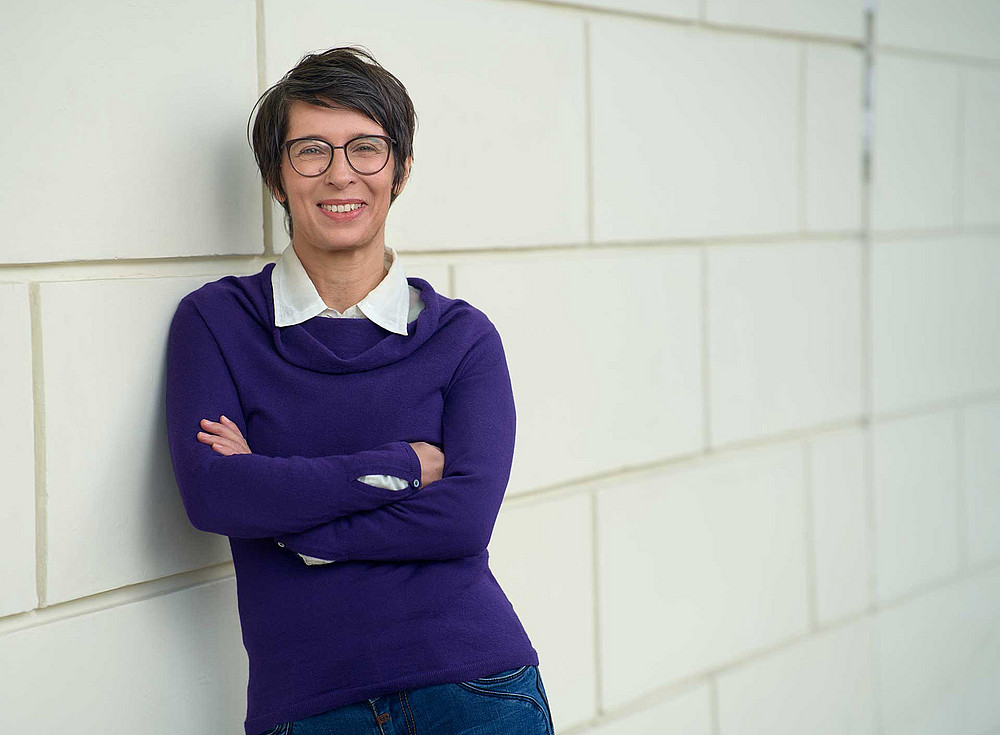
"As a rule, a degree programme is like a full-time job," confirms Sabine Bergner, lecturer and Chair of the Curriculum Commission for Psychology. It is therefore not so far-fetched to compare starting a degree programme with a new career start. "The values between the applicant and the company or organisation must match," Bergner adds. So a university also attracts those who share similar principles. But the process also works the other way round. "People are shaped by the organisation. Like when the sea grinds a stone," the psychologist draws a vivid picture.
BASTA - with this acronym, the scientist summarises four key tips for a successful start - whether at work or at university:
⇒ Observe: "Every workplace has its own rules. The best way to learn them is through observation," advises Sabine Bergner. She recommends looking for colleagues in a new environment who can serve as role models. This process is called social learning in technical jargon.
⇒Take upoffers: The best way for newcomers to learn the values and norms of an organisation is to attend events, for example. Bergner: "This not only gives you information, but also an impression of what the institution stands for." Applied to the University of Graz, Bergner recommends that first-year students take part in the Welcome Weeks.
⇒Acceptstress: Despite the magic inherent in every beginning. "You have to realise that you will face stressful situations," says the researcher. Because it is clear that an unfamiliar environment brings with it unfamiliar processes. Young people are therefore confronted with a lot of new things in their first semester. How do I organise my time resources? How do I behave towards professors? Where is the seminar room? These and many other challenges have to be faced. "But getting out of your comfort zone," emphasises Sabine Bergner, "allows you to grow."
⇒ Incentives: "Maintaining motivation is just as important," says the business economist and psychologist, recalling her own studies. "To complete several years of training, there has to be a purpose to what you do." At university, good grades or a scholarship can support this motive.
And what does Sabine Bergner wish all first-year students in the winter semester of 2025? "Despite all the challenges, they should also enjoy starting their studies - after all, it's the start of a new phase of life!"