Begin of page section:
Page sections:

  • Go to contents (Accesskey 1)
  • Go to position marker (Accesskey 2)
  • Go to main navigation (Accesskey 3)
  • Go to sub navigation (Accesskey 4)
  • Go to additional information (Accesskey 5)
  • Go to page settings (user/language) (Accesskey 8)
  • Go to search (Accesskey 9)

End of this page section. Go to overview of page sections

Begin of page section:
Page settings:

English en
Deutsch de
Search
Login

End of this page section. Go to overview of page sections

Begin of page section:
Search:

Search for details about Uni Graz
Close

End of this page section. Go to overview of page sections


Search

Begin of page section:
Main navigation:

Page navigation:

  • University

    University
    • About the University
    • Organisation
    • Faculties
    • Library
    • Working at University of Graz
    • Campus
    Developing solutions for the world of tomorrow - that is our mission. Our students and our researchers take on the great challenges of society and carry the knowledge out.
  • Research Profile

    Research Profile
    • Our Expertise
    • Research Questions
    • Research Portal
    • Promoting Research
    • Research Transfer
    • Ethics in Research
    • Commission for Scientific Integrity
    Scientific excellence and the courage to break new ground. Research at the University of Graz creates the foundations for making the future worth living.
  • Studies

    Studies
    • Prospective Students
    • Students
    • Post-registration Law
  • Community

    Community
    • International
    • Location
    • Research and Business
    • Alumni
    The University of Graz is a hub for international research and brings together scientists and business experts. Moreover, it fosters the exchange and cooperation in study and teaching.
Topics
  • Sustainable University
  • Researchers answer
  • Work for us
Close menu

End of this page section. Go to overview of page sections

Begin of page section:
You are here:

University of Graz News 30 years after Srebrenica: Heike Karge supports forces for reconciliation

End of this page section. Go to overview of page sections

Wednesday, 09 July 2025

30 years after Srebrenica: Heike Karge supports forces for reconciliation

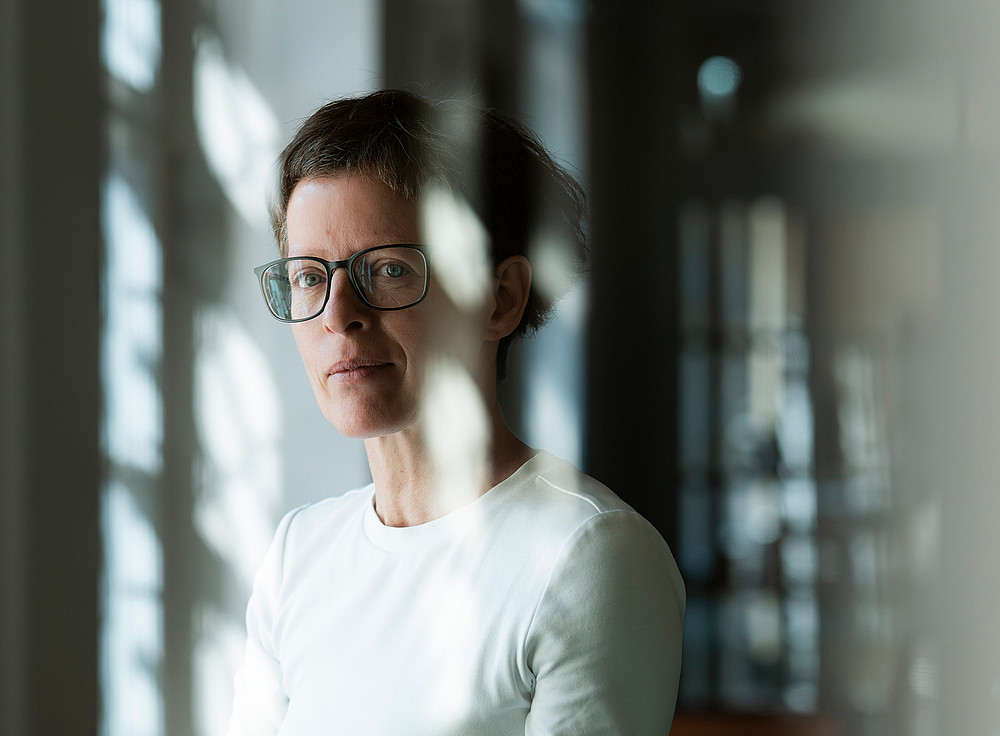
Portrait of Heike Karge photographed through a pane of glass ©KANIZAJ photography 2025

Heike Karge specialises in the history and society of the former Yugoslavia. Photo: Uni Graz/Kanizaj

This year marks the thirtieth anniversary of the Srebrenica massacre in Bosnia. To this day, Serbia and the Republika Srpska refuse to characterise the killing of more than 8,000 Bosnian Muslims as genocide. Those in power lack the will to come to terms with the atrocities. There is hope from strong forces in civil society who want to make a process of reconciliation possible by documenting war crimes across national and ethnic boundaries. Heike Karge, Professor of Southeast European History at the University of Graz, supports them in joint research projects, among other things.


For twenty years, historian Heike Karge has been examining how wars and conflicts in Southeastern Europe have erected walls between people that still exist today. The fronts remain entrenched. “Trauma plays a role here. However, the main reason for the continuing deep divisions is the instrumentalisation of memory by nationalist politics. The war of the 1990s, but also events from the Second World War, continue to have an impact to this day,” explains Karge. "In Bosnia and Herzegovina, battles over memory are still being fought today. The fact that Milorad Dodik, President of the Republika Srpska, wants to secede this part of the country has to do, among other things, with the fact that the High Representative for Bosnia and Herzegovina demanded a few years ago that the genocide in Srebrenica should not be denied as such," says the researcher. When a UN resolution designated 11 July as a day of remembrance for the genocide in Srebrenica last May, Serbian President Aleksandar Vučić criticised it as “stigmatisation”. His government is also unwilling to come to terms with war crimes.

Croatia is dealing with this challenge in a somewhat more open manner. “Here, for example, there are different history textbooks that teachers can choose from. Some also include the Serbian perspective to a certain extent,” reports Karge. “Fundamentally, however, state policy in Croatia clearly states through various laws, parliamentary decrees and declarations that the homeland war was a just war and that its own war crimes should not be addressed,” says the historian.

Commitment to reconciliation
At the civil society level, however, there are strong movements and NGOs working for reconciliation. One example is Documenta, a documentation centre founded in Zagreb in 2004 to come to terms with the past. It is also the largest human rights organisation in former Yugoslavia. The institution cooperates with many partners in Southeastern Europe to promote dialogue and the peace process. “International cooperation is very important in supporting these forces,” emphasises Karge. She has cooperated with Documenta in an EU project, among other things. Invitations to guest speakers, internships in NGOs and excursions for students also contribute to raising awareness and strengthening civil society organisations. At the University of Graz, all institutions dealing with the region cooperate with local institutions, in particular the Graz School of Interdisciplinary Transnational Studies, formerly the Centre for Southeast European Studies.

A detailed article can be read in UNIZEIT.

created by Gudrun Pichler

Related news

Record of reported species: Styria wins the global City Nature Challenge

Observers in Styria recorded 4,660 different animals, plants and fungi as part of the international City Nature Challenge between 24 and 27 April 2026. This saw the region take first place in the "species" category. Ostrava in the Czech Republic made the most observations, with just under 140,000, whilst the San Francisco Bay Area had the highest number of participants, namely 3,019.

Studying at the University of Graz: How to enrol

Ready for a new chapter in your life with the start of your studies at the University of Graz in the winter semester 2026/27? Here you will find information on deadlines, admission procedures, registration, and everything else you need to successfully start your studies in the fall.

Europe Day: Strengthening international expertise with Arqus

On 9 May, the spotlight will be on Europe. At the University of Graz, European cooperation is also a tangible part of everyday student life – not least through the Arqus university alliance. Master’s and PhD students can currently register for the Arqus micro-credential in ‘Advanced Creative Thinking and Communication’.

A substantial community: the key role of soil crusts in the earth system

They are often overshadowed by the plant world: lichens, fungi, mosses and bacteria, which form unique communities on rocks and trees or as soil crusts. Bettina Weber from the University of Graz is bringing this biological alliance into the research spotlight. Her research shows that these communities form an essential part of the Earth’s critical zone and play a key role in the interactions between land and atmosphere. Bettina Weber was honoured by the European Geosciences Union for her groundbreaking research at the beginning of May.

Begin of page section:
Additional information:

University of Graz
Universitaetsplatz 3
8010 Graz
Austria
  • Contact
  • Web Editors
  • Moodle
  • UNIGRAZonline
  • Imprint
  • Data Protection Declaration
  • Accessibility Declaration
Weatherstation
Uni Graz

End of this page section. Go to overview of page sections

End of this page section. Go to overview of page sections

Begin of page section:

End of this page section. Go to overview of page sections