Begin of page section:
Page sections:

  • Go to contents (Accesskey 1)
  • Go to position marker (Accesskey 2)
  • Go to main navigation (Accesskey 3)
  • Go to sub navigation (Accesskey 4)
  • Go to additional information (Accesskey 5)
  • Go to page settings (user/language) (Accesskey 8)
  • Go to search (Accesskey 9)

End of this page section. Go to overview of page sections

Begin of page section:
Page settings:

English en
Deutsch de
Search
Login

End of this page section. Go to overview of page sections

Begin of page section:
Search:

Search for details about Uni Graz
Close

End of this page section. Go to overview of page sections


Search

Begin of page section:
Main navigation:

Page navigation:

  • University

    University
    • About the University
    • Organisation
    • Faculties
    • Library
    • Working at University of Graz
    • Campus
    Developing solutions for the world of tomorrow - that is our mission. Our students and our researchers take on the great challenges of society and carry the knowledge out.
  • Research Profile

    Research Profile
    • Our Expertise
    • Research Questions
    • Research Portal
    • Promoting Research
    • Research Transfer
    • Ethics in Research
    • Commission for Scientific Integrity
    Scientific excellence and the courage to break new ground. Research at the University of Graz creates the foundations for making the future worth living.
  • Studies

    Studies
    • Prospective Students
    • Students
  • Community

    Community
    • International
    • Location
    • Research and Business
    • Alumni
    The University of Graz is a hub for international research and brings together scientists and business experts. Moreover, it fosters the exchange and cooperation in study and teaching.
  • Spotlight
Topics
  • Sustainable University
  • Researchers answer
  • Work for us
Close menu

End of this page section. Go to overview of page sections

Begin of page section:
You are here:

University of Graz Spotlight Does fasting make us younger, Tobias Eisenberg?

End of this page section. Go to overview of page sections

Does fasting make us younger, Tobias Eisenberg?

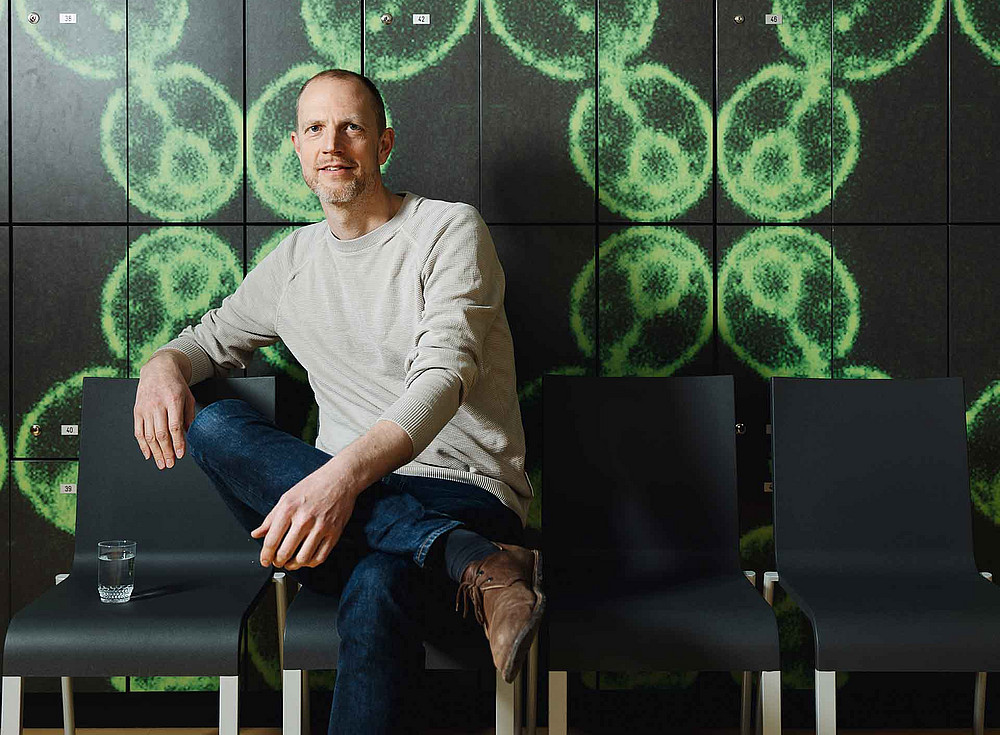
Tobias Eisenberg ©KANIZAJ 2022

Molecular biologist Tobias Eisenberg investigates how food deprivation affects the organism. Photo: Uni Graz/Kanizaj

Not eating is currently on everyone's lips. It's Lent, and the next swimming season is just around the corner. This phase is equated with weight and calorie reduction. Biochemist and molecular biologist Tobias Eisenberg is investigating how short-term food deprivation – a very common occurrence for our ancestors – affects the organism.

Proper fasting promotes the balance of our metabolism, known as homeostasis, and triggers the process of autophagy, a cellular recycling programme. Tobias Eisenberg explains: "Defective components are broken down. Their remains serve as building blocks for new functional components. This promotes cell repair." At the same time, ketone bodies are produced as a by-product of fat burning. They replace sugar as an energy source and in turn promote autophagy. Eisenberg tested this effect on himself: "What fascinated me during my several-day fasting regimen was the disappearance of the feeling of hunger. After two to three days, I experienced a surge of energy that felt like a relaxed endurance run."

By abstaining, you put your body in an exceptional situation. "We are not only investigating how fasting changes energy metabolism, but also whether and how it delays cell ageing," says Eisenberg. "Studies on model organisms such as flies, nematodes and mice show that this can work." In the Cluster of Excellence MetAGE, funded by the Austrian Science Fund (FWF), the researcher is investigating these processes with colleagues from the Medical Universities of Graz and Vienna. And what is the best method of fasting? Even the molecular biologist cannot answer that question. "There are too few good comparative studies with humans."

Risks

Eisenberg points out the dangers of food deprivation: "Without calorie intake, a person will eventually die. Our organism is not capable of obtaining energy from light; we do not photosynthesise." The molecular biologist also warns against extreme forms of fasting. "In addition to the possible benefits, there are also risks such as malnutrition or undernourishment." A permanent reduction in calorie intake of more than 30 percent can be harmful. Children, adolescents, pregnant and breastfeeding women, as well as elderly and sick people should not fast, or only do so under medical supervision. "The most important thing is to listen to your own body," advises Eisenberg. "What is good for one person's health may be harmful to another."

created by Roman Vilgut

Related news

A special honour for special achievement: six "Sub auspiciis" awards for Graz University of Technology and the University of Graz

Top marks at school, outstanding academic achievement during their studies: six researchers from Graz – from Graz University of Technology and the University of Graz – were awarded their doctorates on 13 March 2026 ‘sub auspiciis Praesidentis rei publicae’. On behalf of the Austrian Federal President, University of Graz Rector Peter Riedler and Graz University of Technology Rector Horst Bischof presided over the conferment ceremony in the auditorium of the Old University of Graz. On 18 March, the candidates Hannah Brunner, Samuel Hörmann and Thomas Steiner (Graz University of Technology) as well as Christian Bundschuh, Peter Hartmann and Lena Parigger (University of Graz) will be presented with the honorary ring at the Hofburg in Vienna – personally by Federal President Alexander Van der Bellen.

Mathematics Day: University of Graz multiplies the fun of arithmetic

Competing in a puzzle contest without the pressure of grades is usually fun even for those who dislike maths. To mark Mathematics Day on 14 March, the University of Graz is hosting the international Naboj competition. At the end of February, more than three hundred lower school pupils competed in the Maths Mix Doubles.

Scientific freedom and neutrality: a question of attitude

How neutral must research be? At the Styrian University Conference at the University of Graz, keynote speaker David Beaver questioned the concept of objectivity. He advocated for bold science that stands by its values in order to remain resilient in times of crisis and actively shape social progress.

University of Graz: Discover the apprentice game and secure jobtraining

The University of Graz not only educates students – it also offers apprenticeships in eight future-oriented professions – even with a school-leaving certificate if desired! From metal technology in the physics workshop to IT systems engineering: discover apprenticeships now and immerse yourself in the world of university apprentices with an interactive game.

Begin of page section:
Additional information:

University of Graz
Universitaetsplatz 3
8010 Graz
Austria
  • Contact
  • Web Editors
  • Moodle
  • UNIGRAZonline
  • Imprint
  • Data Protection Declaration
  • Accessibility Declaration
Weatherstation
Uni Graz

End of this page section. Go to overview of page sections

End of this page section. Go to overview of page sections

Begin of page section:

End of this page section. Go to overview of page sections