Begin of page section:
Page sections:

  • Go to contents (Accesskey 1)
  • Go to position marker (Accesskey 2)
  • Go to main navigation (Accesskey 3)
  • Go to sub navigation (Accesskey 4)
  • Go to additional information (Accesskey 5)
  • Go to page settings (user/language) (Accesskey 8)
  • Go to search (Accesskey 9)

End of this page section. Go to overview of page sections

Begin of page section:
Page settings:

English en
Deutsch de
Search
Login

End of this page section. Go to overview of page sections

Begin of page section:
Search:

Search for details about Uni Graz
Close

End of this page section. Go to overview of page sections


Search

Begin of page section:
Main navigation:

Page navigation:

  • University

    University
    • About the University
    • Organisation
    • Faculties
    • Library
    • Working at University of Graz
    • Campus
    Developing solutions for the world of tomorrow - that is our mission. Our students and our researchers take on the great challenges of society and carry the knowledge out.
  • Research Profile

    Research Profile
    • Our Expertise
    • Research Questions
    • Research Portal
    • Promoting Research
    • Research Transfer
    • Ethics in Research
    Scientific excellence and the courage to break new ground. Research at the University of Graz creates the foundations for making the future worth living.
  • Studies

    Studies
    • Prospective Students
    • Students
  • Community

    Community
    • International
    • Location
    • Research and Business
    • Alumni
    The University of Graz is a hub for international research and brings together scientists and business experts. Moreover, it fosters the exchange and cooperation in study and teaching.
  • Spotlight
Topics
  • Our digital Advent calendar
  • Sustainable University
  • Researchers answer
  • Work for us
Close menu

End of this page section. Go to overview of page sections

Begin of page section:
You are here:

University of Graz News Living together

End of this page section. Go to overview of page sections

Friday, 16 December 2022

Living together

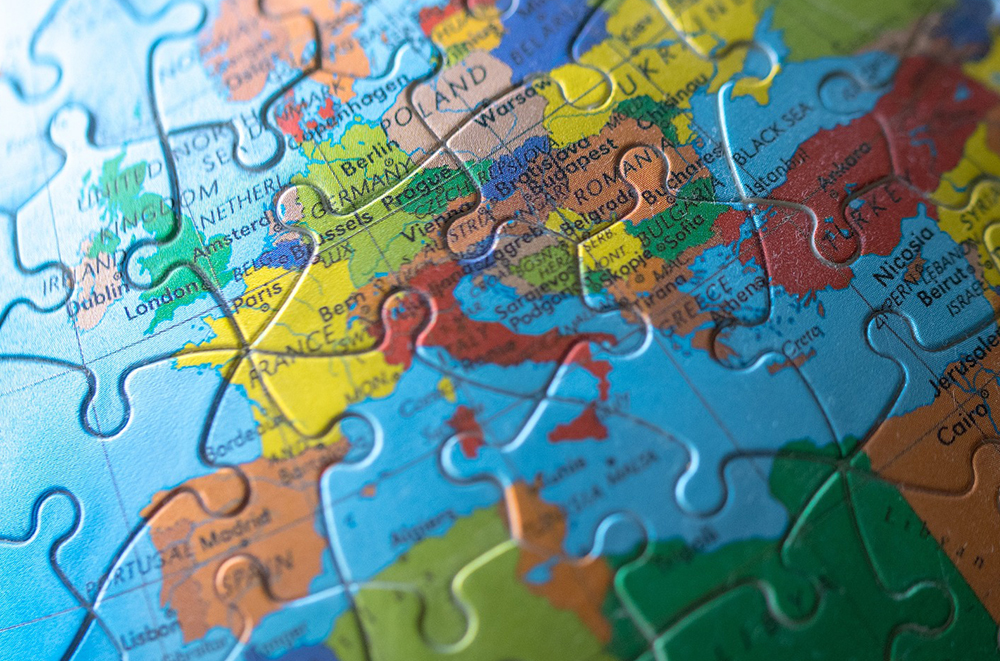
map of Europe

Migration is also a success story for Europe, says Bilgin Ayata. Photo: Dzoko Stach - pixabay

Why is Europe's migration policy stuck? Bilgin Ayata outlines possible solutions.

How do we deal with migration? There is no sign of a United Europe on this issue. Not even on the International Migrants Day on 18 December. Political opinions in the EU could not be more different, the debate is stuck in a dead end. Bilgin Ayata, professor at the Centre for Southeast European Studies at the University of Graz, views  migration  primarily as a proxy discussion and outlines a solution approach:

Migration was and is always a challenge - for everyone involved. In retrospect, however, it is a success story for Europe, which needed immigration after the Second World War urgently. It was a key driver of economic and cultural development.
The fact is that the current debates are very emotional and very polemical. The topic is often a representative of other conflicts. Although it is called European migration policy, it is often understood as irregular, undocumented immigration as well as asylum and flight, especially from African and Asian countries. It is usually more about who is migrating and from where, rather than about capacity.
Politically, a reversal of empirical reality is taking place. According to the EU Commission, the declining birth rate and an increasingly ageing population require the influx of 70 million people.
Migration and asylum policy is a question of political will rather than capacity. It is not the numbers of arriving refugees that are the problem, but the different attitudes towards asylum and migration. In fact, we need to answer basic questions: What kind of Europe do we want? What ideas of society do we have? What are the perspectives of coexistence within the states as well as within the Union?
The example of Ukrainian refugees shows that humane procedures can be implemented quickly and unbureaucratically. I share the opinion of an Italian legal scholar that the European directive for temporary protection could have been activated as early as 2015. In the face of drowning people in the Mediterranean sea, we are experiencing dehumanisation. Border protection is being placed above human rights. The mere attempt to apply for asylum is often criminalised. This is absolutely not compatible with EU standards.
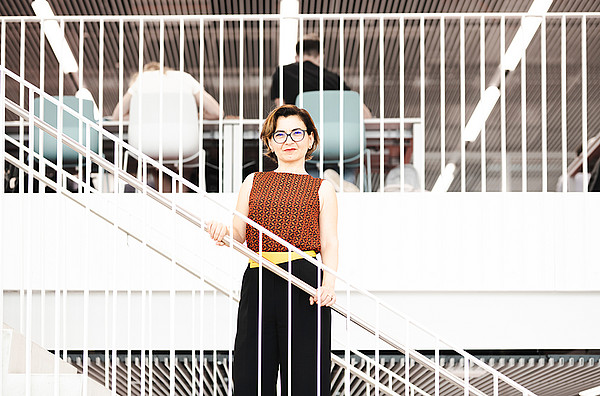
Bilgin Ayata ©Uni Graz/Tzivanopoulos
©Uni Graz/Tzivanopoulos
In her research, Bilgin Ayata deals with the migration policy of the EU. Photo: Uni Graz/Tzivanopoulos
created by Protokolliert von Andreas Schweiger

Related news

Semester abroad without barriers: University of Graz wins award for promoting inclusion

The University of Graz has been awarded the Internationalization Award for its new inclusion initiative. Students with fewer opportunities now also receive financial support for their semester abroad outside Europe.

Fair distribution: Researchers determine just greenhouse gas budgets for all EU regions

Ten years ago, on 12 December 2015, the Paris Climate Agreement was signed at the UN Climate Conference. In order to limit global warming to well below two degrees, only a certain amount of CO2 may be emitted worldwide. While the focus was originally on national emission targets, more than 200 subnational regions and almost 300 cities have now adopted their own targets. But how many emissions are they fairly entitled to? Researchers at the University of Graz have now developed transparent criteria for fair distribution at the subnational level for the first time and determined corresponding greenhouse gas budgets for all European regions. The paper was published today in the scientific journal Nature Communications.

Chemical Christmas show at the University of Graz: An explosive evening at the Schauspielh

At the beginning of December, the University of Graz transformed the theater into a laboratory: as part of “Chemical Life,” teacher training students staged a chemical Christmas show for Styrian school classes—complete with ethanol rockets, nitrogen snow, and glowing effects. An evening designed to inspire interest in studying chemistry.

Train by train: Koralm railway accelerates exchange between the Universities

Lectures at the University of Klagenfurt in the morning, seminars at the University of Graz in the afternoon: Austria's longest tunnel and a journey time of around 45 minutes make it easy. The Koralm railway increases the speed of networking between the two university locations. The collaboration builds on existing cooperation - for example in the areas of teacher training, Slavic studies and as employers, the universities are well coordinated.

Begin of page section:
Additional information:

University of Graz
Universitaetsplatz 3
8010 Graz
Austria
  • Contact
  • Web Editors
  • Moodle
  • UNIGRAZonline
  • Imprint
  • Data Protection Declaration
  • Accessibility Declaration
Weatherstation
Uni Graz

End of this page section. Go to overview of page sections

End of this page section. Go to overview of page sections

Begin of page section:

End of this page section. Go to overview of page sections