Begin of page section:
Page sections:

  • Go to contents (Accesskey 1)
  • Go to position marker (Accesskey 2)
  • Go to main navigation (Accesskey 3)
  • Go to sub navigation (Accesskey 4)
  • Go to additional information (Accesskey 5)
  • Go to page settings (user/language) (Accesskey 8)
  • Go to search (Accesskey 9)

End of this page section. Go to overview of page sections

Begin of page section:
Page settings:

English en
Deutsch de
Search
Login

End of this page section. Go to overview of page sections

Begin of page section:
Search:

Search for details about Uni Graz
Close

End of this page section. Go to overview of page sections


Search

Begin of page section:
Main navigation:

Page navigation:

  • University

    University
    • About the University
    • Organisation
    • Faculties
    • Library
    • Working at University of Graz
    • Campus
    Developing solutions for the world of tomorrow - that is our mission. Our students and our researchers take on the great challenges of society and carry the knowledge out.
  • Research Profile

    Research Profile
    • Our Expertise
    • Research Questions
    • Research Portal
    • Promoting Research
    • Research Transfer
    • Ethics in Research
    Scientific excellence and the courage to break new ground. Research at the University of Graz creates the foundations for making the future worth living.
  • Studies

    Studies
    • Prospective Students
    • Students
  • Community

    Community
    • International
    • Location
    • Research and Business
    • Alumni
    The University of Graz is a hub for international research and brings together scientists and business experts. Moreover, it fosters the exchange and cooperation in study and teaching.
  • Spotlight
Topics
  • Sustainable University
  • Researchers answer
  • Work for us
Close menu

End of this page section. Go to overview of page sections

Begin of page section:
You are here:

University of Graz News Zur Soziologie der Religion

End of this page section. Go to overview of page sections

Thursday, 23 August 2012

Zur Soziologie der Religion

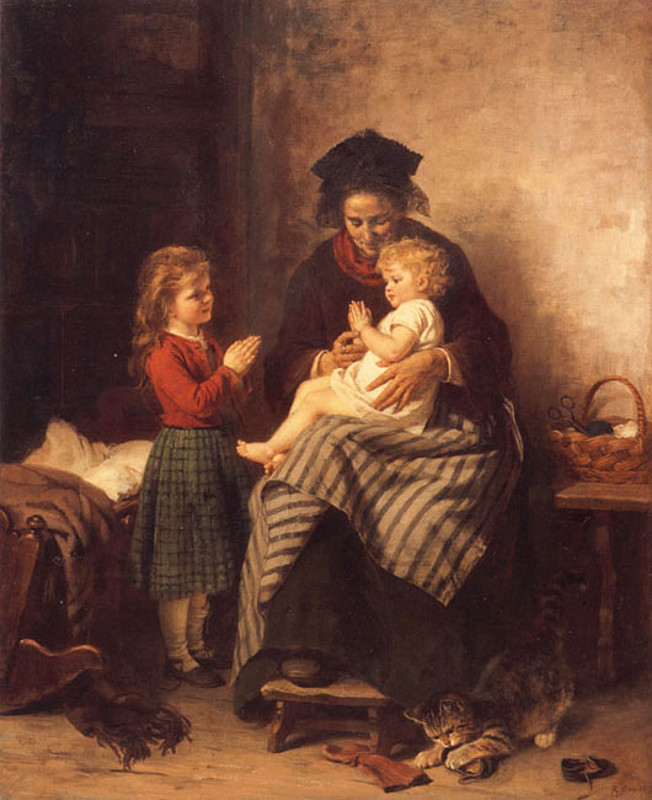
"Das Morgengebet" von Rudolf Epp, um 1879. Beten ist nur eine der grundlegenden menschlichen Tätigkeiten, die unmittelbar mit Religion verbunden ist. Soziologie Stephan Moebius hat die Schriften von Marcel Mauss' zu diesem Thema neu herausgegeben.

"Das Morgengebet" von Rudolf Epp, um 1879. Beten ist nur eine der grundlegenden menschlichen Tätigkeiten, die unmittelbar mit Religion verbunden ist. Soziologie Stephan Moebius hat die Schriften von Marcel Mauss' zu diesem Thema neu herausgegeben.

Zwei neue Editionen von Uni-Graz-Forscher Stephan Moebius sind erschienen

Strafen und opfern, urteilen und werten, beten – viele, zum Teil grundlegende menschliche Tätigkeiten sind  unmittelbar mit Religion verbunden. Sie stehen im Zentrum der Arbeit des französischen Soziologen und Ethnologen Marcel Mauss (1872-1950). Seine Schriften zur Religionssoziologie gelten als Meilensteine der Sozial- und Kulturwissenschaften, da sie nicht nur Einblicke in Sakralisierungsprozesse geben, sondern auch die gesellschaftlichen Ursprünge des Magischen und Religiösen behandeln.

Univ.-Prof. Dr. Stephan Moebius vom Institut für Soziologie der Uni Graz hat nun einen neuen Band herausgegeben, der die wichtigsten religionssoziologischen Studien umfasst. Darin behandelt werden unter anderem das Gebet, das Opfer, die Magie, das Strafrecht oder das Verhältnis von Ritualen und Emotionen. Der Wissenschafter hat in einem Nachwort zudem eine systematische Darstellung der Religionssoziologie von Mauss geliefert.

>> "Marcel Mauss: Schriften zur Religionssoziologie". Herausgegeben und eingeleitet von Stephan Moebius, Frithjof Nungesser und Christian Papilloud Mit einem Nachwort von Stephan Moebius. 28,80 Euro, suhrkamp taschenbuch wissenschaft. August 2012.

Einen weiteren Band hat der Soziologie Moebius mit einem Nachwort versehen: In "Das Collège de Sociologie - 1937–1939" widmet sich der Herausgeber des Buchs, Denis Hollier, einer der wichtigsten intellektuellen Gruppierungen des 20. Jahrhunderts. Dem "Collège de sociologie", das 1937 von Georges Bataille zusammen mit Roger Caillois und Michel Leiris gegründet wurde, ging es um die Etablierung einer Soziologie des Sakralen, die für eine allgemeine Wissenschaft fruchtbar gemacht werden sollte. 

Die Edition hat den Diskussionszusammenhang des Collège de sociologie erstmals erschlossen und zeitlich nachvollziehbar gemacht. Zahlreiche Texte sind nur in dieser Ausgabe zugänglich; nun liegt sie erstmals in vollständiger deutscher Übersetzung vor.

>> "Das Collège de Sociologie - 1937–1939 ". Herausgegeben von Denis Hollier mit einem Nachwort von Stephan Moebius. 20,60 Euro, suhrkamp taschenbuch wissenschaft. August 2012.


created by Gerhild Kastrun

Related news

Diversity buddies at the University of Graz: Support on equal terms

The University of Graz is strengthening its commitment to equal opportunities with its new Diversity Buddies. University members can find easily accessible contact persons here for questions relating to equality and diversity. All employees can get involved and take action.

When parents find it difficult to have a say

In her dissertation, translation scholar Marie Tschurtschenthaler examines how communication between compulsory schools and parents whose first language is not German works – and what role professional language mediation plays in this. Initial insights show that it is not just about language, but also about resources, responsibilities and the institutional framework.

AI in schools: Maria Bertel drafts legal guidelines for teachers

The legal expert and her team analysed the legal situation regarding the use of artificial intelligence in education as part of an EU project and answered open questions from practice.

Cosmetics in the environment: University of Graz proves danger to ants

Titanium dioxide, which is found in cosmetics, for example, is increasingly entering the environment in the form of nanoparticles. This could also put insects at risk. If ants ingest the substance in combination with the pesticide glyphosate, it disturbs the development of their offspring. Scientists at the University of Graz are drawing attention to the negative consequences of this toxic cocktail.

Begin of page section:
Additional information:

University of Graz
Universitaetsplatz 3
8010 Graz
Austria
  • Contact
  • Web Editors
  • Moodle
  • UNIGRAZonline
  • Imprint
  • Data Protection Declaration
  • Accessibility Declaration
Weatherstation
Uni Graz

End of this page section. Go to overview of page sections

End of this page section. Go to overview of page sections

Begin of page section:

End of this page section. Go to overview of page sections