



Begin of page section:
Page sections:

  • Go to contents (Accesskey 1)
  • Go to position marker (Accesskey 2)
  • Go to main navigation (Accesskey 3)
  • Go to sub navigation (Accesskey 4)
  • Go to additional information (Accesskey 5)
  • Go to page settings (user/language) (Accesskey 8)
  • Go to search (Accesskey 9)

End of this page section. Go to overview of page sections

Begin of page section:
Page settings:

English en
Deutsch de
Search
Login

End of this page section. Go to overview of page sections

Begin of page section:
Search:

Search for details about Uni Graz
Close

End of this page section. Go to overview of page sections


Search

Begin of page section:
Main navigation:

Page navigation:

  • University

    University
    • About the University
    • Organisation
    • Faculties
    • Library
    • Working at University of Graz
    • Campus
    Developing solutions for the world of tomorrow - that is our mission. Our students and our researchers take on the great challenges of society and carry the knowledge out.
  • Research Profile

    Research Profile
    • Our Expertise
    • Research Questions
    • Research Portal
    • Promoting Research
    • Research Transfer
    • Ethics in Research
    • Commission for Scientific Integrity
    Scientific excellence and the courage to break new ground. Research at the University of Graz creates the foundations for making the future worth living.
  • Studies

    Studies
    • Prospective Students
    • Students
    • Welcome Weeks for First Year Students
  • Community

    Community
    • International
    • Location
    • Research and Business
    • Alumni
    The University of Graz is a hub for international research and brings together scientists and business experts. Moreover, it fosters the exchange and cooperation in study and teaching.
Topics
  • Sustainable University
  • Researchers answer
  • Work for us
Close menu

End of this page section. Go to overview of page sections

Begin of page section:
You are here:

University of Graz News Zukunft im Kleinen

End of this page section. Go to overview of page sections

Monday, 21 March 2022

Zukunft im Kleinen

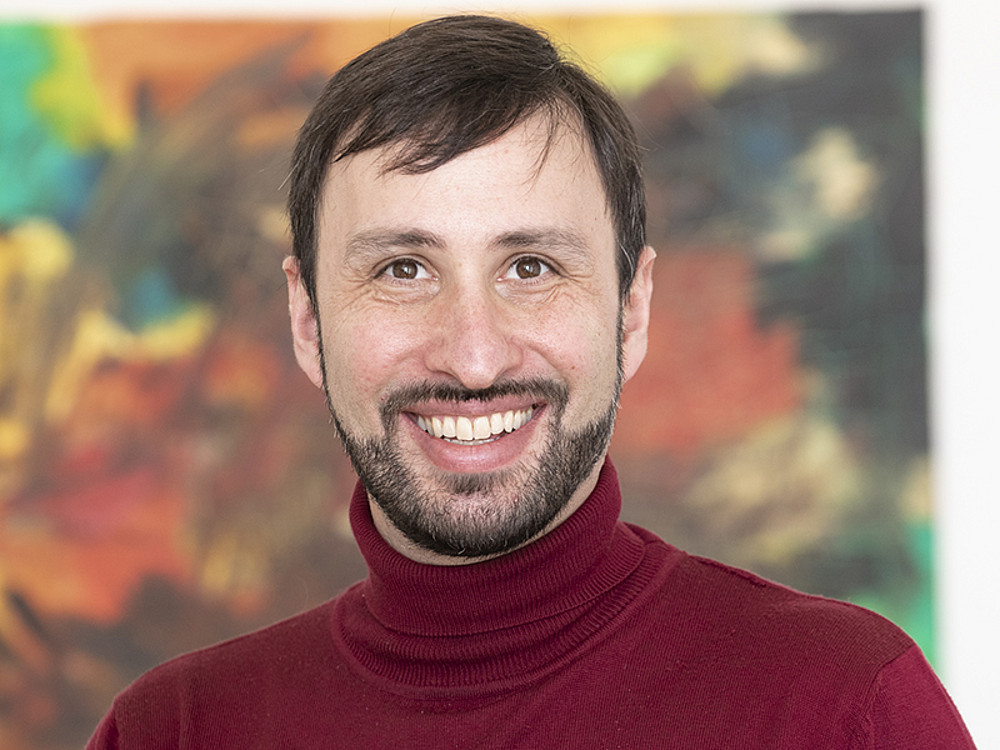
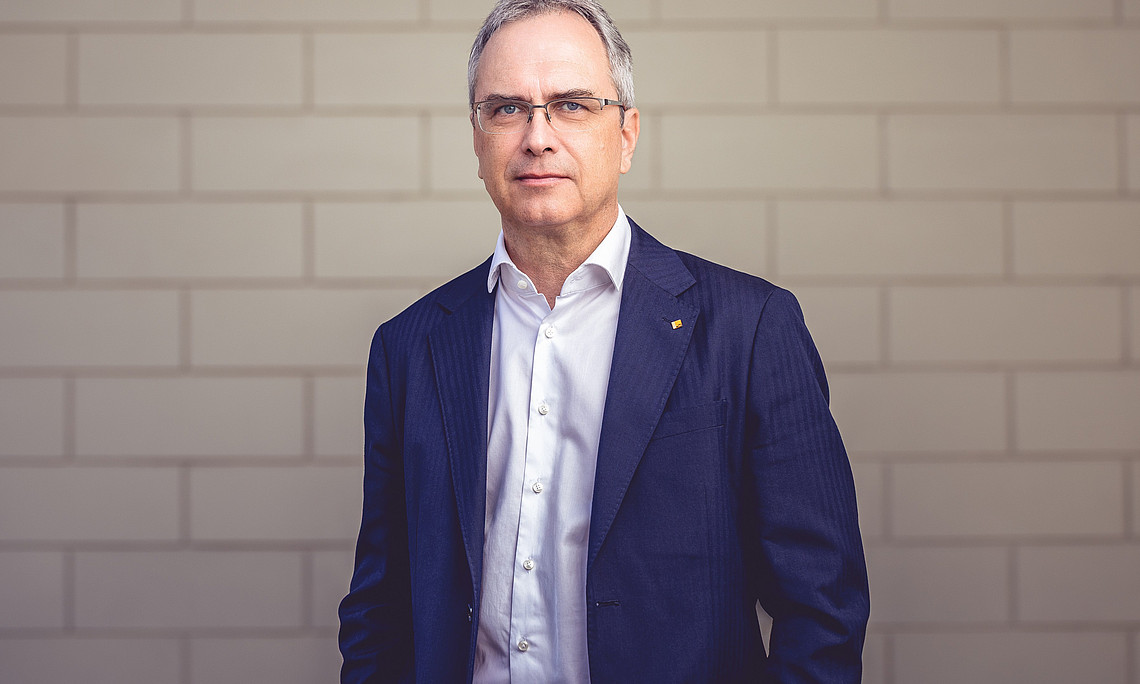
Thomas Weiss ist seit August 2021 Professor für Theoretische Nanophysik an der Universität Graz. Foto: Uni Graz/Tzivanopoulos ©Uni Graz/Tzivanopoulos
©Uni Graz/Tzivanopoulos

Thomas Weiss ist seit August 2021 Professor für Theoretische Nanophysik an der Universität Graz. Foto: Uni Graz/Tzivanopoulos

Thomas Weiss erforscht die Wechselwirkungen von Licht und Materie im Nanobereich

Ob Quantencomputer oder optische Sensoren zur Bestimmung von Wirkstoffen in Medikamenten – viele Anwendungen der Zukunft bauen auf Technologien, für die es notwendig ist, Licht und einzelne Photonen gezielt steuern zu können. Zu diesem Zweck erforscht Thomas Weiss, seit August 2021 Professor für Theoretische Nanophysik an der Universität Graz, die Wechselwirkungen von Licht und Materie mit Hilfe von Computersimulationen.

Um seine Forschung zu erklären, nutzt Weiss einen Vergleich mit der Musik: „Die schönen Töne, die Instrumente erzeugen, entstehen, weil gewisse Resonanzen angeregt werden. Wenn Wellen mit bestimmten Frequenzen miteinander schwingen, überlagern sie sich so, dass sie sich gegenseitig immer mehr verstärken. Möchte ich den Klang beeinflussen, muss ich verstehen, wie diese Resonanzen zustande kommen. Dasselbe mache ich mit Licht. Als Resonanzkörper dient dabei ein Nanoteilchen.“ Ziel ist, die Wechselwirkungen zwischen Licht und Materie zu kontrollieren und zu verstärken. Wie bei einem Musikinstrument sind auch bei einem Nanoresonator Material und Form von entscheidender Bedeutung. „Wir untersuchen, wie ein Nanoteilchen aus Metall, Silizium oder einem anderen Halbleiter auf ein Lichtfeld reagiert. Wie sieht das umgebende elektromagnetische Feld aus? Welche Resonanzen treten auf?“, berichtet Weiss.

Vom Computer bis zum Medikament
Das Spektrum für Anwendungen, die auf diesen Forschungen aufbauen, ist breit gefächert. In jedem Fall sind sie zukunftsträchtig. So spielt die Nanophotonik unter anderem eine wichtige Rolle für superschnelle Quantencomputer und Quantenkryptographie zur Einrichtung sicherer Kommunikationswege. Ein weiterer Anwendungsbereich sind hoch sensible Sensoren, etwa zur Messung von Wirkstoffkonzentrationen in Medikamenten. Dafür liefert ein Forschungsschwerpunkt von Thomas Weiss wichtige Grundlagen.

Der Physiker untersucht, wie sich die sogenannte Händigkeit von chiralen Molekülen feststellen lässt. Viele Moleküle sind chiral, auch unsere DNA und damit alle Aminosäuren im Körper. Das bedeutet, sie kommen in zwei Varianten vor, wobei die eine das Spiegelbild der anderen ist, wie die linke und die rechte Hand einer Person. Bei Medikamenten kann es entscheidend sein, welche Händigkeit die Moleküle eines Wirkstoffs haben. Ein tragisches Beispiel ist das Schlafmittel Contergan, bei dem die linksdrehende Form von Thalidomid in den 1960er-Jahren zu schweren Missbildungen bei Embryos geführt hat. Weiss erforscht, wie ein geeigneter Nanoresonator und das umgebende elektromagnetische Feld designt werden müssten, um die Händigkeit von Molekülen verschiedener Wirkstoffe präzise bestimmen und die ungewünschten Formen herausfiltern zu können.

An seiner neuen Forschungsstätte hat der Wissenschafter, der zuvor in Stuttgart Juniorprofessor war, ein interessantes Umfeld vorgefunden: „Die Nanophysik der Universität Graz ist international gut vernetzt“, weiß er zu schätzen. Einige Kollegen hatte er bereits zuvor kennengelernt. Nun trägt er zur weiteren Stärkung des Fachs in Graz bei.

created by Gudrun Pichler

Related news

Electrifying: Researchers film the first moments on the way from light to electricity

Physicists at the University of Graz (Austria), in collaboration with colleagues from Marburg University and Forschungszentrum Jülich (Germany), have achieved a scientific breakthrough. For the first time, the generation of electrical energy from light has been filmed and described theoretically. This work is of far-reaching significance, not least for optimising sustainable energy production from photovoltaics. This is because it provides fundamental building blocks for understanding the physical processes that take place, for example, in organic solar cells. The paper was published in the journal Physical Review X, one of the world’s most prestigious physics journals.

University of Graz: Working together to make Styria a sustainable centre of learning

Round table calls for sustainable funding for the 2028–2030 performance agreement period between the five Styrian universities and the federal government.

How can we teach using YouTube and AI? The University of Graz is strengthening media education in schools

A journey through the blood vessels using VR headsets brings biology lessons to life. An interactive quiz brings physics to life. The YouTube video explains the First World War. Whilst mobile phones are increasingly being banned from the classroom, social media platforms, apps and AI are playing an ever-greater role in knowledge transfer at school. But how can teaching with media be made even more effective? What are the challenges in media-based teaching? At the University of Graz, researchers are discussing these issues at a conference being held in Austria for the first time.

Jurassic Sounds: Biologist reconstructs insect songs from 165 million years ago

It was apparently not just the roars of the dinosaurs that made up the soundscape of the animal world during the Jurassic period. Crickets and grasshoppers communicated through a variety of songs and high-pitched sounds, as Thorin Jonsson from the Institute of Biology at the University of Graz discovered together with colleagues from the universities of Lincoln, Bristol (UK), Beijing (China) and Tempe (USA). The findings on what are so far the oldest traces of sound on Earth have just been published in the journal PNAS.

Begin of page section:
Additional information:

University of Graz
Universitaetsplatz 3
8010 Graz
Austria
  • Contact
  • Web Editors
  • Moodle
  • UNIGRAZonline
  • Imprint
  • Data Protection Declaration
  • Accessibility Declaration
Weatherstation
Uni Graz

End of this page section. Go to overview of page sections

End of this page section. Go to overview of page sections

Begin of page section:

End of this page section. Go to overview of page sections

