Begin of page section:
Page sections:

  • Go to contents (Accesskey 1)
  • Go to position marker (Accesskey 2)
  • Go to main navigation (Accesskey 3)
  • Go to sub navigation (Accesskey 4)
  • Go to additional information (Accesskey 5)
  • Go to page settings (user/language) (Accesskey 8)
  • Go to search (Accesskey 9)

End of this page section. Go to overview of page sections

Begin of page section:
Page settings:

English en
Deutsch de
Search
Login

End of this page section. Go to overview of page sections

Begin of page section:
Search:

Search for details about Uni Graz
Close

End of this page section. Go to overview of page sections


Search

Begin of page section:
Main navigation:

Page navigation:

  • University

    University
    • About the University
    • Organisation
    • Faculties
    • Library
    • Working at University of Graz
    • Campus
    Developing solutions for the world of tomorrow - that is our mission. Our students and our researchers take on the great challenges of society and carry the knowledge out.
  • Research Profile

    Research Profile
    • Our Expertise
    • Research Questions
    • Research Portal
    • Promoting Research
    • Research Transfer
    • Ethics in Research
    • Commission for Scientific Integrity
    Scientific excellence and the courage to break new ground. Research at the University of Graz creates the foundations for making the future worth living.
  • Studies

    Studies
    • Prospective Students
    • Students
    • Welcome Weeks for First Year Students
  • Community

    Community
    • International
    • Location
    • Research and Business
    • Alumni
    The University of Graz is a hub for international research and brings together scientists and business experts. Moreover, it fosters the exchange and cooperation in study and teaching.
Topics
  • Sustainable University
  • Researchers answer
  • Work for us
Close menu

End of this page section. Go to overview of page sections

Begin of page section:
You are here:

University of Graz News Wortschatz

End of this page section. Go to overview of page sections

Wednesday, 06 May 2015

Wortschatz

Zweisprachigkeit ist bei Kindern in Österreich stark verbreitet. Foto: Rainer Sturm - pixelio.de


Zweisprachigkeit ist bei Kindern in Österreich stark verbreitet. Foto: Rainer Sturm - pixelio.de
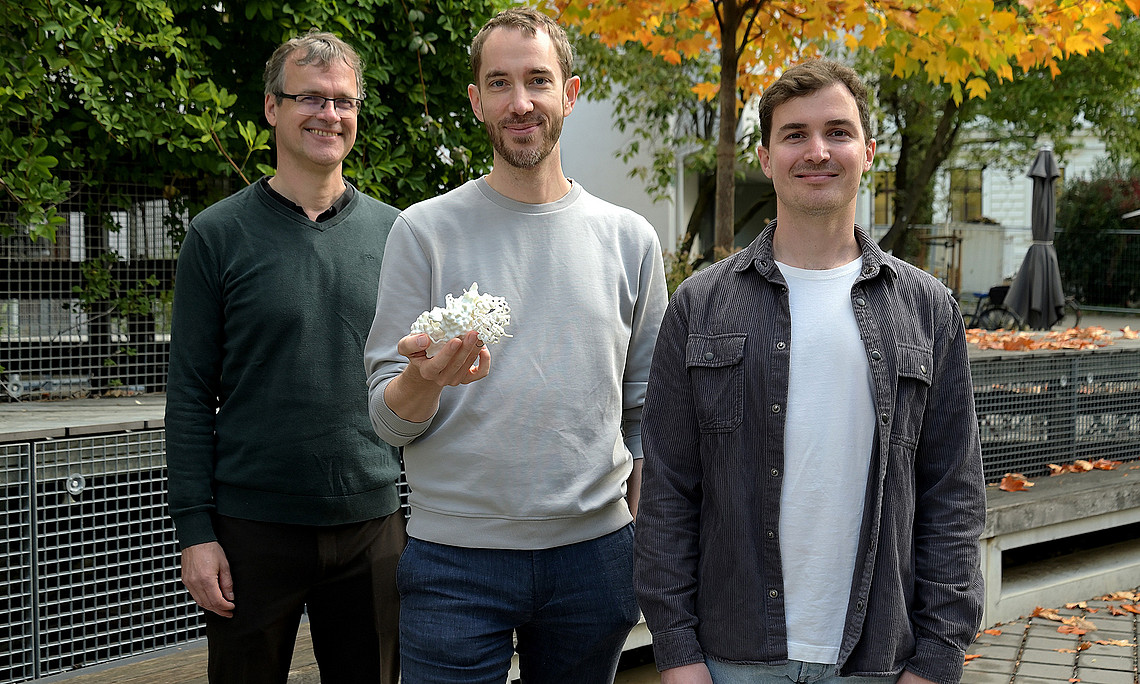
Wissenschafter beleuchtet Zweisprachigkeit bei Kindern. Aktuell ist dazu ein Buch erschienen

Jedes fünfte Kind im Vorschulalter in Österreich wächst mehrsprachig auf. Der anschließende Bildungsalltag ist jedoch stark einsprachig, also deutsch, geprägt. Stefan Schneider vom Institut für Romanistik an der Uni Graz hat in einem neuen Buch insbesondere den Forschungsstand zum Spracherwerb in den ersten drei Lebensjahren dokumentiert. Fazit: Mehrsprachigkeit ist buchstäblich ein Wortschatz, den es noch zu heben gilt.

Mehrsprachigkeit ist nichts Außergewöhnliches, widerspricht Schneider der vor allem in Europa und Amerika vorherrschenden Meinung von Monolingualität. Bis in die 1950er-Jahre galten zweisprachig aufwachsende Kinder als weniger intelligent. Diese Vorurteile sind mittlerweile abgebaut. „Mehrsprachigkeit fördert die kognitiven Fähigkeiten“, fasst Schneider den aktuellen Forschungsstand zusammen. „Es dürfte eine höhere Flexibilität bewirken und das Umschalten im Gehirn erleichtern.“

Für die Kinder spielt der Mix an Sprachen keine Rolle. „Sie wollen effizient kommunizieren“, bestätigt der Wissenschafter, der Romanistik an der Uni Graz lehrt. Zahlreiche Studien belegen: Mehrsprachigkeit ist heute der Normalfall – auf den jedoch beim Schuleintritt wenig Rücksicht genommen wird: „Kinder mit Migrationshintergrund werden mit Deutsch überfallen. Es wäre notwendig, den Unterricht mit der Erstsprache zu beginnen und Deutsch als weitere Schulsprache zu erlernen.“ Bereits im Kindergarten sollte der Erstsprache, der von den Eltern weitergegebenen Sprache, mehr Augenmerk geschenkt werden. „Kinder sollen nicht das Gefühl haben, dass ihre Familiensprache minderwertig ist“, so der Autor.

„Es kann auch einiges schiefgehen“, verweist Schneider auf Faktoren, die den bilingualen Erwerb negativ beeinflussen können. „Die Akzeptanz kann vom Prestige der jeweiligen Sprache abhängen.“ Beispielsweise komme Italienisch besser an als Türkisch. Das soziale Umfeld sei ebenso mitentscheidend. „Wenn eine Sprache weniger stark verwendet wird, weil etwa ein Elternteil seltener daheim ist, müsste man dieses Defizit, zum Beispiel mit Reisen in dieses Land ausgleichen. Das kann sich nicht jeder leisten“, weiß Schneider.
Trotz vieler praktischer Hinweise sieht Schneider sein utb-Taschenbuch nicht als Elternratgeber, sondern als wissenschaftliche Einführung in das wichtige gesellschaftliche Thema.

Aktuelle Buchtipps:
Stefan Schneider, Bilingualer Erstspracherwerb, Ernst Reinhardt Verlag, 2015 >> Mehr

Parenthetical Verbs, herausgegeben v. Schneider, Stefan / Glikman, Julie / Avanzi, Mathieu, Linguistische Arbeiten 557, De Gruyter Mouton, 2015 >> Mehr


created by Andreas Schweiger

Related news

Jurassic Sounds: Biologist reconstructs insect songs from 165 million years ago

It was apparently not just the roars of the dinosaurs that made up the soundscape of the animal world during the Jurassic period. Crickets and grasshoppers communicated through a variety of songs and high-pitched sounds, as Thorin Jonsson from the Institute of Biology at the University of Graz discovered together with colleagues from the universities of Lincoln, Bristol (UK), Beijing (China) and Tempe (USA). The findings on what are so far the oldest traces of sound on Earth have just been published in the journal PNAS.

EU funding boosts international exchange between universities

The University of Graz is further expanding its international study opportunities through the European university alliance Arqus and is taking the lead in two key projects. In future, students will benefit from even more joint degree programmes and from simplified recognition of academic achievements through the Joint European Degree Label.

Rescue and risks: Researchers have surveyed public perceptions of AI

The use of artificial intelligence has had to be made transparent since 2 August 2026. The EU’s AI Act, which has been in force since then, also sets out how risky an application is and which security measures apply as a result. However, the assessment of risks by the legislation differs in some cases significantly from the perceptions of the Austrian public. This is the finding of a representative study carried out by data scientist Stefan Thalmann from the University of Graz and his team.

The Healing Sea: Researchers discover new approaches to treating chronic inflammation in sponges

Chronic inflammation plays a key role in many diseases, ranging from metabolic disorders and cardiovascular diseases to tissue damage following injuries or infections. “Normally, the body is able to resolve inflammation on its own. If this process becomes unbalanced, immune cells remain permanently active and continue to drive negative changes in the tissue,” explains Andreas Koeberle, a pharmacist at the University of Graz.

Begin of page section:
Additional information:

University of Graz
Universitaetsplatz 3
8010 Graz
Austria
  • Contact
  • Web Editors
  • Moodle
  • UNIGRAZonline
  • Imprint
  • Data Protection Declaration
  • Accessibility Declaration
Weatherstation
Uni Graz

End of this page section. Go to overview of page sections

End of this page section. Go to overview of page sections

Begin of page section:

End of this page section. Go to overview of page sections