



Begin of page section:
Page sections:

  • Go to contents (Accesskey 1)
  • Go to position marker (Accesskey 2)
  • Go to main navigation (Accesskey 3)
  • Go to sub navigation (Accesskey 4)
  • Go to additional information (Accesskey 5)
  • Go to page settings (user/language) (Accesskey 8)
  • Go to search (Accesskey 9)

End of this page section. Go to overview of page sections

Begin of page section:
Page settings:

English en
Deutsch de
Search
Login

End of this page section. Go to overview of page sections

Begin of page section:
Search:

Search for details about Uni Graz
Close

End of this page section. Go to overview of page sections


Search

Begin of page section:
Main navigation:

Page navigation:

  • University

    University
    • About the University
    • Organisation
    • Faculties
    • Library
    • Working at University of Graz
    • Campus
    Developing solutions for the world of tomorrow - that is our mission. Our students and our researchers take on the great challenges of society and carry the knowledge out.
  • Research Profile

    Research Profile
    • Our Expertise
    • Research Questions
    • Research Portal
    • Promoting Research
    • Research Transfer
    • Ethics in Research
    • Commission for Scientific Integrity
    Scientific excellence and the courage to break new ground. Research at the University of Graz creates the foundations for making the future worth living.
  • Studies

    Studies
    • Prospective Students
    • Students
    • Registration for Study Programme (Winter semester 2026/27)
    • Welcome Weeks for First Year Students
  • Community

    Community
    • International
    • Location
    • Research and Business
    • Alumni
    The University of Graz is a hub for international research and brings together scientists and business experts. Moreover, it fosters the exchange and cooperation in study and teaching.
Topics
  • Sustainable University
  • Researchers answer
  • Work for us
Close menu

End of this page section. Go to overview of page sections

Begin of page section:
You are here:

University of Graz News Wissenschaftliches Neuland

End of this page section. Go to overview of page sections

Wednesday, 08 October 2014

Wissenschaftliches Neuland

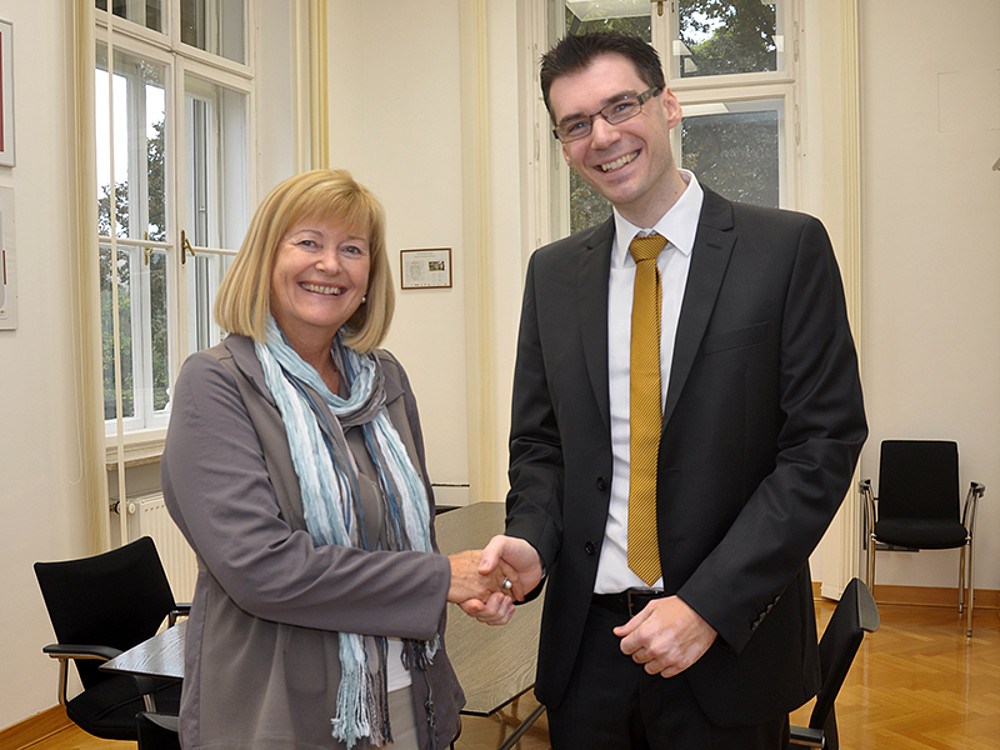
Rektorin Neuper begrüßte Roland Grabner, den ersten Professor für Begabungsforschung in Österreich Foto: Uni Graz/Schweiger

Rektorin Neuper begrüßte Roland Grabner, den ersten Professor für Begabungsforschung in Österreich Foto: Uni Graz/Schweiger

Uni Graz richtet Österreichs erste Professur für Begabungsforschung ein

Sie sind blitzgescheite ErfinderInnen, geniale KünstlerInnen und einzigartig kluge Wunderkinder. Doch was macht hochbegabte Menschen überhaupt aus? Was beeinflusst die überdurchschnittliche Leistungsentwicklung? Wie können hyperintelligente Personen gefördert werden? Diese und weitere Fragen will die neue, österreichweit einmalige Professur für Begabungsforschung an der Karl-Franzens-Universität Graz beantworten. Univ.-Prof. Dr. Roland Grabner hat die Stelle am Institut für Psychologie am 1. Oktober 2014 angetreten.


In Österreich ist die Begabungsforschung noch wenig beachtet, insbesondere die Untersuchung neurowissenschaftlicher Aspekte stellt Forschungsneuland dar. Die Einrichtung der Professur wurde in der Leistungsvereinbarung zwischen Uni Graz und Wissenschaftsministerium 2013-2015 festgelegt.
„Die Professur ist an der Uni Graz ausgezeichnet verankert und verfügt auch international über hohe Relevanz“, betont Rektorin Univ.-Prof. Dr. Christa Neuper. So werden die Forschungen die Uni-Graz-Schwerpunkte „Gehirn und Verhalten“ sowie „Lernen – Bildung – Wissen“ ergänzen, aber auch einen Beitrag zur „PädagogInnenbildung Neu“ leisten.
Darüber hinaus wird die Professur die seit 2009 gesetzlich verankerte Förderung von Begabten und Hochbegabten unterstützen. Dort setzt auch Roland Grabner an: „Mein Ziel ist es, den Theorie- und Praxistransfer zu fördern. Denn jede Lehrperson ist zugleich auch eine Begabungslehrperson.“ Am Beispiel der Mathematik will er das gesamte Spektrum, von Lernschwächen bis hin zu Hochbegabung, wissenschaftlich betrachten.


Zur Person:
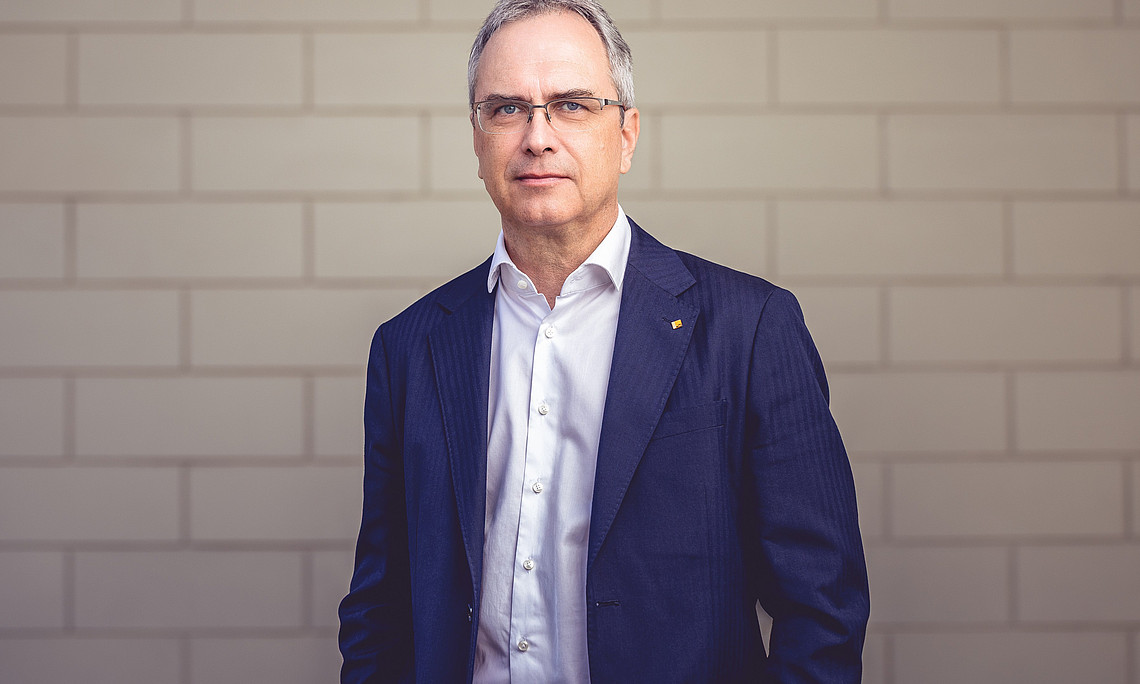
Roland Grabner (39) promovierte 2005 aus Psychologie an der Uni Graz. Er forschte in Graz, Berlin und an der ETH Zürich, wo sich der gebürtige Grazer 2012 für das Fach Psychologie habilitierte. Zuletzt war Grabner Universitätsprofessor für Pädagogische Psychologie an der Georg-August-Universität Göttingen.
Seine Forschungsschwerpunkte liegen in den kognitiven und neuronalen Grundlagen von individuellen und schulrelevanten Lernprozessen mit Fokus auf die Entwicklung und Förderung mathematischer Kompetenzen.

created by Andreas Schweiger

Related news

Commissioned by NATO: University of Graz tests high-tech textiles

As part of an international project, antimicrobial and fire-resistant fabrics with UV protection are being developed in Zagreb. Pharmacists from the University of Graz are ensuring that these fabrics are skin-friendly.

The Arctic up close: ORF special feature on the University of Graz’s research station in S

Students from the University of Graz are spending two weeks conducting research at the Univerisity of Graz research station at the Sermilik Fjord in Greenland, which has been operational for three years. They are measuring glacial runoff, tracking ice melt in real time and installing weather stations. ORF is following the expedition and will be reporting on the special feature ‘Arctic Adventure’ across its various channels from 20 July.

Medicine for ants: Caffeine prolongs the life of infected insects

Black coffee stimulates us and acts against bacteria. So, can caffeine also be good for insects? Yes, confirm biologists of the University of Graz. When ants suffer from a fungal disease, they consume more caffeine and remain active for longer.

How formulas are making medicine more personalised

When Federica Caforio talks about the heart, it doesn’t sound like an operating theatre, but rather like equations, parameters and simulations. Yet this is precisely where the medical promise of her research lies: one day, clinical data will be used to create a digital twin of the heart – a virtual model that will enable a better understanding of diseases and allow for more personalised treatment plans. She will be presenting her research at the ‘ECMTB 2026’ mathematics conference.

Begin of page section:
Additional information:

University of Graz
Universitaetsplatz 3
8010 Graz
Austria
  • Contact
  • Web Editors
  • Moodle
  • UNIGRAZonline
  • Imprint
  • Data Protection Declaration
  • Accessibility Declaration
Weatherstation
Uni Graz

End of this page section. Go to overview of page sections

End of this page section. Go to overview of page sections

Begin of page section:

End of this page section. Go to overview of page sections

