



Begin of page section:
Page sections:

  • Go to contents (Accesskey 1)
  • Go to position marker (Accesskey 2)
  • Go to main navigation (Accesskey 3)
  • Go to sub navigation (Accesskey 4)
  • Go to additional information (Accesskey 5)
  • Go to page settings (user/language) (Accesskey 8)
  • Go to search (Accesskey 9)

End of this page section. Go to overview of page sections

Begin of page section:
Page settings:

English en
Deutsch de
Search
Login

End of this page section. Go to overview of page sections

Begin of page section:
Search:

Search for details about Uni Graz
Close

End of this page section. Go to overview of page sections


Search

Begin of page section:
Main navigation:

Page navigation:

  • University

    University
    • About the University
    • Organisation
    • Faculties
    • Library
    • Working at University of Graz
    • Campus
    Developing solutions for the world of tomorrow - that is our mission. Our students and our researchers take on the great challenges of society and carry the knowledge out.
  • Research Profile

    Research Profile
    • Our Expertise
    • Research Questions
    • Research Portal
    • Promoting Research
    • Research Transfer
    • Ethics in Research
    • Commission for Scientific Integrity
    Scientific excellence and the courage to break new ground. Research at the University of Graz creates the foundations for making the future worth living.
  • Studies

    Studies
    • Prospective Students
    • Students
    • Registration for Study Programme (Winter semester 2026/27)
  • Community

    Community
    • International
    • Location
    • Research and Business
    • Alumni
    The University of Graz is a hub for international research and brings together scientists and business experts. Moreover, it fosters the exchange and cooperation in study and teaching.
Topics
  • Sustainable University
  • Researchers answer
  • Work for us
Close menu

End of this page section. Go to overview of page sections

Begin of page section:
You are here:

University of Graz News Wirksam

End of this page section. Go to overview of page sections

Friday, 22 March 2019

Wirksam

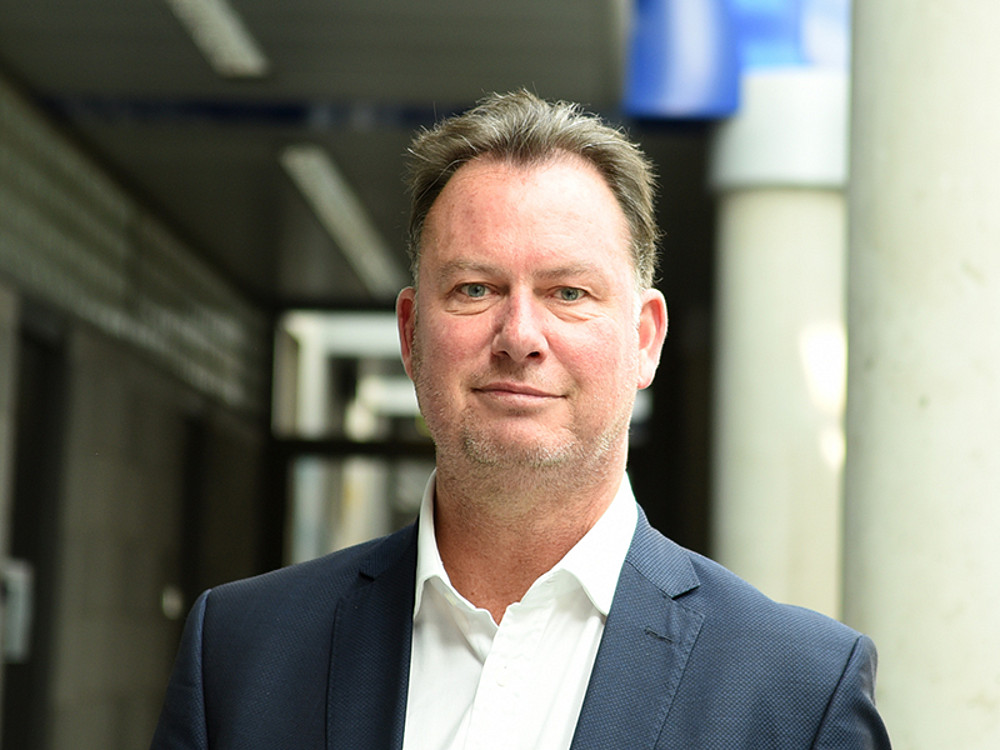
Michael Finus untersucht, wie man Staaten verbindlich zum Klimaschutz verpflichten kann. Foto: Uni Graz/Eklaude ©Uni Graz/Eklaude

Michael Finus untersucht, wie man Staaten verbindlich zum Klimaschutz verpflichten kann. Foto: Uni Graz/Eklaude

Ökonom Michael Finus untersucht, wie internationale Umweltabkommen effektiver werden

Papier ist geduldig: Das zeigen auch das Kyoto-Protokoll oder das Pariser Klimaschutzabkommen. Die unter großen Anstrengungen zustande gekommenen Dokumente erzielen in der Praxis bei weitem nicht die Wirkung, die sie eigentlich haben sollten. Michael Finus, seit 1. Juni 2018 Professor für Klima- und Umweltökonomie an der Universität Graz, erforscht, wie man solche Verträge effektiver gestalten kann. Er wendet dafür die Spieltheorie an, eine mathematische Methode, um die strategische Interaktion zwischen Individuen und Staaten abzubilden und Entscheidungen zu prognostizieren.

„Bei globalen Abkommen ist es wichtig, dass möglichst alle – vor allem die großen – Nationen beitreten. Man müsste außerdem glaubwürdige Sanktionen einführen, damit sich die Staaten dann auch an den Pakt halten“, fasst Finus zusammen. Er schlägt etwa ein Pfandsystem für Industrieländer vor: Die einzelnen Staaten zahlen einen vereinbarten Betrag ein, der verzinst wird, falls sich die Staaten an die vorher ausverhandelte Maßnahmen zum Klimaschutz halten. Wer das nicht tut, bekommt nur einen Teil des Geldes wieder zurück, der Rest fließt in die Entwicklungshilfe oder an die anderen Staaten als Kompensation zurück. Die Länder des globalen Südens wiederum bekommen nur dann eine Unterstützung, wenn sie sich an das Abkommen halten.
Zusätzlich plädiert der Ökonom für sogenannte Grenzsteueranpassungen, um Staaten, die etwa auf nachhaltige – und damit teurere – Produktion setzen, gegen unlauteren Wettbewerb („Öko-Dumping“) zu schützen. „Diese Nationen sollen auf weniger umweltfreundlich hergestellte Importe einen Ausgleichszoll einheben dürfen, damit für ‚gute‘ und klimaschädliche Waren dieselben Marktbedingungen herrschen“, führt Finus aus. Exporte sollten im Gegenzug insofern subventioniert werden, als dass den Firmen ein Teil der Steuern erlassen wird. „Dieser Vorschlag von UmweltschützerInnen stieß anfangs auf große Skepsis, mittlerweile stehen der Internationale Währungsfonds und die Weltbank dem aber positiv gegenüber“, berichtet der Experte.

Michael Finus, der sich 2005 an der deutschen Universität Hagen im Fach Volkswirtschaft habilitierte, war elf Jahre lang an mehreren Universitäten in Großbritannien tätig. Der Klima-Schwerpunkt der Universität in Forschung und Lehre hat ihn dazu motiviert, sich für die Professur zu bewerben: „Graz liegt im Herzen Europas und kann DIE Adresse für interdisziplinäre Klimaforschung werden. Das ist auch für internationale Studierende sehr attraktiv.“

 

created by Dagmar Eklaude

Related news

Staying fit during the holidays: summer sports on the University of Graz campus

The Kleeblattlauf is not the end of the fitness term. Following last year’s successful launch, the University of Graz is once again offering summer sports on campus this year. From 30 June to 16 July 2026, there will be a free exercise programme in the open air. On the shady Südwiese (between the main building and Universitätsplatz 2), anyone interested can get in shape in the afternoons with body workouts, fascia training and yoga.

Getting even hotter: Researchers predict global warming of 1.7 degrees by 2027

While Europe is currently sweltering in the heat, global temperatures are also rising towards concerning record levels. In 2026, Earth’s surface air temperature is expected to reach 1.62 degrees, and in 2027 even 1.71 degrees Celsius above pre-industrial levels. The long-term temperature rise – an average over a 20-year period – is predicted to exceed the 1.5-degree threshold of the Paris Agreement as of 2026 already. For the first time, researchers at the University of Graz have been able to make such a forecast so far in advance. The intensifying El Niño climate event favors forecast skill and thereby facilitates a reliable computation.

Forest fire at Rosenhain: Volunteer fire brigade carried out an evacuation drill at the Jesuit refectory

Thick smoke in the stairwell, flames at the edge of the forest, people missing in the Jesuit refectory at the University of Graz: at Rosenhain, the Graz Volunteer Fire Brigade carried out a drill simulating a scenario that is becoming increasingly realistic given the heat and drought

Full effort in the heat: the Sports Centre was in full swing at the Kleeblattlauf

On 19 June 2026, 2,000 runners and hundreds of supporters made their way to the Rosenhain for a sporting end-of-term event.

Begin of page section:
Additional information:

University of Graz
Universitaetsplatz 3
8010 Graz
Austria
  • Contact
  • Web Editors
  • Moodle
  • UNIGRAZonline
  • Imprint
  • Data Protection Declaration
  • Accessibility Declaration
Weatherstation
Uni Graz

End of this page section. Go to overview of page sections

End of this page section. Go to overview of page sections

Begin of page section:

End of this page section. Go to overview of page sections

