Begin of page section:
Page sections:

  • Go to contents (Accesskey 1)
  • Go to position marker (Accesskey 2)
  • Go to main navigation (Accesskey 3)
  • Go to sub navigation (Accesskey 4)
  • Go to additional information (Accesskey 5)
  • Go to page settings (user/language) (Accesskey 8)
  • Go to search (Accesskey 9)

End of this page section. Go to overview of page sections

Begin of page section:
Page settings:

English en
Deutsch de
Search
Login

End of this page section. Go to overview of page sections

Begin of page section:
Search:

Search for details about Uni Graz
Close

End of this page section. Go to overview of page sections


Search

Begin of page section:
Main navigation:

Page navigation:

  • University

    University
    • About the University
    • Organisation
    • Faculties
    • Library
    • Working at University of Graz
    • Campus
    Developing solutions for the world of tomorrow - that is our mission. Our students and our researchers take on the great challenges of society and carry the knowledge out.
  • Research Profile

    Research Profile
    • Our Expertise
    • Research Questions
    • Research Portal
    • Promoting Research
    • Research Transfer
    • Ethics in Research
    Scientific excellence and the courage to break new ground. Research at the University of Graz creates the foundations for making the future worth living.
  • Studies

    Studies
    • Prospective Students
    • Students
  • Community

    Community
    • International
    • Location
    • Research and Business
    • Alumni
    The University of Graz is a hub for international research and brings together scientists and business experts. Moreover, it fosters the exchange and cooperation in study and teaching.
  • Spotlight
Topics
  • Our digital Advent calendar
  • Sustainable University
  • Researchers answer
  • Work for us
Close menu

End of this page section. Go to overview of page sections

Begin of page section:
You are here:

University of Graz News Wirksam

End of this page section. Go to overview of page sections

Friday, 22 March 2019

Wirksam

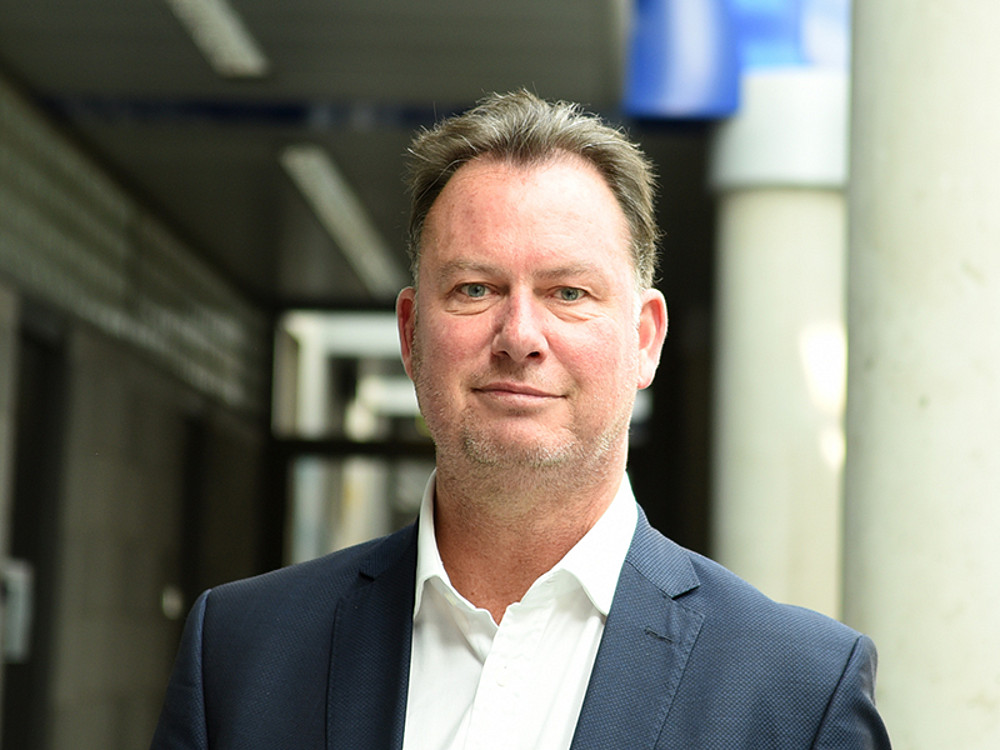
Michael Finus untersucht, wie man Staaten verbindlich zum Klimaschutz verpflichten kann. Foto: Uni Graz/Eklaude ©Uni Graz/Eklaude

Michael Finus untersucht, wie man Staaten verbindlich zum Klimaschutz verpflichten kann. Foto: Uni Graz/Eklaude

Ökonom Michael Finus untersucht, wie internationale Umweltabkommen effektiver werden

Papier ist geduldig: Das zeigen auch das Kyoto-Protokoll oder das Pariser Klimaschutzabkommen. Die unter großen Anstrengungen zustande gekommenen Dokumente erzielen in der Praxis bei weitem nicht die Wirkung, die sie eigentlich haben sollten. Michael Finus, seit 1. Juni 2018 Professor für Klima- und Umweltökonomie an der Universität Graz, erforscht, wie man solche Verträge effektiver gestalten kann. Er wendet dafür die Spieltheorie an, eine mathematische Methode, um die strategische Interaktion zwischen Individuen und Staaten abzubilden und Entscheidungen zu prognostizieren.

„Bei globalen Abkommen ist es wichtig, dass möglichst alle – vor allem die großen – Nationen beitreten. Man müsste außerdem glaubwürdige Sanktionen einführen, damit sich die Staaten dann auch an den Pakt halten“, fasst Finus zusammen. Er schlägt etwa ein Pfandsystem für Industrieländer vor: Die einzelnen Staaten zahlen einen vereinbarten Betrag ein, der verzinst wird, falls sich die Staaten an die vorher ausverhandelte Maßnahmen zum Klimaschutz halten. Wer das nicht tut, bekommt nur einen Teil des Geldes wieder zurück, der Rest fließt in die Entwicklungshilfe oder an die anderen Staaten als Kompensation zurück. Die Länder des globalen Südens wiederum bekommen nur dann eine Unterstützung, wenn sie sich an das Abkommen halten.
Zusätzlich plädiert der Ökonom für sogenannte Grenzsteueranpassungen, um Staaten, die etwa auf nachhaltige – und damit teurere – Produktion setzen, gegen unlauteren Wettbewerb („Öko-Dumping“) zu schützen. „Diese Nationen sollen auf weniger umweltfreundlich hergestellte Importe einen Ausgleichszoll einheben dürfen, damit für ‚gute‘ und klimaschädliche Waren dieselben Marktbedingungen herrschen“, führt Finus aus. Exporte sollten im Gegenzug insofern subventioniert werden, als dass den Firmen ein Teil der Steuern erlassen wird. „Dieser Vorschlag von UmweltschützerInnen stieß anfangs auf große Skepsis, mittlerweile stehen der Internationale Währungsfonds und die Weltbank dem aber positiv gegenüber“, berichtet der Experte.

Michael Finus, der sich 2005 an der deutschen Universität Hagen im Fach Volkswirtschaft habilitierte, war elf Jahre lang an mehreren Universitäten in Großbritannien tätig. Der Klima-Schwerpunkt der Universität in Forschung und Lehre hat ihn dazu motiviert, sich für die Professur zu bewerben: „Graz liegt im Herzen Europas und kann DIE Adresse für interdisziplinäre Klimaforschung werden. Das ist auch für internationale Studierende sehr attraktiv.“


created by Dagmar Eklaude

Related news

Fair distribution: Researchers determine just greenhouse gas budgets for all EU regions

Ten years ago, on 12 December 2015, the Paris Climate Agreement was signed at the UN Climate Conference. In order to limit global warming to well below two degrees, only a certain amount of CO2 may be emitted worldwide. While the focus was originally on national emission targets, more than 200 subnational regions and almost 300 cities have now adopted their own targets. But how many emissions are they fairly entitled to? Researchers at the University of Graz have now developed transparent criteria for fair distribution at the subnational level for the first time and determined corresponding greenhouse gas budgets for all European regions. The paper was published today in the scientific journal Nature Communications.

Chemical Christmas show at the University of Graz: An explosive evening at the Schauspielh

At the beginning of December, the University of Graz transformed the theater into a laboratory: as part of “Chemical Life,” teacher training students staged a chemical Christmas show for Styrian school classes—complete with ethanol rockets, nitrogen snow, and glowing effects. An evening designed to inspire interest in studying chemistry.

Train by train: Koralm railway accelerates exchange between the Universities

Lectures at the University of Klagenfurt in the morning, seminars at the University of Graz in the afternoon: Austria's longest tunnel and a journey time of around 45 minutes make it easy. The Koralm railway increases the speed of networking between the two university locations. The collaboration builds on existing cooperation - for example in the areas of teacher training, Slavic studies and as employers, the universities are well coordinated.

On the trail of the Big Bang: University of Graz receives 1.5 million euros for doctoral programmes

The Austrian Science Fund FWF has selected the Doctoral Programme in Theoretical Particle Physics at the University of Graz for funding from the Doc.funds. Six young scientists will be funded for 3.5 years. They will gain fundamentally new insights into the origins of the world.

Begin of page section:
Additional information:

University of Graz
Universitaetsplatz 3
8010 Graz
Austria
  • Contact
  • Web Editors
  • Moodle
  • UNIGRAZonline
  • Imprint
  • Data Protection Declaration
  • Accessibility Declaration
Weatherstation
Uni Graz

End of this page section. Go to overview of page sections

End of this page section. Go to overview of page sections

Begin of page section:

End of this page section. Go to overview of page sections