Begin of page section:
Page sections:

  • Go to contents (Accesskey 1)
  • Go to position marker (Accesskey 2)
  • Go to main navigation (Accesskey 3)
  • Go to sub navigation (Accesskey 4)
  • Go to additional information (Accesskey 5)
  • Go to page settings (user/language) (Accesskey 8)
  • Go to search (Accesskey 9)

End of this page section. Go to overview of page sections

Begin of page section:
Page settings:

English en
Deutsch de
Search
Login

End of this page section. Go to overview of page sections

Begin of page section:
Search:

Search for details about Uni Graz
Close

End of this page section. Go to overview of page sections


Search

Begin of page section:
Main navigation:

Page navigation:

  • University

    University
    • About the University
    • Organisation
    • Faculties
    • Library
    • Working at University of Graz
    • Campus
    Developing solutions for the world of tomorrow - that is our mission. Our students and our researchers take on the great challenges of society and carry the knowledge out.
  • Research Profile

    Research Profile
    • Our Expertise
    • Research Questions
    • Research Portal
    • Promoting Research
    • Research Transfer
    • Ethics in Research
    • Commission for Scientific Integrity
    Scientific excellence and the courage to break new ground. Research at the University of Graz creates the foundations for making the future worth living.
  • Studies

    Studies
    • Prospective Students
    • Students
    • Post-registration Law
  • Community

    Community
    • International
    • Location
    • Research and Business
    • Alumni
    The University of Graz is a hub for international research and brings together scientists and business experts. Moreover, it fosters the exchange and cooperation in study and teaching.
Topics
  • Sustainable University
  • Researchers answer
  • Work for us
Close menu

End of this page section. Go to overview of page sections

Begin of page section:
You are here:

University of Graz News Wissenschaftler:innen klimafreundlich unterwegs: „Green Academia Award“ verliehen

End of this page section. Go to overview of page sections

Wednesday, 11 October 2023

Wissenschaftler:innen klimafreundlich unterwegs: „Green Academia Award“ verliehen

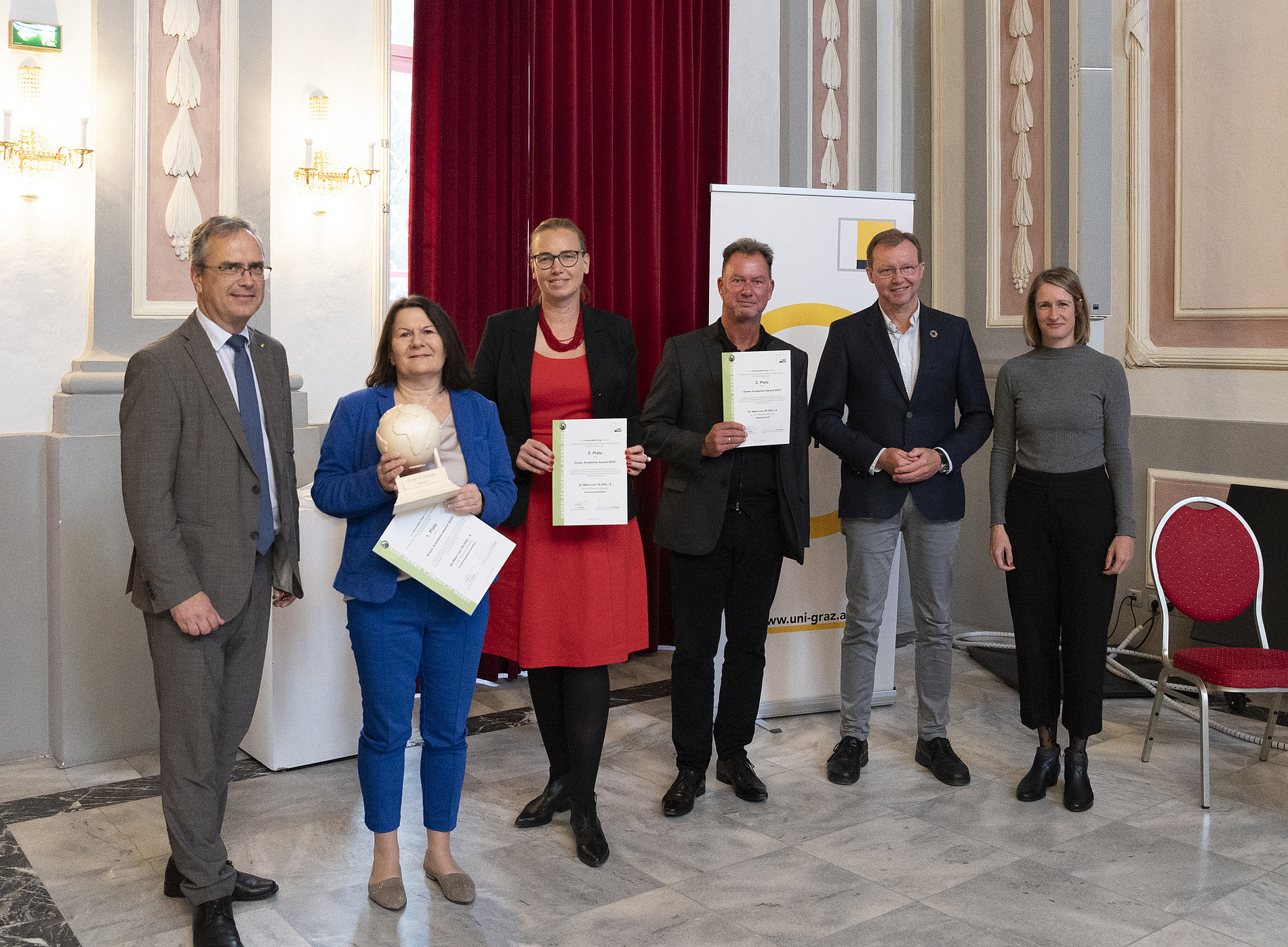
Der „Green Academia Award“ der Uni Graz ging heuer an die Erziehungswissenschaften. Rektor Peter Riedler (links) und Klimaforscher Gottfried Kirchengast (rechts) überreichten die Trophäe aus Holz an Hannelore Reicher und Arno Heimgartner. Foto: Uni Graz/Angele

Der „Green Academia Award“ der Uni Graz ging heuer an die Erziehungswissenschaften. Rektor Peter Riedler (links) und Klimaforscher Gottfried Kirchengast (rechts) überreichten die Trophäe aus Holz an Hannelore Reicher und Arno Heimgartner. Foto: Uni Graz/Angele

Hervorragend forschen und dabei klimafreundlich unterwegs – mit dem „Green Academia Award“ zeichnete die Universität Graz am 10. Oktober 2023 zum allerersten Mal jene Wissenschaftszweige aus, die nachhaltige Mobilität und ausgezeichnete Forschungsleistung besonders erfolgreich miteinander verbinden. Am besten gelang dies im Jahr 2022 im Vergleich zu den Jahren vor 2020 den Erziehungswissenschaften, die damit einen wichtigen Beitrag zur Erreichung der Klimaziele der Uni Graz beitragen.

„Wir wollen als eine der ersten Universitäten Österreichs echte Klimaneutralität erreichen“, begründet Rektor Peter Riedler die Initiative. So sollen bis 2030 die Treibhausgase, die am Campus entstehen, drastisch reduziert werden. Bis 2040 will die Uni Graz mindestens 90 Prozent der Emissionen abbauen. Diese Zielsetzung unterstützt der „Green Academia Award“, der nach der heurigen Premiere im Rahmen des Nachhaltigkeitstages jährlich verliehen wird.

Forscher:innen des Wegener Center für Klima und Globalen Wandel haben zur Vergabe des Preises eine spezielle Berechnungsmethode entwickelt, die gemeinsam mit der Abteilung für Leistungs- und Qualitätsmanagement umgesetzt wird. Die Basis bildet eine Kombination aus der Erreichung der Klimaschutzziele im Bereich internationale Bedienstetenmobilität und der Forschungsziele auf dem Gebiet der Qualitätspublikationen.

Die Erziehungswissenschaften erfüllten diese Kriterien im Jahr 2022 im Vergleich zu ihren Leistungen im Referenzzeitraum 2015-2019 am besten. Sie erhielten 50.000 Euro, um weitere nachhaltige Maßnahmen zu setzen.
Platz 2 ging an die Volkswirtschaft, die mit 20.000 Euro prämiert wurde, Platz 3 an die Kunstwissenschaften, die mit 10.000 Euro ausgezeichnet wurden.
https://klimaneutral.uni-graz.at

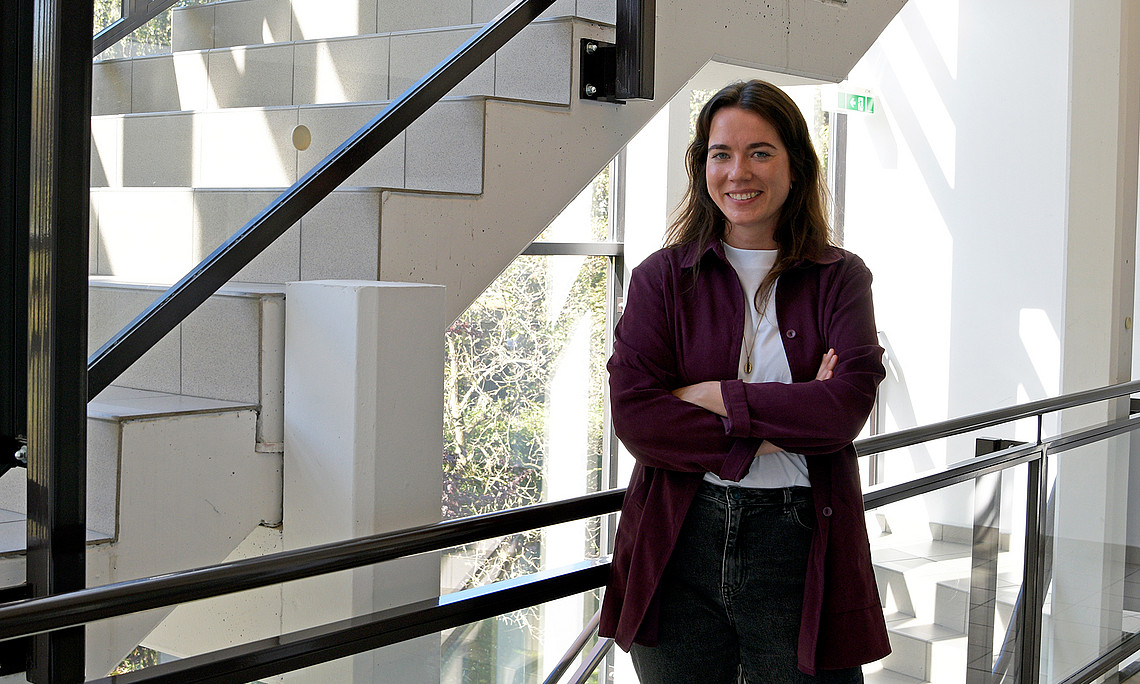
Rektor Riedler (links), Gottfried Kirchengast und Julia Danzer vom Wegener Center (rechts) mit VertreterInnen der drei besten Wissenschaftszweige: Hannelore Reicher für Erziehungswissenschaften, Cornelia Logemann für Kunstwissenschaften und Michael Finus für Volkswirtschaft (v. l.) Foto: Uni Graz/Angele
created by Andreas Schweiger

Related news

Studying at the University of Graz: How to enrol

Ready for a new chapter in your life with the start of your studies at the University of Graz in the winter semester 2026/27? Here you will find information on deadlines, admission procedures, registration, and everything else you need to successfully start your studies in the fall.

Europe Day: Strengthening international expertise with Arqus

On 9 May, the spotlight will be on Europe. At the University of Graz, European cooperation is also a tangible part of everyday student life – not least through the Arqus university alliance. Master’s and PhD students can currently register for the Arqus micro-credential in ‘Advanced Creative Thinking and Communication’.

A substantial community: the key role of soil crusts in the earth system

They are often overshadowed by the plant world: lichens, fungi, mosses and bacteria, which form unique communities on rocks and trees or as soil crusts. Bettina Weber from the University of Graz is bringing this biological alliance into the research spotlight. Her research shows that these communities form an essential part of the Earth’s critical zone and play a key role in the interactions between land and atmosphere. Bettina Weber was honoured by the European Geosciences Union for her groundbreaking research at the beginning of May.

The digital world of tomorrow: University of Graz works with people to shape the future

Digitalisation is supposed to make everything better: artificial intelligence that even organises travel. The car that drives itself. Robots that care for us in our old age. But what kind of future do people actually want? What role should technology play in this? The University of Graz is exploring these questions through a new research facility. At the Graz Sociodigital and Participatory Futures Studio – or GraSP Futures Studio for short – young and old work together with researchers to design visions of the future that also critically examine technical innovations.

Begin of page section:
Additional information:

University of Graz
Universitaetsplatz 3
8010 Graz
Austria
  • Contact
  • Web Editors
  • Moodle
  • UNIGRAZonline
  • Imprint
  • Data Protection Declaration
  • Accessibility Declaration
Weatherstation
Uni Graz

End of this page section. Go to overview of page sections

End of this page section. Go to overview of page sections

Begin of page section:

End of this page section. Go to overview of page sections