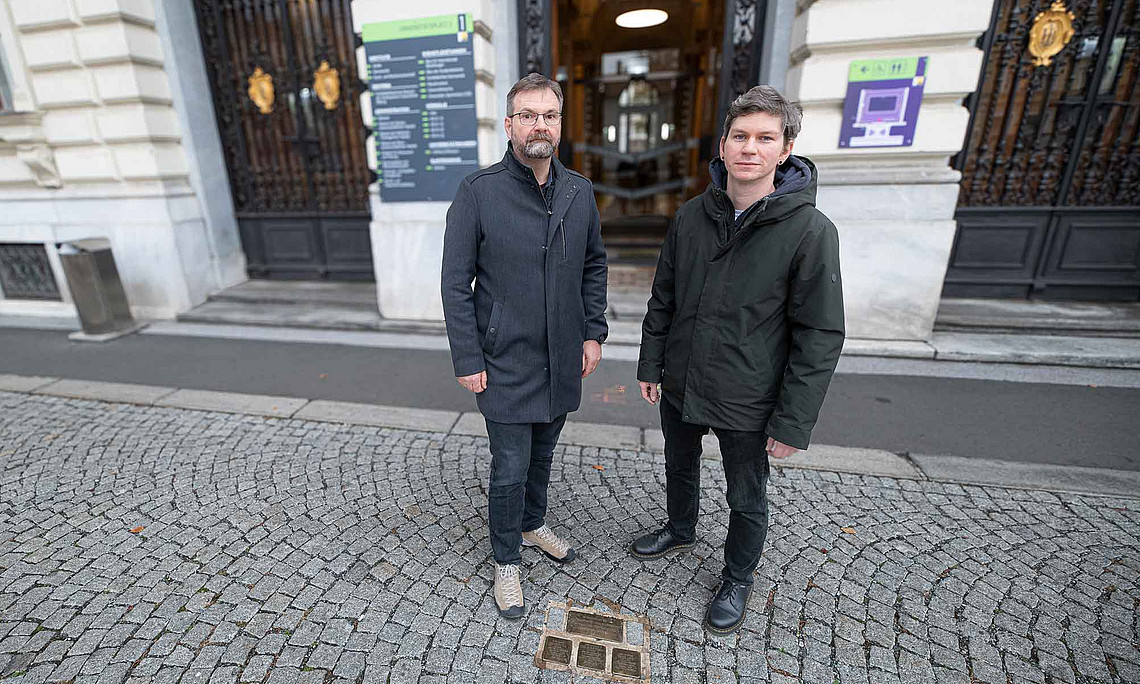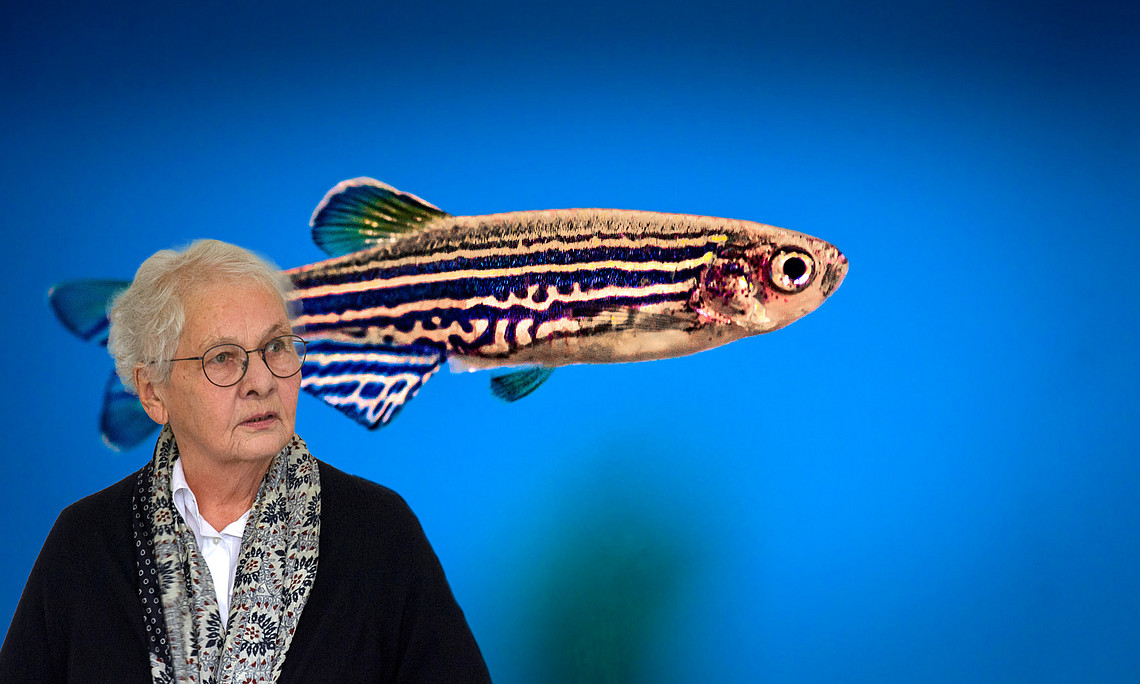


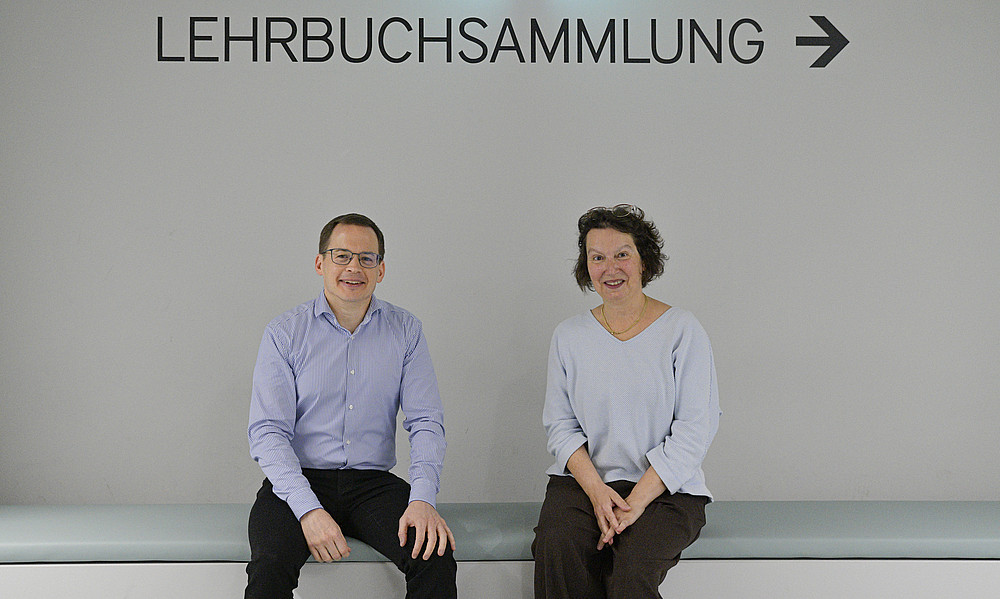
The subject matter covered in Alexandra Fukari’s and Sandro Keller’s courses could not be more different, yet the translation studies scholar and the biophysicist have one thing in common: a love of teaching. In recognition of this shared passion and the success of their teaching methods, they were awarded the University of Graz Teaching Prizes for the 2025/2026 academic year on 5 November.
“I’ve simply been teaching the way I’ve done for decades,” says Alexandra Fukari. In her course “French: Basic Translation Skills 2c” at the Institute for Theoretical and Applied Translation Studies, the focus is not only on expanding and deepening transcultural communication skills between French and German, and on translating and interpreting between these two languages, but also on independent learning and teamwork. “I want students to enjoy coming to class and to take something away from it,” explains Fukari. One advantage of the module is the manageable number of participants: “Ten to 15 people – no more than that.” This creates an atmosphere that allows for discussion of social issues relating to diversity and inclusion.
Basic tools of the natural sciences
Sandro Keller from the Institute of Molecular Biosciences takes a very different approach. His compulsory lecture, ‘Physical Chemistry for Students of Molecular Biology’, was attended by 236 students last academic year. “To understand the processes of life at a molecular level, you need chemistry and physics as tools,” emphasises the University of Graz researcher. Many students initially perceive physical chemistry as a “daunting subject”. “I’ve been teaching this lecture for over ten years. And after every session, I make notes on what I could do better.” Over time, this has led to a formula for success: when teaching the subject matter, Keller relies on clear structures, understandable explanations, humour and concrete links to research and everyday life. “I try to meet the students where they are,” he explains. Abstract models, for example, are linked to real data from the laboratory, current research questions or examples from TV series. All lecture sessions are also streamed and recorded, materials are made available digitally well in advance, and several exam dates are offered.
You only learn by making mistakes!
Both lecturers agree that mistakes are an integral part of successful learning. Whether discussing topics in a group or working through calculations on the blackboard, students are encouraged to think for themselves, ask questions and even point out mistakes to the lecturers. “Even incorrect approaches are used to show how one can work one’s way out of a mental dead end,” reports the biophysicist. The strong demand for the optional supplementary module ‘Biophysical Chemistry’ also demonstrates that this approach motivates students: Last semester, more than two-thirds of the 236 students took part. Alexandra Fukari also makes a conscious effort to accommodate different life circumstances: online participation, flexibly arranged sessions and exam dates are designed to make studying more compatible with, for example, work or care responsibilities. Mental health is also an integral part of her approach to teaching. The aim is to reduce the pressure to perform without losing sight of the subject-specific learning objectives.