



Begin of page section:
Page sections:

  • Go to contents (Accesskey 1)
  • Go to position marker (Accesskey 2)
  • Go to main navigation (Accesskey 3)
  • Go to sub navigation (Accesskey 4)
  • Go to additional information (Accesskey 5)
  • Go to page settings (user/language) (Accesskey 8)
  • Go to search (Accesskey 9)

End of this page section. Go to overview of page sections

Begin of page section:
Page settings:

English en
Deutsch de
Search
Login

End of this page section. Go to overview of page sections

Begin of page section:
Search:

Search for details about Uni Graz
Close

End of this page section. Go to overview of page sections


Search

Begin of page section:
Main navigation:

Page navigation:

  • University

    University
    • About the University
    • Organisation
    • Faculties
    • Library
    • Working at University of Graz
    • Campus
    Developing solutions for the world of tomorrow - that is our mission. Our students and our researchers take on the great challenges of society and carry the knowledge out.
  • Research Profile

    Research Profile
    • Our Expertise
    • Research Questions
    • Research Portal
    • Promoting Research
    • Research Transfer
    • Ethics in Research
    • Commission for Scientific Integrity
    Scientific excellence and the courage to break new ground. Research at the University of Graz creates the foundations for making the future worth living.
  • Studies

    Studies
    • Prospective Students
    • Students
  • Community

    Community
    • International
    • Location
    • Research and Business
    • Alumni
    The University of Graz is a hub for international research and brings together scientists and business experts. Moreover, it fosters the exchange and cooperation in study and teaching.
Topics
  • Sustainable University
  • Researchers answer
  • Work for us
Close menu

End of this page section. Go to overview of page sections

Begin of page section:
You are here:

University of Graz News How much can a democracy take? Philosopher Julian Müller on strengths and weaknesses

End of this page section. Go to overview of page sections

Friday, 17 January 2025

How much can a democracy take? Philosopher Julian Müller on strengths and weaknesses

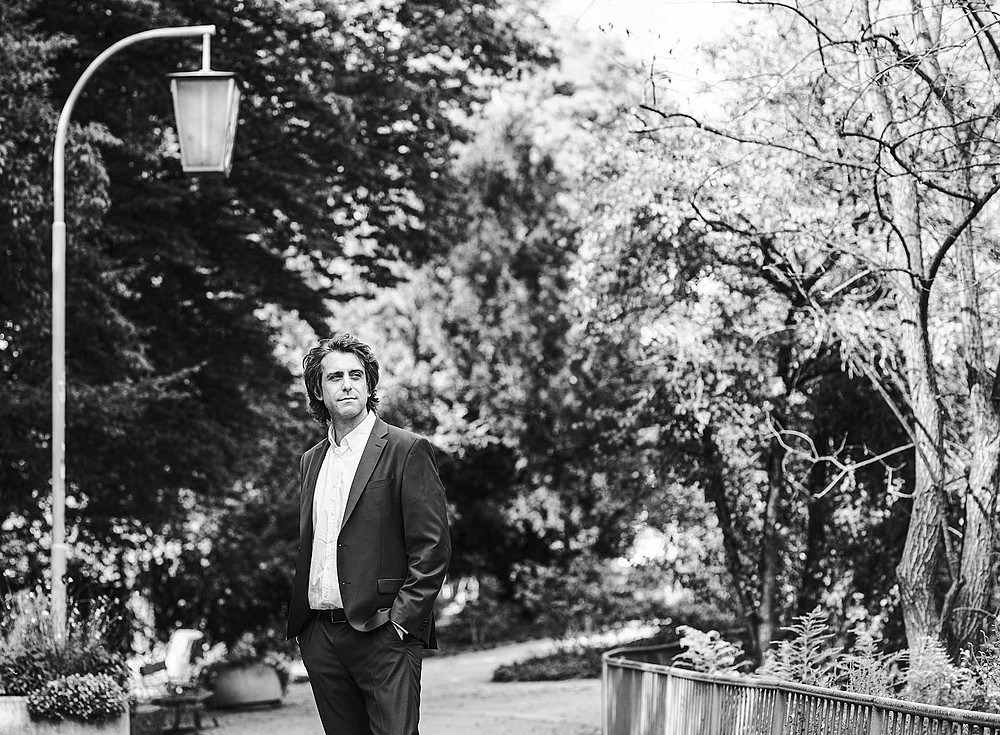
Julian Müller ©Uni Graz/Tzivanopoulos

Julian Müller, Professor of Political Philosophy: "Democracy can withstand a lot. The democratic constitutional state even more so." Photo: University of Graz/Tzivanopoulos

For some he is a saviour, for others a destroyer of the democratic USA. With the start of Donald Trump's second presidency, many are painting a gloomy picture. Julian Müller, Professor of Political Philosophy at the University of Graz, warns against exaggerated doom and gloom. However, he also recognises the need for action, as liberal democracy is being put to the test.

As a professor of political philosophy, you focus on the strengths of liberal democracy. How weak is it in the face of a US President Trump?
Julian Müller: We have to remember that the world has already experienced four years of Donald Trump and has not come to an end. The situation is currently highly emotionally charged. I experienced something similar when I was a post-doc at Brown University during Trump's first election in 2016. Students came back crying from the Democratic election parties.

So can we be more relaxed?
Müller: I can certainly see the possibility that the presidency will damage the foundations of democracy. Liberal democracy thrives on a healthy culture of debate, on virtues such as honesty and seriousness. Sounds boring, but it is necessary. Trump and Musk, on the other hand, rely on strong emotions and riot culture. That's very entertaining, of course, but ultimately also highly dangerous.

Do liberal politicians even stand a chance in this match?
Müller: Centrist politicians are not allowed to use the same means as Trump and are therefore at a clear disadvantage. However, strategic mistakes were also made in the USA. Too little attention was paid to the concerns of the working population. We are seeing the same in Europe. Centrist parties are now being punished for this.

Does this mean that populists like Trump & Co. can govern without risk?
Müller: No, because if Trump drives the economy to the wall and people's incomes fall, he will quickly lose support. In the end, the population only cares about one thing: results. So Trump has to deliver.

So must and can a democracy withstand a lot?
Müller: Democracy can withstand a lot. The democratic constitutional state even more so. The problem of demagogues and populists is as old as democracy itself. The founding fathers of the USA therefore wisely limited the term of office of presidents to eight years.

After all, the people are always right, aren't they? 
Müller: I agree with Sir Karl Popper, who said: Anyone can be wrong. That also applies to the people.

created by Interview: Andreas Schweiger

Related news

Uni Vibes: Where science and art come together

At the third Uni Vibes event hosted by the University of Graz, visitors enjoyed science, music and performances on campus. Guided tours focusing on democracy, educational sciences and the Graz Centre of Physics demonstrated how research shapes community life, urban development and culture.

Protest against budget cuts: universities send a united message in Graz

On 28 May, thousands of students, researchers and staff from all Styrian universities demonstrated in Graz against the announced budget cuts. University management and student representatives warned of severe consequences for research, teaching and the region’s standing as a centre of academic excellence.

Overcoming boundaries: Can we manage without prisons and camps?

The US immigration agency ICE has sparked fear and horror. Not only are migrants criminalised and brutally persecuted, but earlier this year, ICE officers killed two US citizens in Minneapolis. Against the backdrop of these dramatic events, the University of Graz is shedding light on the role of deportation and detention centres as part of the international conference ‘Camps, Belonging, and Abolition Democracy’. Researchers aim to develop scenarios for how a future without prisons and the death penalty can become a reality.

Philosopher Julian Müller: Populism and liberal democracy do not go together

Trump, Orban, Meloni, from the AfD to the Rassemblement National - right-wing populism is on the rise in Europe and other parts of the world. That is frightening. Why? Because it pretends to know what the only right thing to do is and leaves no room for other opinions. This threatens our liberal democracy. But what does liberal actually mean? Julian F. Müller, Professor of Political Philosophy at the University of Graz since April 2024, explores the question: "What unites liberal cosmopolitans apart from Netflix, Pho Ga, Apple watches, smoothies and bouldering in bunkers?" The researcher is certain that we can only protect our society, if we understand what characterises liberal thinking.

Begin of page section:
Additional information:

University of Graz
Universitaetsplatz 3
8010 Graz
Austria
  • Contact
  • Web Editors
  • Moodle
  • UNIGRAZonline
  • Imprint
  • Data Protection Declaration
  • Accessibility Declaration
Weatherstation
Uni Graz

End of this page section. Go to overview of page sections

End of this page section. Go to overview of page sections

Begin of page section:

End of this page section. Go to overview of page sections