



Begin of page section:
Page sections:

  • Go to contents (Accesskey 1)
  • Go to position marker (Accesskey 2)
  • Go to main navigation (Accesskey 3)
  • Go to sub navigation (Accesskey 4)
  • Go to additional information (Accesskey 5)
  • Go to page settings (user/language) (Accesskey 8)
  • Go to search (Accesskey 9)

End of this page section. Go to overview of page sections

Begin of page section:
Page settings:

English en
Deutsch de
Search
Login

End of this page section. Go to overview of page sections

Begin of page section:
Search:

Search for details about Uni Graz
Close

End of this page section. Go to overview of page sections


Search

Begin of page section:
Main navigation:

Page navigation:

  • University

    University
    • About the University
    • Organisation
    • Faculties
    • Library
    • Working at University of Graz
    • Campus
    Developing solutions for the world of tomorrow - that is our mission. Our students and our researchers take on the great challenges of society and carry the knowledge out.
  • Research Profile

    Research Profile
    • Our Expertise
    • Research Questions
    • Research Portal
    • Promoting Research
    • Research Transfer
    • Ethics in Research
    • Commission for Scientific Integrity
    Scientific excellence and the courage to break new ground. Research at the University of Graz creates the foundations for making the future worth living.
  • Studies

    Studies
    • Prospective Students
    • Students
    • Welcome Weeks for First Year Students
  • Community

    Community
    • International
    • Location
    • Research and Business
    • Alumni
    The University of Graz is a hub for international research and brings together scientists and business experts. Moreover, it fosters the exchange and cooperation in study and teaching.
Topics
  • Sustainable University
  • Researchers answer
  • Work for us
Close menu

End of this page section. Go to overview of page sections

Begin of page section:
You are here:

University of Graz News Whale Strandings

End of this page section. Go to overview of page sections

Tuesday, 14 September 2021

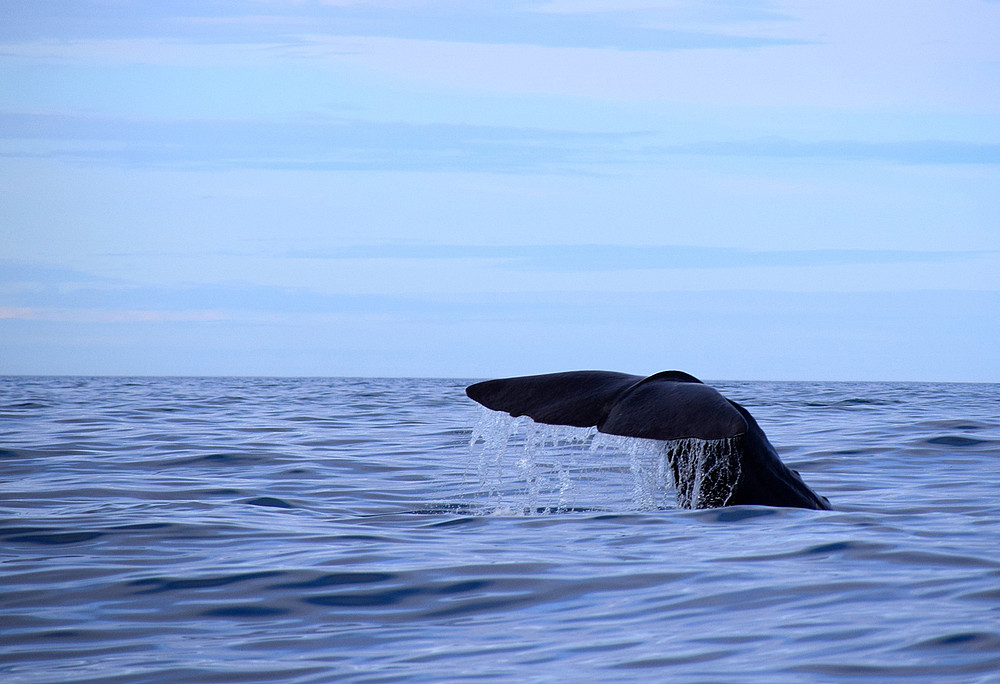
Whale Strandings

Foto: Pixabay.com/MartinKra

Foto: Pixabay.com/MartinKra

Researchers at the University of Graz believe they are caused by high levels of Mercury in the Oceans

At the beginning of September this year, dozens of porpoise carcasses were washed ashore on several Dutch islands. No isolated case, says Jörg Feldmann, environmental chemist at the University of Graz. Although the cause behind the mass mortality of these mammals is still largely unknown, Feldmann and his team suspect that the neurotoxin mercury killed them. Together with colleagues from Scotland and France, they collected the first evidence to support their suspicion by extracting the livers from long-finned pilot whales and sperm whales. Liver cell analyses in a 50-nanometre range with the NanoSIMS method revealed the presence of particulate mercury in the cells. This discovery could help prevent mysterious whale strandings in the future. First results of the new mercury analysis method have now been published in Analytical Chemistry, a renowned professional journal.

“Mercury obviously plays a central role in this process,” Feldmann explains. Concentrations of the neurotoxin in seawater, caused by the combustion of coal and other industrial waste, have tripled in the last few centuries. “The higher the creature’s level in the food chain, the greater the concentration of mercury in its liver cells and brain, and whales are close to the top of the chain,” he underlines. ”The huge marine mammals display a concentration 1000 times greater than their fellow sea dwellers, a fact that is, however, considered harmless.” The key factor is selenium: this substance is an essential trace element for mammals since it protects cells from oxidative stress and is important for brain metabolism. It binds readily with mercury and at the same time counteracts the element’s toxicity by making it insoluble. “We found that both substances combine to yield newly formed micro- and nanoparticles called mercury selenide,” says Feldmann. However, the transformative process does not happen without an adverse effect. “The selenium bound by mercury is then lacking as a protective substance for the brain. This lack could lead to disease in whales such as epilepsy, resulting in disorientation and stranding,” the environmental chemist suspects. Whales are gregarious animals that more or less synchronize their behavior – for better or worse. The group strands together. Further analyses would enable Feldmann to unravel the whales’ behavior in more detail: “Maybe one day we will have targeted measures which enable us to prevent whole groups of these marine giants from stranding, and to do that we need to know exactly what triggers this behavior”.

Development of Mercury Analysis by NanoSIMS for the Localization of Mercury–Selenium Particles in Whale Liver. Maria Angels Subirana, Lhiam Paton, James Hall, Andrew Brownlow, Eva M. Krupp, Jörg Feldmann, and Dirk Schaumlöffel. Analytical Chemistry Article ASAP
DOI: 10.1021/acs.analchem.1c02769

 

created by Konstantin Tzivanopoulos

Related news

Electrifying: Researchers film the first moments on the way from light to electricity

Physicists at the University of Graz (Austria), in collaboration with colleagues from Marburg University and Forschungszentrum Jülich (Germany), have achieved a scientific breakthrough. For the first time, the generation of electrical energy from light has been filmed and described theoretically. This work is of far-reaching significance, not least for optimising sustainable energy production from photovoltaics. This is because it provides fundamental building blocks for understanding the physical processes that take place, for example, in organic solar cells. The paper was published in the journal Physical Review X, one of the world’s most prestigious physics journals.

University of Graz: Working together to make Styria a sustainable centre of learning

Round table calls for sustainable funding for the 2028–2030 performance agreement period between the five Styrian universities and the federal government.

How can we teach using YouTube and AI? The University of Graz is strengthening media education in schools

A journey through the blood vessels using VR headsets brings biology lessons to life. An interactive quiz brings physics to life. The YouTube video explains the First World War. Whilst mobile phones are increasingly being banned from the classroom, social media platforms, apps and AI are playing an ever-greater role in knowledge transfer at school. But how can teaching with media be made even more effective? What are the challenges in media-based teaching? At the University of Graz, researchers are discussing these issues at a conference being held in Austria for the first time.

Jurassic Sounds: Biologist reconstructs insect songs from 165 million years ago

It was apparently not just the roars of the dinosaurs that made up the soundscape of the animal world during the Jurassic period. Crickets and grasshoppers communicated through a variety of songs and high-pitched sounds, as Thorin Jonsson from the Institute of Biology at the University of Graz discovered together with colleagues from the universities of Lincoln, Bristol (UK), Beijing (China) and Tempe (USA). The findings on what are so far the oldest traces of sound on Earth have just been published in the journal PNAS.

Begin of page section:
Additional information:

University of Graz
Universitaetsplatz 3
8010 Graz
Austria
  • Contact
  • Web Editors
  • Moodle
  • UNIGRAZonline
  • Imprint
  • Data Protection Declaration
  • Accessibility Declaration
Weatherstation
Uni Graz

End of this page section. Go to overview of page sections

End of this page section. Go to overview of page sections

Begin of page section:

End of this page section. Go to overview of page sections


