Begin of page section:
Page sections:

  • Go to contents (Accesskey 1)
  • Go to position marker (Accesskey 2)
  • Go to main navigation (Accesskey 3)
  • Go to sub navigation (Accesskey 4)
  • Go to additional information (Accesskey 5)
  • Go to page settings (user/language) (Accesskey 8)
  • Go to search (Accesskey 9)

End of this page section. Go to overview of page sections

Begin of page section:
Page settings:

English en
Deutsch de
Search
Login

End of this page section. Go to overview of page sections

Begin of page section:
Search:

Search for details about Uni Graz
Close

End of this page section. Go to overview of page sections


Search

Begin of page section:
Main navigation:

Page navigation:

  • University

    University
    • About the University
    • Organisation
    • Faculties
    • Library
    • Working at University of Graz
    • Campus
    Developing solutions for the world of tomorrow - that is our mission. Our students and our researchers take on the great challenges of society and carry the knowledge out.
  • Research Profile

    Research Profile
    • Our Expertise
    • Research Questions
    • Research Portal
    • Promoting Research
    • Research Transfer
    • Ethics in Research
    Scientific excellence and the courage to break new ground. Research at the University of Graz creates the foundations for making the future worth living.
  • Studies

    Studies
    • Prospective Students
    • Students
  • Community

    Community
    • International
    • Location
    • Research and Business
    • Alumni
    The University of Graz is a hub for international research and brings together scientists and business experts. Moreover, it fosters the exchange and cooperation in study and teaching.
  • Spotlight
Topics
  • Our digital Advent calendar
  • Sustainable University
  • Researchers answer
  • Work for us
Close menu

End of this page section. Go to overview of page sections

Begin of page section:
You are here:

University of Graz News How the Koralm Tunnel is changing the regional economy

End of this page section. Go to overview of page sections

Tuesday, 25 November 2025

How the Koralm Tunnel is changing the regional economy

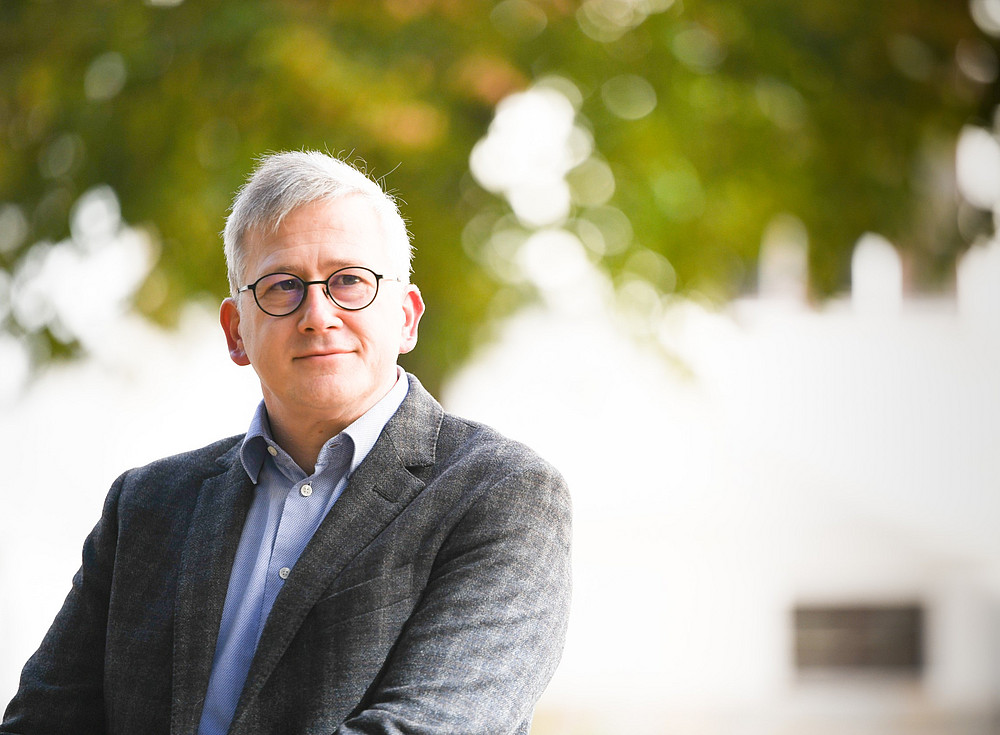
A man in a gray jacket and light blue shirt stands in front of a blurred background with green trees and a white building. ©Universität Graz/Tzivanopoulos

Economist Jörn Kleinert sees the Koralmbahn railway as an opportunity for the regions along the route. Photo: University of Graz/Tzivanopoulos

The Koralm Tunnel is revolutionizing the connection between Styria and Carinthia. Jörn Kleinert, an economist at the University of Graz, analyzes the profound effects on the economy, tourism, and the daily lives of commuters and students in both provinces.

After lectures on Friday, hop on the train and be at the Wörthersee in less than an hour. It sounds unbelievable, but with the opening of the 33-kilometer-long Koralm Tunnel, it will be possible. In 45 minutes, you can get from Graz to Klagenfurt, and in 1 hour and 5 minutes to Villach. Not only that, but the number of connections will also multiply. Whereas there used to be eight buses a day between Klagenfurt and Graz, in future there will be 29 ÖBB trains commuting between Graz, Klagenfurt, and Villach on weekdays. Westbahn will operate five trains on the route and also stop in Pörtschach. “The connection is therefore practically fully booked even at the opening,” explains Jörn Kleinert, economist at the University of Graz and expert on trade flows and European integration.

The tunnel not only connects Styria and Carinthia, but together with the Semmering Base Tunnel currently under construction, it is a central component of the Baltic-Adriatic axis. This axis stretches from the Baltic States to the Adriatic ports of Koper, Rijeka, and Split, as well as Trieste, Venice, Ravenna, and Bari. One of the corridor's goals is to shift freight transport from road to rail. However, Kleinert tempers expectations here. “Freight trains can only travel through the tunnel between midnight and 6 a.m. The rest of the time is reserved for passenger trains.”

The Baltic-Adriatic axis is supposed to split in Graz. One branch goes towards Carinthia and another towards Maribor and Ljubljana. “However, there are still major hurdles here,” says Kleinert. “The section between Leibnitz and Maribor is partly single-track, and trains can only travel very slowly between Maribor and Ljubljana. ”Work on the European project is not yet complete," says Kleinert.

New momentum

Back to the greater areas of Central Carinthia and Graz. Kleinert is convinced that life here will change permanently as a result of the rail link. He sees a similar dynamic here as between the cities of Cologne and Frankfurt. “The economic areas are moving closer together, and for many people, commuting through the tunnel will be completely normal. At the same time, the regions will retain their independence.” Kleinert sees the greater Graz area as the clear winner of this development.

With four universities, two teachers-universities and two universities for applied sciences, the Styrian capital offers a huge range of courses and is an industrial stronghold in southern Austria. The new rail link will make Graz even more attractive – for job seekers and students. However, it could also provide a boost for Carinthia in the area of tourism, as the travel time to the Carinthian lakes will be significantly reduced.

Effects on regions

The Koralm Tunnel will also create two new stations: St. Paul/Lavanttal (33 minutes to Graz) and Weststeiermark (17 minutes to Graz). Many expect this to have an impact on the regions around the stations. While Kleinert expects only minor growth impulses in the Lavanttal valley, he sees the possibility of a so-called Tullnerfeld effect in the Deutschlandsberg region. This station on the new Westbahn line in Lower Austria revitalized the region after its opening in 2012. “For this to happen in western Styria, the Park&Ride service is crucial,” says Kleinert. At least the foundation for this has been laid.

Interested in the economic impact of major projects such as the Koralm Tunnel? You can learn about the background in a degree program in economics or environmental systems science with a focus on economics at the University of Graz.

created by Roman Vilgut

Related news

On the trail of the Big Bang: University of Graz receives 1.5 million euros for doctoral programmes

The Austrian Science Fund FWF has selected the Doctoral Programme in Theoretical Particle Physics at the University of Graz for funding from the Doc.funds. Six young scientists will be funded for 3.5 years. They will gain fundamentally new insights into the origins of the world.

From trans women and knee prostheses: sports science prizes awarded

Walking better with a prosthesis, successfully getting rid of excess weight, training more effectively, more fairness for trans people in sport: these were the topics addressed by the students at the University of Graz who were awarded the sports science prizes for their Master's theses on 3 December 2025.

Influential: Rupert Baumgartner and Holger Hoff among the highly cited researchers

The number of publications in scientific journals is considered to be a measure of a researcher's scientific achievement. How often these works are cited by colleagues provides information about the relevance of the publications. Sustainability researcher Rupert Baumgartner and transdisciplinarity expert Holger Hoff from the University of Graz are among the top 1 per cent of the most cited scientists in their fields of research.

Nobel Lecture 2025: How evolution enters chemistry

During the Nobel Lecture at BioTechMed-Graz, Nobel Prize winner in Chemistry Frances H. Arnold provided insight into her research on the directed evolution of enzymes.

Begin of page section:
Additional information:

University of Graz
Universitaetsplatz 3
8010 Graz
Austria
  • Contact
  • Web Editors
  • Moodle
  • UNIGRAZonline
  • Imprint
  • Data Protection Declaration
  • Accessibility Declaration
Weatherstation
Uni Graz

End of this page section. Go to overview of page sections

End of this page section. Go to overview of page sections

Begin of page section:

End of this page section. Go to overview of page sections