Begin of page section:
Page sections:

  • Go to contents (Accesskey 1)
  • Go to position marker (Accesskey 2)
  • Go to main navigation (Accesskey 3)
  • Go to sub navigation (Accesskey 4)
  • Go to additional information (Accesskey 5)
  • Go to page settings (user/language) (Accesskey 8)
  • Go to search (Accesskey 9)

End of this page section. Go to overview of page sections

Begin of page section:
Page settings:

English en
Deutsch de
Search
Login

End of this page section. Go to overview of page sections

Begin of page section:
Search:

Search for details about Uni Graz
Close

End of this page section. Go to overview of page sections


Search

Begin of page section:
Main navigation:

Page navigation:

  • University

    University
    • About the University
    • Organisation
    • Faculties
    • Library
    • Working at University of Graz
    • Campus
    Developing solutions for the world of tomorrow - that is our mission. Our students and our researchers take on the great challenges of society and carry the knowledge out.
  • Research Profile

    Research Profile
    • Our Expertise
    • Research Questions
    • Research Portal
    • Promoting Research
    • Research Transfer
    • Ethics in Research
    Scientific excellence and the courage to break new ground. Research at the University of Graz creates the foundations for making the future worth living.
  • Studies

    Studies
    • Prospective Students
    • Students
  • Community

    Community
    • International
    • Location
    • Research and Business
    • Alumni
    The University of Graz is a hub for international research and brings together scientists and business experts. Moreover, it fosters the exchange and cooperation in study and teaching.
  • Spotlight
Topics
  • Our digital Advent calendar
  • Sustainable University
  • Researchers answer
  • Work for us
Close menu

End of this page section. Go to overview of page sections

Begin of page section:
You are here:

University of Graz News Corona and climate

End of this page section. Go to overview of page sections

Friday, 11 February 2022

Corona and climate

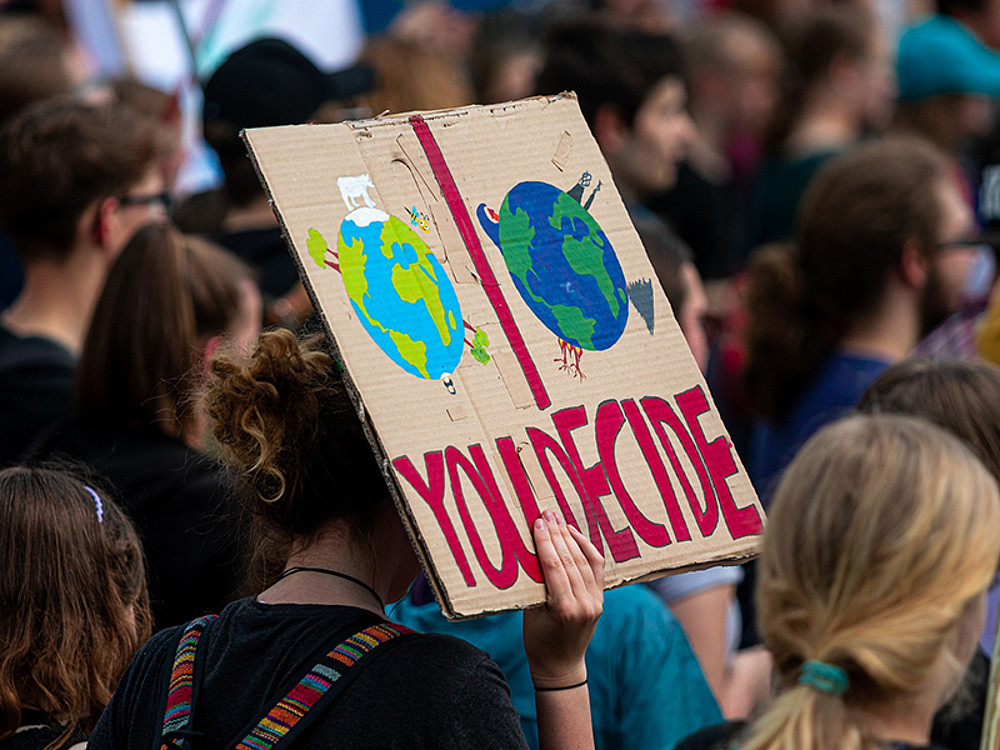
To curb climate change, we need a profound system change. How we could shape this to ensure people are still able to lead comfortable and fulfilling lives is a subject of current research. Photo: pixabay

To curb climate change, we need a profound system change. How we could shape this to ensure people are still able to lead comfortable and fulfilling lives is a subject of current research. Photo: pixabay

What we can learn from the pandemic

The Corona pandemic has shown how difficult it is to manage global crises in the complex systems of human societies. This is because disruptions in one sector often lead to cascading problems in other sectors. Consider, for example, the current supply bottlenecks for semiconductor components or the high energy prices. Like Covid-19, the effects of climate change and inadequate management of it can disrupt societies at many different levels - from trade and finance to mobility and communication networks. In the process, it is usually the weakest who are hit the hardest. Ilona Otto, Professor of Societal Impacts of Climate Change and Postdoctoral Researcher Andrew Ringsmuth from the Wegener Center at the University of Graz explain in an article in the scientific journal, Climate Risk Management what we can learn from the pandemic to cope with the climate crisis.

"It is of crucial importance to build social and ecological resilience in order to be well prepared for the consequences of climate change," the researchers emphasise. They understand resilience as more than the ability to survive and recover from problems, but rather as a process of change towards a behaviour or system that is better adapted to its circumstances. "A resilient community in a skiing area might for a while cope with reduced snowfalls by creating artificial snow and persisting as a ski resort but, eventually, after enough bad seasons, change their business focus to other things like summer sports or different industries," Ringsmuth explains with an example.

Helpful for this is a global system for monitoring climate impacts and for open data exchange. Because climate change knows neither sectoral nor national boundaries. "Only if far-reaching interactions and possible chain reactions are recognised can successful adaptation measures be developed," the authors say. Nevertheless, uncertainties will remain in the prediction of climate impacts. "Therefore, it is important to develop risk management strategies that can react flexibly to changes," the researchers emphasise.

Complex, systemic risks pose a particular challenge due to the numerous influencing factors and different actors. The scientists are convinced that "in order to be able to jointly develop solutions that can be implemented in a timely manner, measures to promote resilience must offer incentives to all those involved". And reducing economic and other social inequalities and investing in structures to support the most vulnerable groups would also increase resilience at many levels.

The pandemic with its lockdowns has shown that it is possible to reduce CO2 emissions quickly and on a large scale, as would be necessary to limit climate change within the goals of the Paris Agreement. None of the policy or technology efforts so far have come close to doing so. "The idea that we might need to slow down our economy to address the climate crisis is uncomfortable, but we are now at a point where we need to be open to drastic action. The time for half measures is over. We need a profound system change," says Ringsmuth. How we could shape this to ensure people are still able to lead comfortable and fulfilling lives is a subject of current research.

>> read the entire article


created by Gudrun Pichler

Related news

Semester abroad without barriers: University of Graz wins award for promoting inclusion

The University of Graz has been awarded the Internationalization Award for its new inclusion initiative. Students with fewer opportunities now also receive financial support for their semester abroad outside Europe.

Fair distribution: Researchers determine just greenhouse gas budgets for all EU regions

Ten years ago, on 12 December 2015, the Paris Climate Agreement was signed at the UN Climate Conference. In order to limit global warming to well below two degrees, only a certain amount of CO2 may be emitted worldwide. While the focus was originally on national emission targets, more than 200 subnational regions and almost 300 cities have now adopted their own targets. But how many emissions are they fairly entitled to? Researchers at the University of Graz have now developed transparent criteria for fair distribution at the subnational level for the first time and determined corresponding greenhouse gas budgets for all European regions. The paper was published today in the scientific journal Nature Communications.

Chemical Christmas show at the University of Graz: An explosive evening at the Schauspielh

At the beginning of December, the University of Graz transformed the theater into a laboratory: as part of “Chemical Life,” teacher training students staged a chemical Christmas show for Styrian school classes—complete with ethanol rockets, nitrogen snow, and glowing effects. An evening designed to inspire interest in studying chemistry.

Train by train: Koralm railway accelerates exchange between the Universities

Lectures at the University of Klagenfurt in the morning, seminars at the University of Graz in the afternoon: Austria's longest tunnel and a journey time of around 45 minutes make it easy. The Koralm railway increases the speed of networking between the two university locations. The collaboration builds on existing cooperation - for example in the areas of teacher training, Slavic studies and as employers, the universities are well coordinated.

Begin of page section:
Additional information:

University of Graz
Universitaetsplatz 3
8010 Graz
Austria
  • Contact
  • Web Editors
  • Moodle
  • UNIGRAZonline
  • Imprint
  • Data Protection Declaration
  • Accessibility Declaration
Weatherstation
Uni Graz

End of this page section. Go to overview of page sections

End of this page section. Go to overview of page sections

Begin of page section:

End of this page section. Go to overview of page sections