Begin of page section:
Page sections:

  • Go to contents (Accesskey 1)
  • Go to position marker (Accesskey 2)
  • Go to main navigation (Accesskey 3)
  • Go to sub navigation (Accesskey 4)
  • Go to additional information (Accesskey 5)
  • Go to page settings (user/language) (Accesskey 8)
  • Go to search (Accesskey 9)

End of this page section. Go to overview of page sections

Begin of page section:
Page settings:

English en
Deutsch de
Search
Login

End of this page section. Go to overview of page sections

Begin of page section:
Search:

Search for details about Uni Graz
Close

End of this page section. Go to overview of page sections


Search

Begin of page section:
Main navigation:

Page navigation:

  • University

    University
    • About the University
    • Organisation
    • Faculties
    • Library
    • Working at University of Graz
    • Campus
    Developing solutions for the world of tomorrow - that is our mission. Our students and our researchers take on the great challenges of society and carry the knowledge out.
  • Research Profile

    Research Profile
    • Our Expertise
    • Research Questions
    • Research Portal
    • Promoting Research
    • Research Transfer
    • Ethics in Research
    Scientific excellence and the courage to break new ground. Research at the University of Graz creates the foundations for making the future worth living.
  • Studies

    Studies
    • Prospective Students
    • Students
  • Community

    Community
    • International
    • Location
    • Research and Business
    • Alumni
    The University of Graz is a hub for international research and brings together scientists and business experts. Moreover, it fosters the exchange and cooperation in study and teaching.
  • Spotlight
Topics
  • Our digital Advent calendar
  • Sustainable University
  • Researchers answer
  • Work for us
Close menu

End of this page section. Go to overview of page sections

Begin of page section:
You are here:

University of Graz News Weltmeere im Wanken

End of this page section. Go to overview of page sections

Friday, 10 April 2015

Weltmeere im Wanken

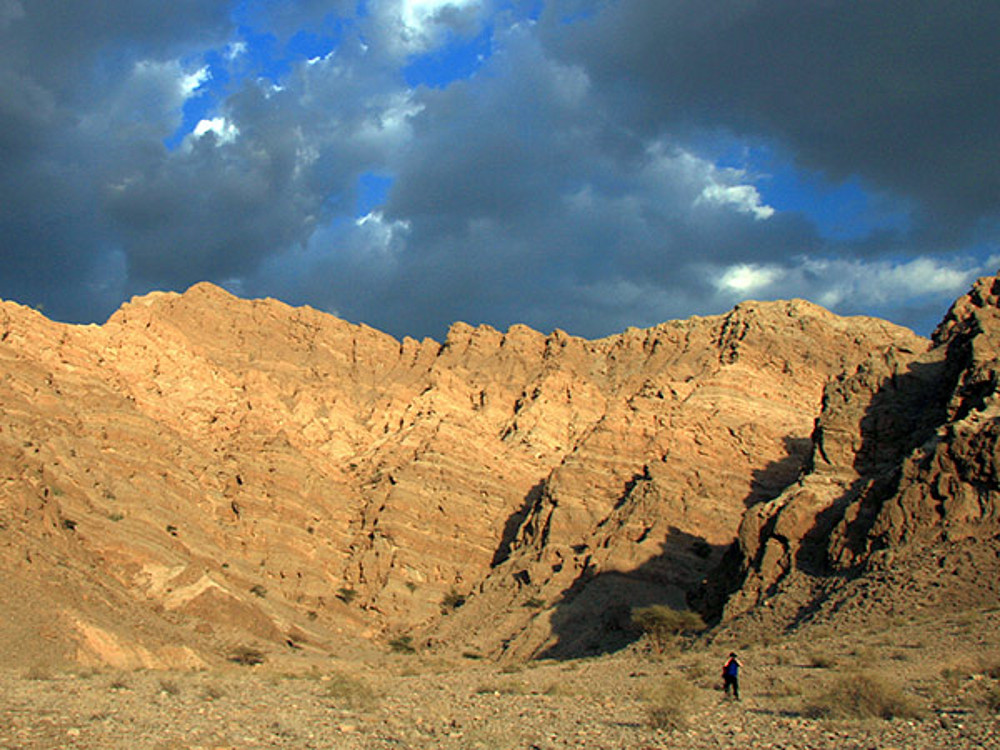
An Gesteinen in den Vereinigten Arabischen Emiraten konnten ForscherInnen die Ursachen für das bislang größte Massensterben auf der Erde rekonstruieren. Foto: M.O. Clarkson

An Gesteinen in den Vereinigten Arabischen Emiraten konnten ForscherInnen die Ursachen für das bislang größte Massensterben auf der Erde rekonstruieren. Foto: M.O. Clarkson

ForscherInnen klären größtes Massensterben der Erdgeschichte

Mehr als 90 Prozent der Meerestiere und rund zwei Drittel der an Land lebenden Arten wurden vor 252 Millionen Jahren ausgelöscht. Verantwortlich dafür war die plötzliche Übersäuerung der Ozeane, ausgelöst durch extreme vulkanische Aktivitäten. Das zeigt eine groß angelegte internationale Studie, an der auch Dr. Sylvain Richoz vom Institut für Erdwissenschaften der Uni Graz beteiligt war. Das Team der WissenschafterInnen veröffentlichte die sensationellen Ergebnisse in der aktuellen Ausgabe des renommierten Fachmagazins Science. Die Erkenntnisse helfen, die Bedrohung der Meere durch aktuelle Umwelteinflüsse besser einzuschätzen.
„Damals gelangte durch Vulkanausbrüche ähnlich schnell große Mengen an Kohlendioxid in die Atmosphäre wie heute“, erklärt Co-Autor Richoz. „Dieses rasche Freiwerden des Gases führte zu einer Übersäuerung der Meere, die große Mengen an CO2 absorbieren können“, so der Wissenschafter. Die veränderte chemische Zusammensetzung des Wassers hatte katastrophale Folgen für das Leben auf der Erde, wie die ForscherInnen nun erstmals feststellen konnten. Zuvor hatten schon steigende Temperaturen und der Rückgang des Sauerstoff-Anteils da Ökosystem ins Wanken gebracht. „Unsere Erkenntnisse sind insofern beunruhigend, als wir heute ähnliche von den Menschen verursachte Veränderungen beobachten“, ergänzt Richoz.

Für die von der Universität Edinburgh koordinierte Studie untersuchten die WissenschafterInnen aus Cambridge, Bremen, Exeter, Graz und Leeds Felsen in den Arabischen Emiraten, die einst den Meeresgrund bildeten. Anhand der Zusammensetzung des Gesteins konnten sie die Umweltbedingungen im Meer rekonstruieren und ein Klimamodell der damaligen Zeit erstellen.

Der Artikel ist unter dem Titel „Ocean acidification and the Permo-Triassic mass extinction“ in der aktuellen Ausgabe des Magazins Science erschienen und online abrufbar unter  http://www.sciencemag.org/content/348/6231/229.figures-only

created by Dagmar Eklaude

Related news

Chemical Christmas show at the University of Graz: An explosive evening at the Schauspielh

At the beginning of December, the University of Graz transformed the theater into a laboratory: as part of “Chemical Life,” teacher training students staged a chemical Christmas show for Styrian school classes—complete with ethanol rockets, nitrogen snow, and glowing effects. An evening designed to inspire interest in studying chemistry.

Train by train: Koralm railway accelerates exchange between the Universities

Lectures at the University of Klagenfurt in the morning, seminars at the University of Graz in the afternoon: Austria's longest tunnel and a journey time of around 45 minutes make it easy. The Koralm railway increases the speed of networking between the two university locations. The collaboration builds on existing cooperation - for example in the areas of teacher training, Slavic studies and as employers, the universities are well coordinated.

On the trail of the Big Bang: University of Graz receives 1.5 million euros for doctoral programmes

The Austrian Science Fund FWF has selected the Doctoral Programme in Theoretical Particle Physics at the University of Graz for funding from the Doc.funds. Six young scientists will be funded for 3.5 years. They will gain fundamentally new insights into the origins of the world.

From trans women and knee prostheses: sports science prizes awarded

Walking better with a prosthesis, successfully getting rid of excess weight, training more effectively, more fairness for trans people in sport: these were the topics addressed by the students at the University of Graz who were awarded the sports science prizes for their Master's theses on 3 December 2025.

Begin of page section:
Additional information:

University of Graz
Universitaetsplatz 3
8010 Graz
Austria
  • Contact
  • Web Editors
  • Moodle
  • UNIGRAZonline
  • Imprint
  • Data Protection Declaration
  • Accessibility Declaration
Weatherstation
Uni Graz

End of this page section. Go to overview of page sections

End of this page section. Go to overview of page sections

Begin of page section:

End of this page section. Go to overview of page sections