Begin of page section:
Page sections:

  • Go to contents (Accesskey 1)
  • Go to position marker (Accesskey 2)
  • Go to main navigation (Accesskey 3)
  • Go to sub navigation (Accesskey 4)
  • Go to additional information (Accesskey 5)
  • Go to page settings (user/language) (Accesskey 8)
  • Go to search (Accesskey 9)

End of this page section. Go to overview of page sections

Begin of page section:
Page settings:

English en
Deutsch de
Search
Login

End of this page section. Go to overview of page sections

Begin of page section:
Search:

Search for details about Uni Graz
Close

End of this page section. Go to overview of page sections


Search

Begin of page section:
Main navigation:

Page navigation:

  • University

    University
    • About the University
    • Organisation
    • Faculties
    • Library
    • Working at University of Graz
    • Campus
    Developing solutions for the world of tomorrow - that is our mission. Our students and our researchers take on the great challenges of society and carry the knowledge out.
  • Research Profile

    Research Profile
    • Our Expertise
    • Research Questions
    • Research Portal
    • Promoting Research
    • Research Transfer
    • Ethics in Research
    • Commission for Scientific Integrity
    Scientific excellence and the courage to break new ground. Research at the University of Graz creates the foundations for making the future worth living.
  • Studies

    Studies
    • Prospective Students
    • Students
  • Community

    Community
    • International
    • Location
    • Research and Business
    • Alumni
    The University of Graz is a hub for international research and brings together scientists and business experts. Moreover, it fosters the exchange and cooperation in study and teaching.
Topics
  • Sustainable University
  • Researchers answer
  • Work for us
Close menu

End of this page section. Go to overview of page sections

Begin of page section:
You are here:

University of Graz News Wahrheit und Erkenntnis

End of this page section. Go to overview of page sections

Tuesday, 04 June 2013

Wahrheit und Erkenntnis

Marian David

Marian David

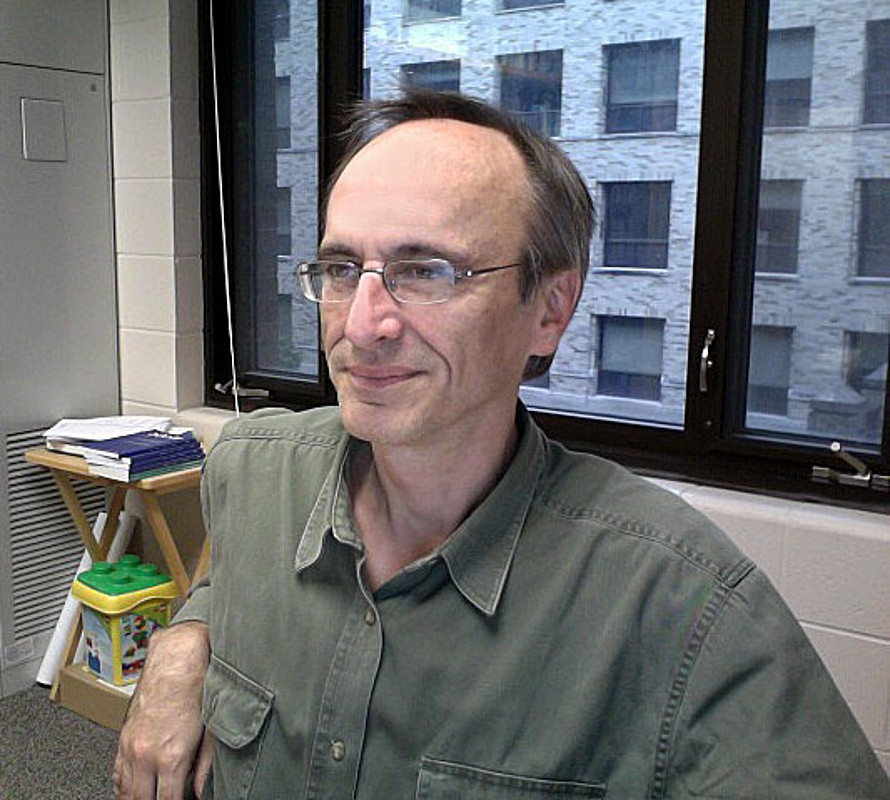
Marian David baut den Arbeitsbereich Theoretische Philosophie neu auf.

Erkenntnistheorie, Sprachphilosophie und Wahrheitstheorien zählen zu den Forschungsschwerpunkten von Univ.-Prof. Dr. Marian David, seit 1. Juli 2012 Professor für Theoretische Philosophie an der Geisteswissenschaftlichen Fakultät der Karl-Franzens-Universität Graz. Bevor der Absolvent der Uni Graz zu seinen akademischen Wurzeln zurückkehrte, lehrte und forschte er  fast dreißig Jahre lang in den USA.  Nach dem Abschluss seiner Diplomstudien Philosophie und Sprachwissenschaft ging David ein Jahr an die University of Colorado / Boulder und machte anschließend sein Ph.D. in Philosophie an der University of Arizona / Tucson. 1990 wechselte er an die University of Notre Dame / Indiana, wo er von 2003 bis 2012 als Full Professor tätig war.


Was den Philosophen in seiner Forschung beschäftigt, sind grundsätzliche Fragen zu Wahrheit und Erkenntnis. „Dazu zählt etwa die Frage, ob sich Wahrheit überhaupt definieren lässt, ob sie etwas Objektives ist“, so David. Auch die Gewinnung von Erkenntnis durch Wissenschaft nimmt Marian David unter die philosophische Lupe. Was zeichnet wissenschaftlichen Erkenntnisgewinn aus? In welcher Beziehung stehen Experiment und Theorie?


Um diesen und vielen anderen Fragen noch tiefer auf den Grund zu gehen, ist Marian David derzeit auch damit beschäftigt, den Arbeitsbereich Theoretische Philosophie an der Karl-Franzens-Universität Graz neu aufzubauen. 

Verstärkung soll er bald von zwei PostDocs bekommen. Schwerpunkte der beiden jungen WissenschafterInnen sind die Philosophie des Geistes, die Sprachphilosophie und die Philosophie der Logik. Weitere Themengebiete des Arbeitsbereichs sind unter anderem Metaphysik und Wissenschaftstheorie.
created by Gudrun Pichler

Related news

The digital world of tomorrow: University of Graz works with people to shape the future

Digitalisation is supposed to make everything better: artificial intelligence that even organises travel. The car that drives itself. Robots that care for us in our old age. But what kind of future do people actually want? What role should technology play in this? The University of Graz is exploring these questions through a new research facility. At the Graz Sociodigital and Participatory Futures Studio – or GraSP Futures Studio for short – young and old work together with researchers to design visions of the future that also critically examine technical innovations.

Eurovision: Why the Song Contest is always political

The 2026 Eurovision Song Contest sits at the intersection of music, geopolitics and culture. Josef Mühlbauer from the University of Graz explains why the ESC has always been a reflection of European politics, and how this major event highlights cultural affinities and social change.

Superti-Furga will becomefounding director of the CORI Institute in Graz

The Austrian Academy of Sciences (ÖAW) is establishing a new flagship centre for research into metabolic diseases in collaboration with the three universities in Graz. This innovative research approach combines mathematics and experimental biology with artificial intelligence

A match for life

Stem cell donations save lives. However, the only way to determine who is ultimately compatible with whom is through a testing process. Pharmacist Marion Mußbacher explains the mechanisms behind this. On 6 May 2026, the ÖH and the charity “Geben für Leben” are calling for people to come forward for typing at the University of Graz.

Begin of page section:
Additional information:

University of Graz
Universitaetsplatz 3
8010 Graz
Austria
  • Contact
  • Web Editors
  • Moodle
  • UNIGRAZonline
  • Imprint
  • Data Protection Declaration
  • Accessibility Declaration
Weatherstation
Uni Graz

End of this page section. Go to overview of page sections

End of this page section. Go to overview of page sections

Begin of page section:

End of this page section. Go to overview of page sections