Begin of page section:
Page sections:

  • Go to contents (Accesskey 1)
  • Go to position marker (Accesskey 2)
  • Go to main navigation (Accesskey 3)
  • Go to sub navigation (Accesskey 4)
  • Go to additional information (Accesskey 5)
  • Go to page settings (user/language) (Accesskey 8)
  • Go to search (Accesskey 9)

End of this page section. Go to overview of page sections

Begin of page section:
Page settings:

English en
Deutsch de
Search
Login

End of this page section. Go to overview of page sections

Begin of page section:
Search:

Search for details about Uni Graz
Close

End of this page section. Go to overview of page sections


Search

Begin of page section:
Main navigation:

Page navigation:

  • University

    University
    • About the University
    • Organisation
    • Faculties
    • Library
    • Working at University of Graz
    • Campus
    Developing solutions for the world of tomorrow - that is our mission. Our students and our researchers take on the great challenges of society and carry the knowledge out.
  • Research Profile

    Research Profile
    • Our Expertise
    • Research Questions
    • Research Portal
    • Promoting Research
    • Research Transfer
    • Ethics in Research
    Scientific excellence and the courage to break new ground. Research at the University of Graz creates the foundations for making the future worth living.
  • Studies

    Studies
    • Prospective Students
    • Students
  • Community

    Community
    • International
    • Location
    • Research and Business
    • Alumni
    The University of Graz is a hub for international research and brings together scientists and business experts. Moreover, it fosters the exchange and cooperation in study and teaching.
  • Spotlight
Topics
  • Sustainable University
  • Researchers answer
  • Work for us
Close menu

End of this page section. Go to overview of page sections

Begin of page section:
You are here:

University of Graz News Vorsicht ansteckend:

End of this page section. Go to overview of page sections

Wednesday, 15 May 2013

Vorsicht ansteckend:

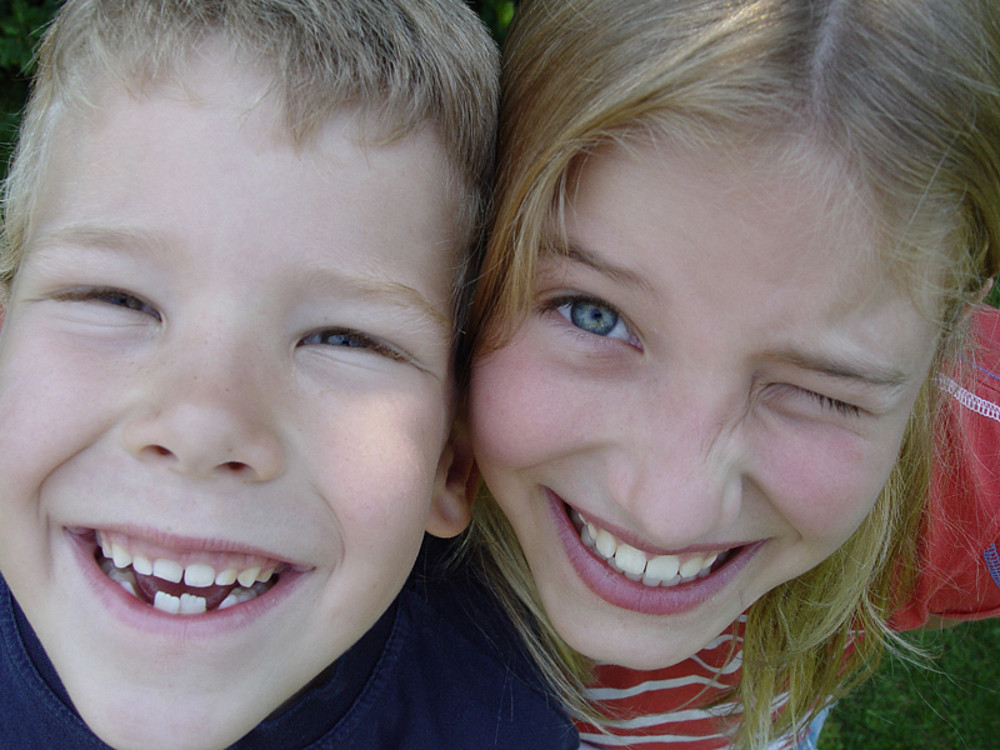
Emotionen - Lächeln oder Weinen - sind ansteckend. Foto: Heike Berse /pixelio.de

Emotionen - Lächeln oder Weinen - sind ansteckend. Foto: Heike Berse /pixelio.de

PsychologInnen der Uni Graz erforschen die Übertragung von Emotionen

Wie funktioniert das Mitweinen bei einem Liebesfilm und warum fiebern wir mit den HeldInnen im Film mit? Gefühle und Emotionen anderer übernehmen, das nennt die Psychologie „Emotionale Ansteckung“. „Über den Emotionsausdruck des Gegenübers lässt man sich sprichwörtlich ,anstecken‘“, beschreibt Ao. Univ.-Prof. Dr. Ilona Papousek vom Institut für Psychologie an der Karl-Franzens-Universität Graz, diesen vollkommen automatisierten Prozess. „Ansteckung kann einerseits über einen Gefühlsausdruck wie zum Beispiel ein Lächeln oder auch über eine Geste passieren“, erklärt sie. Die Forschungen auf diesem Gebiet sind im universitären Schwerpunkt „Gehirn und Verhalten“ verankert.


Emotionale Ansteckung lässt sich unterschiedlich messen: Einerseits können die WissenschafterInnen über Muskelaktivitäten im Gesicht eine erfolgreiche Übertragung von Emotionen feststellen. Neueste Studien zeigen, dass sich Emotionale Ansteckung über die Gehirnaktivität regulieren lässt. Die ForscherInnen versuchen mittels der Elektroenzephalografie – EEG – zu verwertbaren Daten zu kommen. „Wenn Menschen beispielsweise jemanden beobachten, der Gefühle ausdrückt, dann werden im Gehirn nachweislich dieselben Regionen aktiviert, die genutzt werden, um selbst Gefühle auszudrücken“, beschreibt Papousek den Vorgang.


Top-down-Kontrolle
In den Studien an der Uni Graz wurden den ProbandInnen kurze Filme vorgespielt, in denen eine Person zu sehen ist, die Emotionen deutlich ausdrückt. Dabei konnten die ForscherInnen Interessantes herausfinden: „Die hinteren Regionen des Gehirns sind normalerweise für die Wahrnehmung der Gefühle anderer verantwortlich. Das Frontalhirn kann aber unter gewissen Umständen die emotionale Information vorverarbeiten, bevor sie sich auf einen selbst auswirkt“, führt Papousek aus. Über die Gehirnströme zeigte sich, wie stark das Frontalhirn diese hereinkommende Information reguliert; die Wissenschaft nennt diesen Mechanismus im Gehirn top-down-Kontrolle. „Dadurch lässt sich zeigen, wie sehr Personen für Gefühle ansteckbar sind und wie sehr sozial-emotionale Information auf das eigene Bewußtsein oder Verhalten durchschlägt“, sagt Papousek. Die Untersuchungen haben auch ergeben, dass Personen mit Persönlichkeitsstörungen, die durch Verhaltensdefizite im zwischenmenschlichen Bereich gekennzeichnet sind, stärker für die Übertragung von Gefühlen anderer empfänglich sind, vor allem für negative Gefühle und besonders für Ärger.

Die Ergebnisse dieser Studien sind nicht nur für das Verstehen des sozialen Miteinanders von großer Bedeutung, sondern spielen auch in der Psychiatrie und in der Psychotherapie, insbesondere bei der Erforschung der Beziehung zwischen PatientInnen und TherapeutInnen eine Rolle.


Rückfragen:
Ao. Univ.-Prof. Dr. Ilona Papousek
Institut für Psychologie
Karl-Franzens-Universität Graz
Tel.: 0316 380 5121
E-Mail: ilona.papousek(at)uni-graz.at

created by Konstantinos Tzivanopoulos

Related news

Diversity buddies at the University of Graz: Support on equal terms

The University of Graz is strengthening its commitment to equal opportunities with its new Diversity Buddies. University members can find easily accessible contact persons here for questions relating to equality and diversity. All employees can get involved and take action.

When parents find it difficult to have a say

In her dissertation, translation scholar Marie Tschurtschenthaler examines how communication between compulsory schools and parents whose first language is not German works – and what role professional language mediation plays in this. Initial insights show that it is not just about language, but also about resources, responsibilities and the institutional framework.

AI in schools: Maria Bertel drafts legal guidelines for teachers

The legal expert and her team analysed the legal situation regarding the use of artificial intelligence in education as part of an EU project and answered open questions from practice.

Cosmetics in the environment: University of Graz proves danger to ants

Titanium dioxide, which is found in cosmetics, for example, is increasingly entering the environment in the form of nanoparticles. This could also put insects at risk. If ants ingest the substance in combination with the pesticide glyphosate, it disturbs the development of their offspring. Scientists at the University of Graz are drawing attention to the negative consequences of this toxic cocktail.

Begin of page section:
Additional information:

University of Graz
Universitaetsplatz 3
8010 Graz
Austria
  • Contact
  • Web Editors
  • Moodle
  • UNIGRAZonline
  • Imprint
  • Data Protection Declaration
  • Accessibility Declaration
Weatherstation
Uni Graz

End of this page section. Go to overview of page sections

End of this page section. Go to overview of page sections

Begin of page section:

End of this page section. Go to overview of page sections