Begin of page section:
Page sections:

  • Go to contents (Accesskey 1)
  • Go to position marker (Accesskey 2)
  • Go to main navigation (Accesskey 3)
  • Go to sub navigation (Accesskey 4)
  • Go to additional information (Accesskey 5)
  • Go to page settings (user/language) (Accesskey 8)
  • Go to search (Accesskey 9)

End of this page section. Go to overview of page sections

Begin of page section:
Page settings:

English en
Deutsch de
Search
Login

End of this page section. Go to overview of page sections

Begin of page section:
Search:

Search for details about Uni Graz
Close

End of this page section. Go to overview of page sections


Search

Begin of page section:
Main navigation:

Page navigation:

  • University

    University
    • About the University
    • Organisation
    • Faculties
    • Library
    • Working at University of Graz
    • Campus
    Developing solutions for the world of tomorrow - that is our mission. Our students and our researchers take on the great challenges of society and carry the knowledge out.
  • Research Profile

    Research Profile
    • Our Expertise
    • Research Questions
    • Research Portal
    • Promoting Research
    • Research Transfer
    • Ethics in Research
    • Commission for Scientific Integrity
    Scientific excellence and the courage to break new ground. Research at the University of Graz creates the foundations for making the future worth living.
  • Studies

    Studies
    • Prospective Students
    • Students
    • Welcome Weeks for First Year Students
  • Community

    Community
    • International
    • Location
    • Research and Business
    • Alumni
    The University of Graz is a hub for international research and brings together scientists and business experts. Moreover, it fosters the exchange and cooperation in study and teaching.
Topics
  • Sustainable University
  • Researchers answer
  • Work for us
Close menu

End of this page section. Go to overview of page sections

Begin of page section:
You are here:

University of Graz News Vorbild

End of this page section. Go to overview of page sections

Monday, 17 November 2014

Vorbild

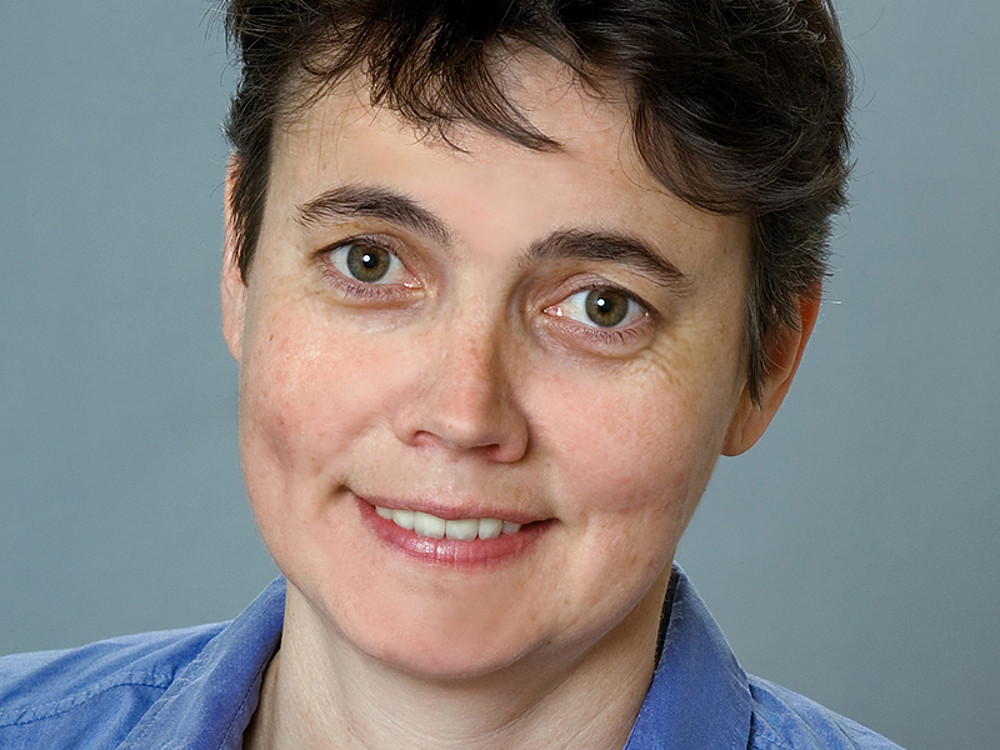
Astrid Veronig ist FEMtech-Expertin des Monats November, Foto: Uni Graz/cp-pictures

Astrid Veronig ist FEMtech-Expertin des Monats November, Foto: Uni Graz/cp-pictures

Astrophysikerin Astrid Veronig zur „FEMtech-Expertin des Monats“ gekürt

Um die Leistungen von Frauen und die Wichtigkeit von weiblicher Kreativität und der weiblichen Perspektive im Technologie- und Forschungsbereich sichtbar zu machen, kürt eine Jury aus hochrangigen VertreterInnen der Wirtschaft, der Wissenschaft und des Personalmanagements eine herausragende Expertin aus der FEMtech-Expertinnendatenbank zur „FEMtech-Expertin des Monats“. Im November fiel die Wahl auf die Astrophysikerin Astrid Veronig von der Karl-Franzens-Universität Graz.

Die gebürtige Steirerin beschäftigt sich seit ihrem Studium mit der Astrophysik und im Speziellen mit der Physik von energetischen Ausbrüchen der Sonne. Dabei untersucht sie das Verhalten von Sonneneruptionen und Strahlungsausbrüchen sowie deren Auswirkung auf das Weltraumwetter in Erdnähe. Ihre aktuellen Arbeiten beschäftigen sich insbesondere mit der Entwicklung und Implementierung eines automatisierten Beobachtungs- und Bilderkennungssystem von Strahlungs-Ausbrüchen am Observatorium Kanzelhöhe – das Veronig auch leitet – im Auftrag der ESA (European Space Agency) und mit diversen Studien zur Ausbreitung von koronalen Massenauswürfen im interplanetaren Raum (von der Sonne zur Erde) und ihrer Wechselwirkung mit dem Sonnenwind. Besonders relevant hierfür sind die beiden Zwillingssatelliten STEREO (Solar TErrestrial RElations Observatory) der NASA, welche die Sonne umkreisen.

Veronig hat an der Karl-Franzens Universität Graz Astronomie studiert und nach ihrem Diplom ihren Doktor sowie ihre Habilitation in Astrophysik abgelegt. Nach Abschluss ihrer Doktorarbeit arbeitete sie am NASA Goddard Space Flight Center (Maryland, USA) mit dem Fokus auf den damals neu gestarteten Röntgen- und Gammasatelliten RHESSI.
2003 kehrte sie an die Universität Graz zurück und startete dort ihre Universitätskarriere. Mittlerweile ist die Steirerin Universitätsprofessorin für Physik und stellvertretende Leiterin des Institutsbereiches für Geophysik, Astrophysik und Meteorologie (IGAM) der Universität Graz. Seit 2013 ist Veronig Leiterin des Observatoriums Kanzelhöhe für Sonnen- und Umweltforschung der Universität Graz.

Hinsichtlich der Thematik „Frauen in Naturwissenschaft und Technik“ ist Veronig der Meinung, dass „Frauen in naturwissenschaftlich-technischen Berufen und der Forschung ein essentieller Teil unserer Gesellschaft“ sind und langsam die traditionellen Geschlechtergrenzen und Arbeitsaufteilungen in Bewegung kommen und sich ändern. Weiters, sagt Veronig, „bieten Naturwissenschaft und Technik auch spannende und ausgezeichnete Berufs- und Karrieremöglichkeiten speziell für Frauen, die dann wiederum Vorbilder für junge Mädchen sind und diese zur Auseinandersetzung mit diesen Themen bringen können“. Den Ausgleich zu ihrer Lehr- und Forschungstätigkeit findet sie beim Volleyball, Wandern und beim Lesen.

Mit der monatlichen Expertinnenwahl stellt das BMVIT seit März 2005 Frauen aus der FEMtech-Expertinnendatenbank vor, die sich erfolgreich im Technologie- und Forschungsbereich etabliert haben.

created by BMVIT/Rumpl & Schweiger

Related news

Jurassic Sounds: Biologist reconstructs insect songs from 165 million years ago

It was apparently not just the roars of the dinosaurs that made up the soundscape of the animal world during the Jurassic period. Crickets and grasshoppers communicated through a variety of songs and high-pitched sounds, as Thorin Jonsson from the Institute of Biology at the University of Graz discovered together with colleagues from the universities of Lincoln, Bristol (UK), Beijing (China) and Tempe (USA). The findings on what are so far the oldest traces of sound on Earth have just been published in the journal PNAS.

EU funding boosts international exchange between universities

The University of Graz is further expanding its international study opportunities through the European university alliance Arqus and is taking the lead in two key projects. In future, students will benefit from even more joint degree programmes and from simplified recognition of academic achievements through the Joint European Degree Label.

Rescue and risks: Researchers have surveyed public perceptions of AI

The use of artificial intelligence has had to be made transparent since 2 August 2026. The EU’s AI Act, which has been in force since then, also sets out how risky an application is and which security measures apply as a result. However, the assessment of risks by the legislation differs in some cases significantly from the perceptions of the Austrian public. This is the finding of a representative study carried out by data scientist Stefan Thalmann from the University of Graz and his team.

The Healing Sea: Researchers discover new approaches to treating chronic inflammation in sponges

Chronic inflammation plays a key role in many diseases, ranging from metabolic disorders and cardiovascular diseases to tissue damage following injuries or infections. “Normally, the body is able to resolve inflammation on its own. If this process becomes unbalanced, immune cells remain permanently active and continue to drive negative changes in the tissue,” explains Andreas Koeberle, a pharmacist at the University of Graz.

Begin of page section:
Additional information:

University of Graz
Universitaetsplatz 3
8010 Graz
Austria
  • Contact
  • Web Editors
  • Moodle
  • UNIGRAZonline
  • Imprint
  • Data Protection Declaration
  • Accessibility Declaration
Weatherstation
Uni Graz

End of this page section. Go to overview of page sections

End of this page section. Go to overview of page sections

Begin of page section:

End of this page section. Go to overview of page sections