Begin of page section:
Page sections:

  • Go to contents (Accesskey 1)
  • Go to position marker (Accesskey 2)
  • Go to main navigation (Accesskey 3)
  • Go to sub navigation (Accesskey 4)
  • Go to additional information (Accesskey 5)
  • Go to page settings (user/language) (Accesskey 8)
  • Go to search (Accesskey 9)

End of this page section. Go to overview of page sections

Begin of page section:
Page settings:

English en
Deutsch de
Search
Login

End of this page section. Go to overview of page sections

Begin of page section:
Search:

Search for details about Uni Graz
Close

End of this page section. Go to overview of page sections


Search

Begin of page section:
Main navigation:

Page navigation:

  • University

    University
    • About the University
    • Organisation
    • Faculties
    • Library
    • Working at University of Graz
    • Campus
    Developing solutions for the world of tomorrow - that is our mission. Our students and our researchers take on the great challenges of society and carry the knowledge out.
  • Research Profile

    Research Profile
    • Our Expertise
    • Research Questions
    • Research Portal
    • Promoting Research
    • Research Transfer
    • Ethics in Research
    • Commission for Scientific Integrity
    Scientific excellence and the courage to break new ground. Research at the University of Graz creates the foundations for making the future worth living.
  • Studies

    Studies
    • Prospective Students
    • Students
    • Welcome Weeks for First Year Students
  • Community

    Community
    • International
    • Location
    • Research and Business
    • Alumni
    The University of Graz is a hub for international research and brings together scientists and business experts. Moreover, it fosters the exchange and cooperation in study and teaching.
Topics
  • Sustainable University
  • Researchers answer
  • Work for us
Close menu

End of this page section. Go to overview of page sections

Begin of page section:
You are here:

University of Graz News Von Bischkek nach Graz

End of this page section. Go to overview of page sections

Friday, 20 November 2015

Von Bischkek nach Graz

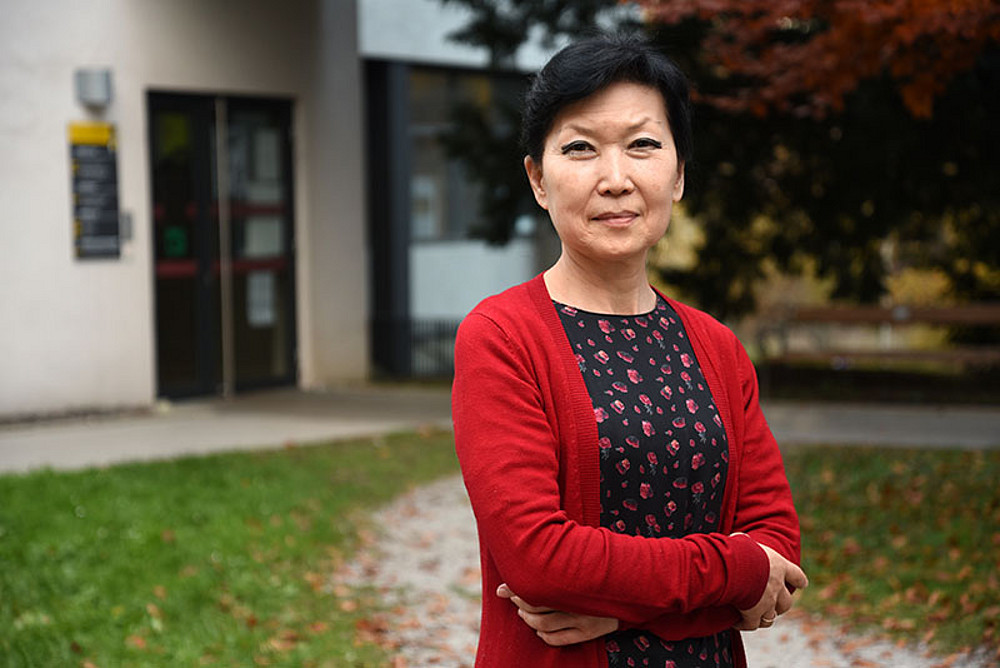
Gulmiza Seitalieva wird bis März 2016 Gastforscherin an der Uni Graz sein. Foto: Uni Graz/Kastrun.

Gulmiza Seitalieva wird bis März 2016 Gastforscherin an der Uni Graz sein. Foto: Uni Graz/Kastrun.

Gulmiza Seitalieva erforscht die Rolle der Frauenrechte im Islam

"Der Islam ist ein sehr wichtiger Bestandteil der nationalen Identität in Kirgistan, da er in der Geschichte des Landes tief verwurzelt ist. Heute ist er aber auch ein Grund, weshalb Frauenrechte dort verletzt werden. Hier in Graz möchte ich die Antworten auf folgende Fragen finden: Wie beeinflusst Religion Frauenrechte im Allgemeinen? Und wie können Frauenrechte in islamischen Gesellschaften gesichert werden?", erklärt Gulmiza Seitalieva, PhD. Die kirgisische Forscherin und Absolventin der Philosophie an der Moscow State University wird insgesamt sechs Monate lang, bis März 2016, an der Karl-Franzens-Universität am Institut der Sprecherin des Clusters Gender des Forschungsschwerpunkts „Heterogenität und Kohäsion“ tätig sein. Ihr Aufenthalt findet im Rahmen des Erasmus Mundus SILKROUTE-Programms, das die Mobilität zwischen Zentralasien und Europa fördert, statt.


Seitalieva wuchs in einer kleinen Gemeinde in Kirgistan auf. Da sie unbedingt eine Hochschul-Ausbildung absolvieren wollte, ging sie nach Moskau und studierte dort Philosophie. Ihre Masterarbeit schrieb sie 1987 über den kritischen Rationalismus von Sir Karl Popper. Ihre Doktorarbeit verfasste  Seitalieva, deren Schwerpunkt auf Europäischer Philosophie liegt, zur Strukturanalyse von Texten des deutschen Literaturwissenschafters Erich Auerbach. Mitte der 1990er Jahre kehrte sie nach Kirgistan zurück, und zwar an die Universität der Hauptstadt Bischkek, wo sie seitdem – alternierende mit zahlreichen Auslandsaufenthalten an renommierten Universitäten, wie zum Beispiel der Universität Aarhus in Dänemark oder der Emory University in Georgia/USA, – lehrt und forscht.


Feminismus und kritisches Denken sind zwei Schwerpunkte der Wissenschafterin, die beides in ihrer Heimat vermisst: „In der Sowjetunion war man gezwungen, so zu leben wie es die Kommunistische Partei vorgab. An Schulen und Universitäten existiert daher bis heute keine Lehrpraxis für die Entwicklung und Förderung von kritischem Denken“, weiß Seitalieva, die sich besonders für das Recht von Frauen, ein selbstbestimmtes Leben zu führen, einsetzt: „Mädchen werden in vom Islam geprägten Bildungseinrichtungen hauptsächlich auf ihre Rolle im Familienleben vorbereitet. Nur eine geringe Anzahl von Studentinnen schließt das Studium ab, die meisten heiraten und verlassen die Universität.“ In den vergangenen Jahren sammelte Seitalieva Input für ihre Forschungen an 15 islamischen Bildungseinrichtungen sowie an drei Theologischen Fakultäten.


In Graz ist die Wissenschafterin vor allem von den freundlichen und hilfsbereiten MitarbeiterInnen der Katholisch-Theologischen Fakultät sowie von der umfangreichen Bibliothek begeistert. „In kirgisischen Universitäten gibt es so viel geballtes Wissen leider nicht“, bedauert Seitalieva, die mit einem in Kirgisien bekannten Bildhauer verheiratet ist und zwei Kinder hat. Zudem ist sie Präsidentin der Aikido Gesellschaft ihres Landes und in diesem Kampfsport selbst aktiv: Der 5. Dan kommt einem Fortgeschrittenen- beziehungsweise Meistergrad gleich.


created by Gerhild Kastrun

Related news

Jurassic Sounds: Biologist reconstructs insect songs from 165 million years ago

It was apparently not just the roars of the dinosaurs that made up the soundscape of the animal world during the Jurassic period. Crickets and grasshoppers communicated through a variety of songs and high-pitched sounds, as Thorin Jonsson from the Institute of Biology at the University of Graz discovered together with colleagues from the universities of Lincoln, Bristol (UK), Beijing (China) and Tempe (USA). The findings on what are so far the oldest traces of sound on Earth have just been published in the journal PNAS.

EU funding boosts international exchange between universities

The University of Graz is further expanding its international study opportunities through the European university alliance Arqus and is taking the lead in two key projects. In future, students will benefit from even more joint degree programmes and from simplified recognition of academic achievements through the Joint European Degree Label.

Rescue and risks: Researchers have surveyed public perceptions of AI

The use of artificial intelligence has had to be made transparent since 2 August 2026. The EU’s AI Act, which has been in force since then, also sets out how risky an application is and which security measures apply as a result. However, the assessment of risks by the legislation differs in some cases significantly from the perceptions of the Austrian public. This is the finding of a representative study carried out by data scientist Stefan Thalmann from the University of Graz and his team.

The Healing Sea: Researchers discover new approaches to treating chronic inflammation in sponges

Chronic inflammation plays a key role in many diseases, ranging from metabolic disorders and cardiovascular diseases to tissue damage following injuries or infections. “Normally, the body is able to resolve inflammation on its own. If this process becomes unbalanced, immune cells remain permanently active and continue to drive negative changes in the tissue,” explains Andreas Koeberle, a pharmacist at the University of Graz.

Begin of page section:
Additional information:

University of Graz
Universitaetsplatz 3
8010 Graz
Austria
  • Contact
  • Web Editors
  • Moodle
  • UNIGRAZonline
  • Imprint
  • Data Protection Declaration
  • Accessibility Declaration
Weatherstation
Uni Graz

End of this page section. Go to overview of page sections

End of this page section. Go to overview of page sections

Begin of page section:

End of this page section. Go to overview of page sections