Begin of page section:
Page sections:

  • Go to contents (Accesskey 1)
  • Go to position marker (Accesskey 2)
  • Go to main navigation (Accesskey 3)
  • Go to sub navigation (Accesskey 4)
  • Go to additional information (Accesskey 5)
  • Go to page settings (user/language) (Accesskey 8)
  • Go to search (Accesskey 9)

End of this page section. Go to overview of page sections

Begin of page section:
Page settings:

English en
Deutsch de
Search
Login

End of this page section. Go to overview of page sections

Begin of page section:
Search:

Search for details about Uni Graz
Close

End of this page section. Go to overview of page sections


Search

Begin of page section:
Main navigation:

Page navigation:

  • University

    University
    • About the University
    • Organisation
    • Faculties
    • Library
    • Working at University of Graz
    • Campus
    Developing solutions for the world of tomorrow - that is our mission. Our students and our researchers take on the great challenges of society and carry the knowledge out.
  • Research Profile

    Research Profile
    • Our Expertise
    • Research Questions
    • Research Portal
    • Promoting Research
    • Research Transfer
    • Ethics in Research
    • Commission for Scientific Integrity
    Scientific excellence and the courage to break new ground. Research at the University of Graz creates the foundations for making the future worth living.
  • Studies

    Studies
    • Prospective Students
    • Students
    • Welcome Weeks for First Year Students
  • Community

    Community
    • International
    • Location
    • Research and Business
    • Alumni
    The University of Graz is a hub for international research and brings together scientists and business experts. Moreover, it fosters the exchange and cooperation in study and teaching.
Topics
  • Sustainable University
  • Researchers answer
  • Work for us
Close menu

End of this page section. Go to overview of page sections

Begin of page section:
You are here:

University of Graz News Volle Sonne tanken

End of this page section. Go to overview of page sections

Tuesday, 10 March 2015

Volle Sonne tanken
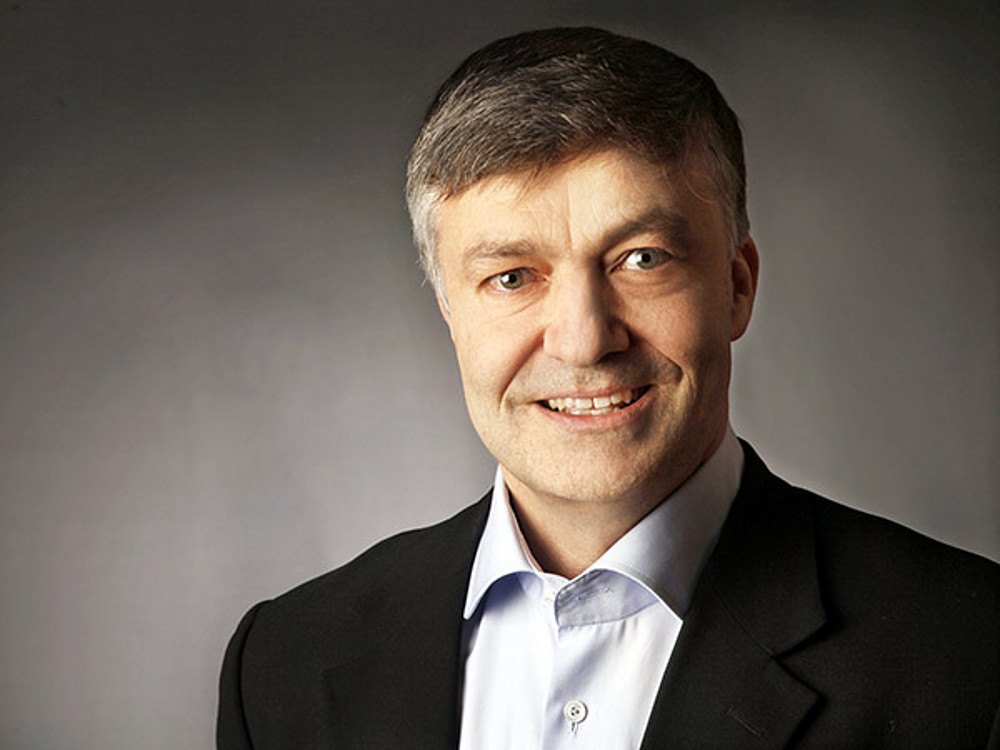
Karl Steininger hat mit seinem Team ein Tool entwickelt, das hilft, Sonnenstrom effizient zu nutzen. Foto: Furgler
Karl Steininger hat mit seinem Team ein Tool entwickelt, das hilft, Sonnenstrom effizient zu nutzen. Foto: Furgler

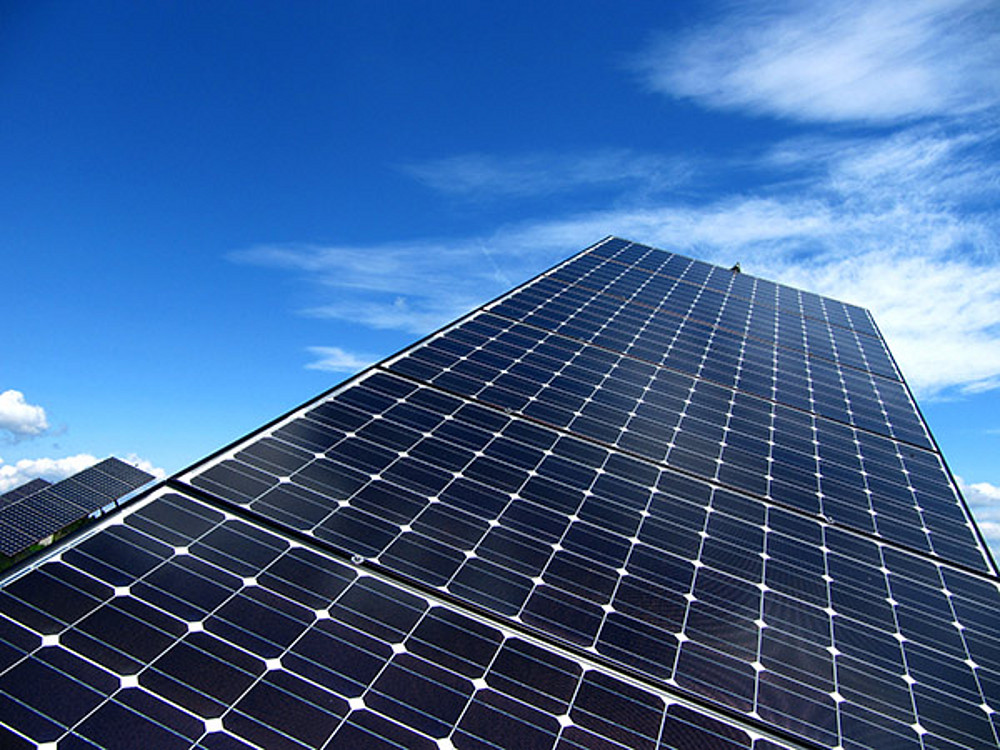
Über Fotovoltaikanlagen könnte der weltweite Energiebedarf spielend gedeckt werden. Foto: Rainer Sturm / www.pixelio.de


Über Fotovoltaikanlagen könnte der weltweite Energiebedarf spielend gedeckt werden. Foto: Rainer Sturm / www.pixelio.de
WissenschafterInnen der Uni Graz haben ein Werkzeug entwickelt, um Solarenergie optimal zu nutzen

Fotovoltaik ist die einzige erneuerbare Energieform, die sogar ein Vielfaches unseres heutigen Bedarfs abdecken könnte. Allerdings ist sie aufgrund des Tages- und Jahreszeitenkreislaufs nicht in der Lage, an einem Standort konstant zu liefern. Ao.Univ.-Prof. Dr. Karl Steininger vom Institut für Volkswirtschaftslehre und vom Wegener Center der Uni Graz hat mit seinem Team nun ein Analyseinstrument entwickelt, das hilft, Sonnenstrom effizient und kontinuierlich verfügbar zu machen. Die Publikation  von Wolf Grossmann, Iris Grossmann und Karl W. Steininger erscheint heute, am 9. März 2015, ab 21 Uhr MEZ unter dem Titel „Solar electricity supply isolines of generation capacity and storage“ als Artikel #201316781 in der aktuellen Ausgabe des renommierten Fachmagazins Proceedings of the National Academy of Sciences (www.pnas.org).

Reale Wetterwerte
„Wir haben anhand von NASA-Daten aus den letzen zwanzig Jahren die tatsächliche Sonneneinstrahlung an 270 Punkten der Erde im Stundentakt ermittelt“, berichtet Steininger. Daraus leiteten die WissenschafterInnen ab, welche Produktionskapazität eine Fotovoltaikanlage bestimmter Größe zu welchem Zeitpunkt haben würde. „Mit unserem Werkzeug lässt sich bestimmen, welche Kombinationen von Kollektorfläche und Speichergröße ökonomisch sinnvoll sind“, präzisiert der Volkswirt. Um die mindestens benötigte Energiemenge zu liefern, kann entweder die Anlage so dimensioniert sein, dass sie auch bei Bewölkung oder bei schwacher Sonneneinstrahlung im Winter ausreichend Strom produziert, oder die Speicherkapazitäten sind so groß, dass sie jahreszeitliche bzw. Schlechtwetterverluste ausgleichen. „Derzeit fällt der Preis der Module stärker als der der Speichertechnologien, was in vielen Fällen größere Fotovoltaik-Flächen sinnvoller macht“, meint der Experte. Und am Platz sollte es nicht scheitern: „Es wären lediglich zwei Prozent der Wüstenfläche der Erde nötig, um die Gesamtenergieversorgung der Welt zu gewährleisten“, weiß Steininger.
Das neue Analyseinstrument hilft weiters, global mehrere Standorte von Fotovoltaikanlagen ideal und wirtschaftlich rentabel zu verbinden: „Kombiniere ich ausreichend entfernte Punkte im Westen und Osten, ist im Netz irgendwo immer Tag, und ich kann den Überschuss von dort an jene Orte ableiten, in denen gerade nicht die Sonne scheint“, beschreibt der Volkswirt. Selbiges gilt für Zusammenschlüsse von Standorten auf der Nord- und Südhalbkugel. „Im Sommer können wir in Österreich die vierfache Solarenergiemenge vom Winter produzieren“, so Steininger. Die Leitungskosten sind derzeit wesentlich geringer als die Stromspeicher.

Effizientes Management
Schließlich hilft das Werkzeug einzelnen Energieanbietern auch, auf die aktuelle Wetterlage zu reagieren und die eigenen Fotovoltaikanlagen optimal zu nutzen. Die Technologien, um den produzierten Strom zu speichern, sind unterschiedlich teuer und effizient.  AnlagenmanagerInnen könnten also bei prognostizierten Wolken zusätzliche Speicher aktivieren, deren Kosten sie sich in anhaltenden Hochdruckperioden sparen.

Für das Analyseinstrument haben Steininger und sein Team erstmals ein theoretisches Modell aus den Wirtschaftswissenschaften angewendet, das ein konstantes Output-Niveau garantieren soll, und damit gezeigt, dass es auch unter variablen Gegebenheiten der Sonneneinstrahlung in der Praxis funktioniert. Die Forschungen sind Teil des gesamtuniversitären Schwerpunkts "Umwelt und Globaler Wandel".


Link zum Artikel

created by Dagmar Eklaude

Related news

Jurassic Sounds: Biologist reconstructs insect songs from 165 million years ago

It was apparently not just the roars of the dinosaurs that made up the soundscape of the animal world during the Jurassic period. Crickets and grasshoppers communicated through a variety of songs and high-pitched sounds, as Thorin Jonsson from the Institute of Biology at the University of Graz discovered together with colleagues from the universities of Lincoln, Bristol (UK), Beijing (China) and Tempe (USA). The findings on what are so far the oldest traces of sound on Earth have just been published in the journal PNAS.

EU funding boosts international exchange between universities

The University of Graz is further expanding its international study opportunities through the European university alliance Arqus and is taking the lead in two key projects. In future, students will benefit from even more joint degree programmes and from simplified recognition of academic achievements through the Joint European Degree Label.

Rescue and risks: Researchers have surveyed public perceptions of AI

The use of artificial intelligence has had to be made transparent since 2 August 2026. The EU’s AI Act, which has been in force since then, also sets out how risky an application is and which security measures apply as a result. However, the assessment of risks by the legislation differs in some cases significantly from the perceptions of the Austrian public. This is the finding of a representative study carried out by data scientist Stefan Thalmann from the University of Graz and his team.

The Healing Sea: Researchers discover new approaches to treating chronic inflammation in sponges

Chronic inflammation plays a key role in many diseases, ranging from metabolic disorders and cardiovascular diseases to tissue damage following injuries or infections. “Normally, the body is able to resolve inflammation on its own. If this process becomes unbalanced, immune cells remain permanently active and continue to drive negative changes in the tissue,” explains Andreas Koeberle, a pharmacist at the University of Graz.

Begin of page section:
Additional information:

University of Graz
Universitaetsplatz 3
8010 Graz
Austria
  • Contact
  • Web Editors
  • Moodle
  • UNIGRAZonline
  • Imprint
  • Data Protection Declaration
  • Accessibility Declaration
Weatherstation
Uni Graz

End of this page section. Go to overview of page sections

End of this page section. Go to overview of page sections

Begin of page section:

End of this page section. Go to overview of page sections