Begin of page section:
Page sections:

  • Go to contents (Accesskey 1)
  • Go to position marker (Accesskey 2)
  • Go to main navigation (Accesskey 3)
  • Go to sub navigation (Accesskey 4)
  • Go to additional information (Accesskey 5)
  • Go to page settings (user/language) (Accesskey 8)
  • Go to search (Accesskey 9)

End of this page section. Go to overview of page sections

Begin of page section:
Page settings:

English en
Deutsch de
Search
Login

End of this page section. Go to overview of page sections

Begin of page section:
Search:

Search for details about Uni Graz
Close

End of this page section. Go to overview of page sections


Search

Begin of page section:
Main navigation:

Page navigation:

  • University

    University
    • About the University
    • Organisation
    • Faculties
    • Library
    • Working at University of Graz
    • Campus
    Developing solutions for the world of tomorrow - that is our mission. Our students and our researchers take on the great challenges of society and carry the knowledge out.
  • Research Profile

    Research Profile
    • Our Expertise
    • Research Questions
    • Research Portal
    • Promoting Research
    • Research Transfer
    • Ethics in Research
    Scientific excellence and the courage to break new ground. Research at the University of Graz creates the foundations for making the future worth living.
  • Studies

    Studies
    • Prospective Students
    • Students
  • Community

    Community
    • International
    • Location
    • Research and Business
    • Alumni
    The University of Graz is a hub for international research and brings together scientists and business experts. Moreover, it fosters the exchange and cooperation in study and teaching.
  • Spotlight
Topics
  • Sustainable University
  • Researchers answer
  • Work for us
Close menu

End of this page section. Go to overview of page sections

Begin of page section:
You are here:

University of Graz News Viel Rot, kaum Grün

End of this page section. Go to overview of page sections

Friday, 04 December 2020

Viel Rot, kaum Grün

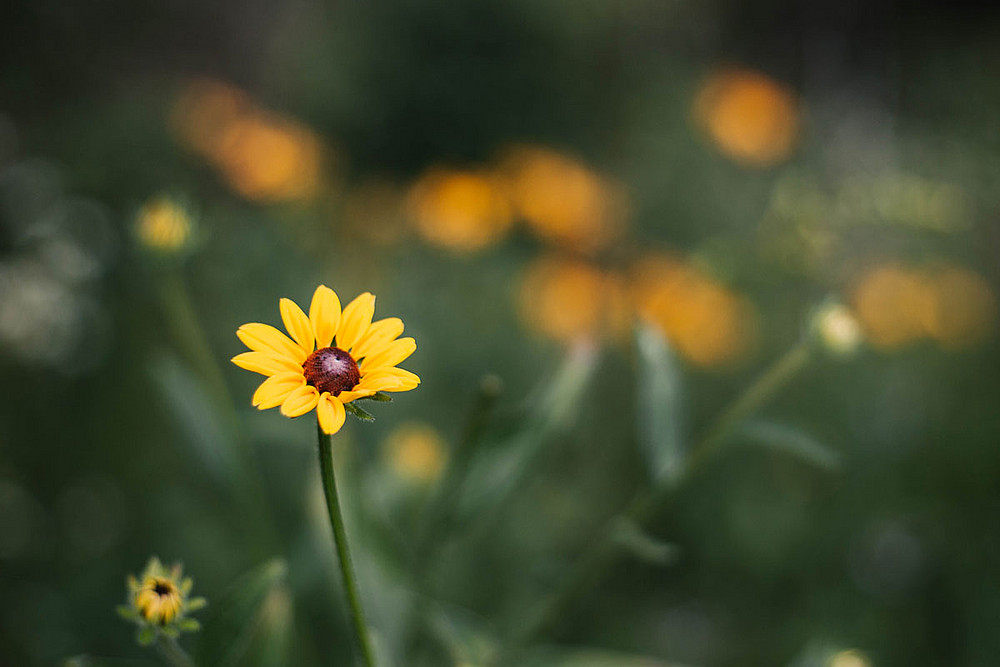
Foto: Pexels.com

Foto: Pexels.com

Biodiversitätsrat präsentiert Barometer zur Biodiversitätspolitik in Österreich

Angesichts des Artensterbens in Österreich stellt der Österreichische Biodiversitätsrat das „Barometer Biodiversitätspolitik in Österreich“ vor: In insgesamt 18 Punkten analysieren die Expert_innen die politischen Pläne, um den Verlust der biologischen Vielfalt aufzuhalten. Zwar enthält das Regierungsprogramm erstmals das Kapitel “Artenvielfalt erhalten – Natur schützen”, dennoch zeigt das Barometer nur vereinzeltes Aufkeimen von Grün. Vorhaben wie die ökosoziale Steuerreform oder der Biodiversitätsfonds weisen zwar in die richtige Richtung, seien aber noch zu wenig ambitioniert. „Und bei Themen wie dem Flächenverbrauch oder der Industrialisierung der Landwirtschaft kann von einer Trendumkehr keine Rede sein“, erklärt Christian Sturmbauer aus dem Leitungsteam des Biodiversitätsrates.

Auch wenn derzeit COVID-19 im Vordergrund stehen muss, hat die Krise des Biodiversitätsverlustes nicht an Dynamik verloren: Die Vielfalt der Arten und Ökosysteme nimmt weltweit und insbesondere auch in Österreich weiterhin drastisch ab. Vor diesem Hintergrund hat der Österreichische Biodiversitätsrat die Pläne der Regierung daraufhin untersucht, ob sie das Artensterben und den Verlust der biologischen Vielfalt aufhalten können.

Das Ergebnis: „Die bisherigen Maßnahmen reichen bei weitem nicht aus“, fasst es Alice Vadrot, Politikwissenschafterin an der Universität Wien und Mitglied des Leitungsteams des Biodiversitätsrates, zusammen. Mit dem „Barometer Biodiversitätspolitik in Österreich“ wird dieses Fazit klar sichtbar: Viel Rot, wenig Orange und nur vereinzeltes Grün.

„Zwar weisen einzelne Maßnahmen der Regierung in die richtige Richtung – beispielsweise die geplante ökosoziale Steuerreform oder der neue Biodiversitätsfonds“, erklärt Franz Essl, ebenfalls Mitglied des Leitungsteams des Biodiversitätsrates, „doch die Anstrengungen müssen sich hier noch vervielfachen!“

Möglichkeitsfenster nutzen
Auch in Zeiten von SARS-CoV müsse die Politik rasch tätig werden und die Weichen richtig stellen: „Wie bei COVID-19 geht es auch beim Biodiversitätsverlust darum, Möglichkeitsfenster zu nutzen. Wir müssen jetzt ambitioniert gegensteuern, um diese Kurve abzuflachen“, so Vadrot.

Das vom Biodiversitätsrat ausgearbeitete „Barometer Biodiversitätspolitik in Österreich“ wird im Rahmen eines Online-Hintergrundgespräches präsentiert, zu dem wir Sie herzlich einladen dürfen.

Online-Hintergrundgespräch via Zoom am Freitag, den 04.12.2020, 08:30 Uhr

donau- uni.zoom.us/j/99070656819?pwd=dVpVUThmMVh1Q0RrUG0zUklCYlhWQT09  
Meeting-ID: 990 7065 6819
Kenncode: 585569


Als GesprächspartnerInnen werden Ihnen die Mitglieder des Leitungsteams des Österreichischen Biodiversitätsrates zur Verfügung stehen:

Ass.-Prof. Mag. Dr. Franz Essl
Department für Botanik und Biodiversitätsforschung, Universität Wien M. +43 (0)676 609 16 39
franz.essl@univie.ac.at ufind.univie.ac.at/de/person.html

Ass.-Prof.in Mag.a Dr.in Irmgard Greilhuber
Department für Botanik und Biodiversitätsforschung, Universität Wien Mykologische Gesellschaft
Tel. +43-1-4277-540 50
Profil Kompetenzlandkarte

Univ.-Prof. Dr. Christian Sturmbauer
Institut für Biologie / Bereich Zoologie, Karl-Franzens-Universität Graz ABOL - Austrian Barcode of Life
M. +43 (0)676 3255080
christian.sturmbauer@uni-graz.at homepage.uni-graz.at/de/christian.sturmbauer/

Assoz.-Prof. Dr. Andreas Tribsch
Fachbereich Biowissenschaften, Universität Salzburg AG Biodiversity of Alpine plants
T. +43 +43 (0) 662 / 8044-5504 Andreas.tribsch@sbg.ac.at www.uni-salzburg.at/index.php

Ass.-Prof.in Mag.a Dr.in Alice Vadrot
Institut für Politikwissenschaft Universität Wien
M. +43 (0)650 423 11 85 alice.vadrot@univie.ac.at www.alicevadrot.eu

Ass.-Prof. Dr. Thomas Wrbka
Department für Botanik und Biodiversitätsforschung Universität Wien
M. +43-(0)664-60277-54375 thomas.wrbka@univie.ac.at


created by Konstantinos Tzivanopoulos

Related news

Cosmetics in the environment: University of Graz proves danger to ants

Titanium dioxide, which is found in cosmetics, for example, is increasingly entering the environment in the form of nanoparticles. This could also put insects at risk. If ants ingest the substance in combination with the pesticide glyphosate, it disturbs the development of their offspring. Scientists at the University of Graz are drawing attention to the negative consequences of this toxic cocktail.

How are tech companies changing democracy? Uni Graz designs exhibition for schools

Filtered information, conspiracy theories, fake news – certain groups and corporations are using social media and algorithms to try to influence public opinion in their favour. Their goal: to weaken fundamental rights and diversity of opinion and seize power. In a new exhibition, researchers at the University of Graz are working with pupils to explore the impact of social media and AI on democracy. In accompanying workshops, the scientists want to encourage young people to develop their own ideas for a socially and ecologically viable future and to actively help shape it. The exhibition, designed as a travelling exhibition for schools, will open on 9 March 2026 at the Dreihackengasse Gymnasium in Graz.

Step by step: What motivates Mireille van Poppel as a scientist and vice-rector

Improving people's health and eliminating inequalities: Mireille van Poppel pursues these goals both as a public health researcher and as vice-rector for Internationalisation and Equality. In both roles, she pays particular attention to individual needs.

Master's degree in psychotherapy in Graz: registration opens in March

Graz is becoming a hotspot for psychotherapy: from 2026, the University of Graz and the Medical University of Graz will jointly offer the new master's programme. Registration for the admission procedure for the 140 study places will start in March.

Begin of page section:
Additional information:

University of Graz
Universitaetsplatz 3
8010 Graz
Austria
  • Contact
  • Web Editors
  • Moodle
  • UNIGRAZonline
  • Imprint
  • Data Protection Declaration
  • Accessibility Declaration
Weatherstation
Uni Graz

End of this page section. Go to overview of page sections

End of this page section. Go to overview of page sections

Begin of page section:

End of this page section. Go to overview of page sections