




Begin of page section:
Page sections:

  • Go to contents (Accesskey 1)
  • Go to position marker (Accesskey 2)
  • Go to main navigation (Accesskey 3)
  • Go to sub navigation (Accesskey 4)
  • Go to additional information (Accesskey 5)
  • Go to page settings (user/language) (Accesskey 8)
  • Go to search (Accesskey 9)

End of this page section. Go to overview of page sections

Begin of page section:
Page settings:

English en
Deutsch de
Search
Login

End of this page section. Go to overview of page sections

Begin of page section:
Search:

Search for details about Uni Graz
Close

End of this page section. Go to overview of page sections


Search

Begin of page section:
Main navigation:

Page navigation:

  • University

    University
    • About the University
    • Organisation
    • Faculties
    • Library
    • Working at University of Graz
    • Campus
    Developing solutions for the world of tomorrow - that is our mission. Our students and our researchers take on the great challenges of society and carry the knowledge out.
  • Research Profile

    Research Profile
    • Our Expertise
    • Research Questions
    • Research Portal
    • Promoting Research
    • Research Transfer
    • Ethics in Research
    • Commission for Scientific Integrity
    Scientific excellence and the courage to break new ground. Research at the University of Graz creates the foundations for making the future worth living.
  • Studies

    Studies
    • Prospective Students
    • Students
  • Community

    Community
    • International
    • Location
    • Research and Business
    • Alumni
    The University of Graz is a hub for international research and brings together scientists and business experts. Moreover, it fosters the exchange and cooperation in study and teaching.
Topics
  • Sustainable University
  • Researchers answer
  • Work for us
Close menu

End of this page section. Go to overview of page sections

Begin of page section:
You are here:

University of Graz News Vertrauenssache

End of this page section. Go to overview of page sections

Wednesday, 30 March 2022

Vertrauenssache

Ob bei Gericht, in der Medizin oder im Marketing: Künstliche Intelligenz (KI) wird schon in vielen Bereichen eingesetzt. Wie eine KI funktioniert, wie wir gut mit ihr zusammenarbeiten und worauf wir dabei achten müssen, darüber spricht der Rechtswissenschafter Matthias Wendland in der aktuellen Ausgabe von "HörSaal". Foto: pexels.com

Ob bei Gericht, in der Medizin oder im Marketing: Künstliche Intelligenz (KI) wird schon in vielen Bereichen eingesetzt. Wie eine KI funktioniert, wie wir gut mit ihr zusammenarbeiten und worauf wir dabei achten müssen, darüber spricht der Rechtswissenschafter Matthias Wendland in der aktuellen Ausgabe von "HörSaal". Foto: pexels.com

Die KI und wir: Wie schaffen wir eine gute Zusammenarbeit? Rechtsexperte Matthias Wendland dazu im Podcast "HörSaal: 15 Minuten Forschung"

Künstliche Intelligenz (KI) umgibt uns schon jetzt in einem größeren Ausmaß, als vielen bewusst ist. Welche Fragen stellen sich – zum Beispiel aus ethischer und rechtlicher Sicht – für unsere „Zusammenwirken“ mit KI? Wie und wann können wir einer KI eigentlich vertrauen? Mit diesen Fragen beschäftigt sich der Rechtswissenschafter Matthias Wendland an der Universität Graz. Im "HörSaal-"Podcast erklärt er, warum eine KI am ehesten mit menschlicher Intuition vergleichbar ist und wie man für sie normative Standards festlegt. Auch das im Entwicklungsplan der Universität Graz festgelegte, geplante Masterstudium "KI und Gesellschaft" bespricht Matthias Wendland und erklärt, was Studierende dabei lernen und in welchen Bereichen sie danach arbeiten können. 

Zur Folge auf: 

>> UniTube
>> Spotify
>> Apple Podcasts
>> Anchor.fm


>> Matthias Wendland im Video-Interview
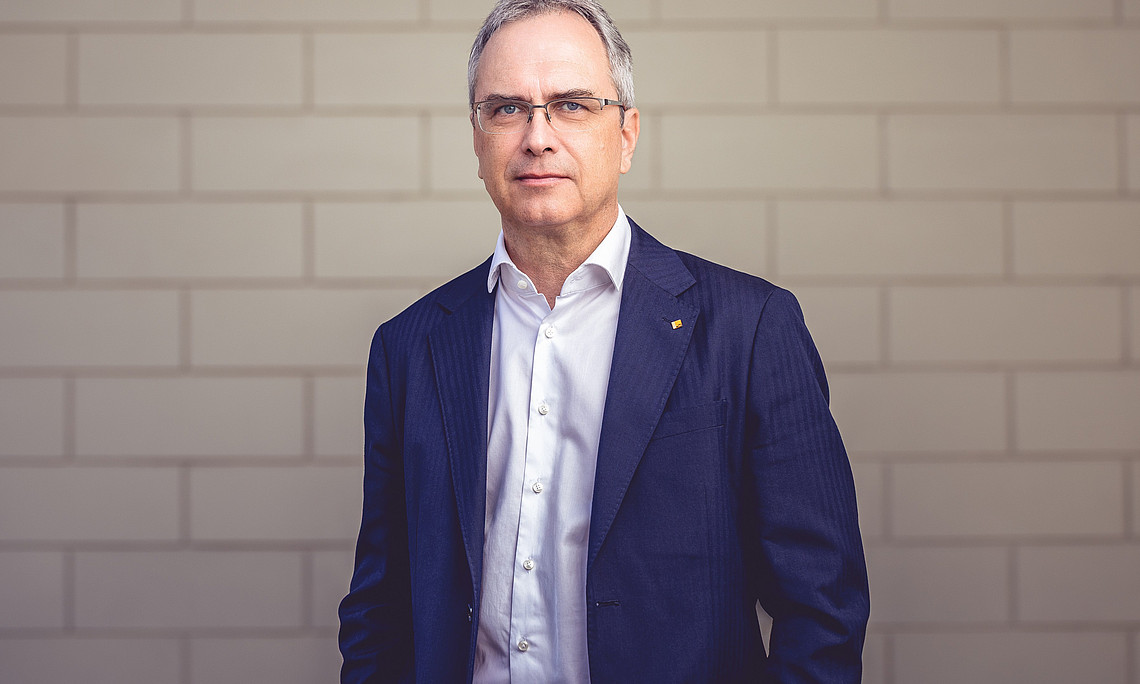
 

created by Gerhild Leljak

Related news

Complying with the norm: Why Do Standards Shape Our Lives, Elisabeth Staudegger?

Standards determine whether a sheet of paper fits in a printer or whether a charging plug can power multiple devices. These standards shape our everyday lives. But who actually sets these standards? Where are the weaknesses, and how could science help to improve them? Elisabeth Staudegger, Head of the ‘Law and IT’ Department at the Institute for Legal Foundations at the University of Graz, host the Academic Standards Day on 16 June. Here she relays how sciences can contribute to the topic of standardisation and reveals her personal favourite standard.

More body awareness than a culture war

In Italy, sex education lessons will in future only be permitted with parental consent, and will be banned entirely in nurseries and primary schools. At the same time, Pride Month highlights why knowledge about the body, relationships, boundaries and diversity is important for young people. A study by the University of Graz shows how important knowledge about the body, contraception, relationship skills and protection against violence is

Will Austria win the World Cup? Mathematician reveals calculation method

Michael Fischer uses the football tournament as a practical example for highschool lessons.

Survival strategies: How plants respond to drought

According to Geosphere Austria, this spring was the driest in Austria since records began around 170 years ago. The low rainfall put particular pressure on the agricultural sector. And climate change is set to make the situation even worse in the coming decades. We asked Johannes Liesche, a professor at the Department of Biology at the University of Graz, how plants react to water shortages and how they survive periods of drought.

Begin of page section:
Additional information:

University of Graz
Universitaetsplatz 3
8010 Graz
Austria
  • Contact
  • Web Editors
  • Moodle
  • UNIGRAZonline
  • Imprint
  • Data Protection Declaration
  • Accessibility Declaration
Weatherstation
Uni Graz

End of this page section. Go to overview of page sections

End of this page section. Go to overview of page sections

Begin of page section:

End of this page section. Go to overview of page sections


