



Begin of page section:
Page sections:

  • Go to contents (Accesskey 1)
  • Go to position marker (Accesskey 2)
  • Go to main navigation (Accesskey 3)
  • Go to sub navigation (Accesskey 4)
  • Go to additional information (Accesskey 5)
  • Go to page settings (user/language) (Accesskey 8)
  • Go to search (Accesskey 9)

End of this page section. Go to overview of page sections

Begin of page section:
Page settings:

English en
Deutsch de
Search
Login

End of this page section. Go to overview of page sections

Begin of page section:
Search:

Search for details about Uni Graz
Close

End of this page section. Go to overview of page sections


Search

Begin of page section:
Main navigation:

Page navigation:

  • University

    University
    • About the University
    • Organisation
    • Faculties
    • Library
    • Working at University of Graz
    • Campus
    Developing solutions for the world of tomorrow - that is our mission. Our students and our researchers take on the great challenges of society and carry the knowledge out.
  • Research Profile

    Research Profile
    • Our Expertise
    • Research Questions
    • Research Portal
    • Promoting Research
    • Research Transfer
    • Ethics in Research
    • Commission for Scientific Integrity
    Scientific excellence and the courage to break new ground. Research at the University of Graz creates the foundations for making the future worth living.
  • Studies

    Studies
    • Prospective Students
    • Students
    • Welcome Weeks for First Year Students
  • Community

    Community
    • International
    • Location
    • Research and Business
    • Alumni
    The University of Graz is a hub for international research and brings together scientists and business experts. Moreover, it fosters the exchange and cooperation in study and teaching.
Topics
  • Sustainable University
  • Researchers answer
  • Work for us
Close menu

End of this page section. Go to overview of page sections

Begin of page section:
You are here:

University of Graz News Neue Teilchen?

End of this page section. Go to overview of page sections

Thursday, 31 March 2022

Neue Teilchen?

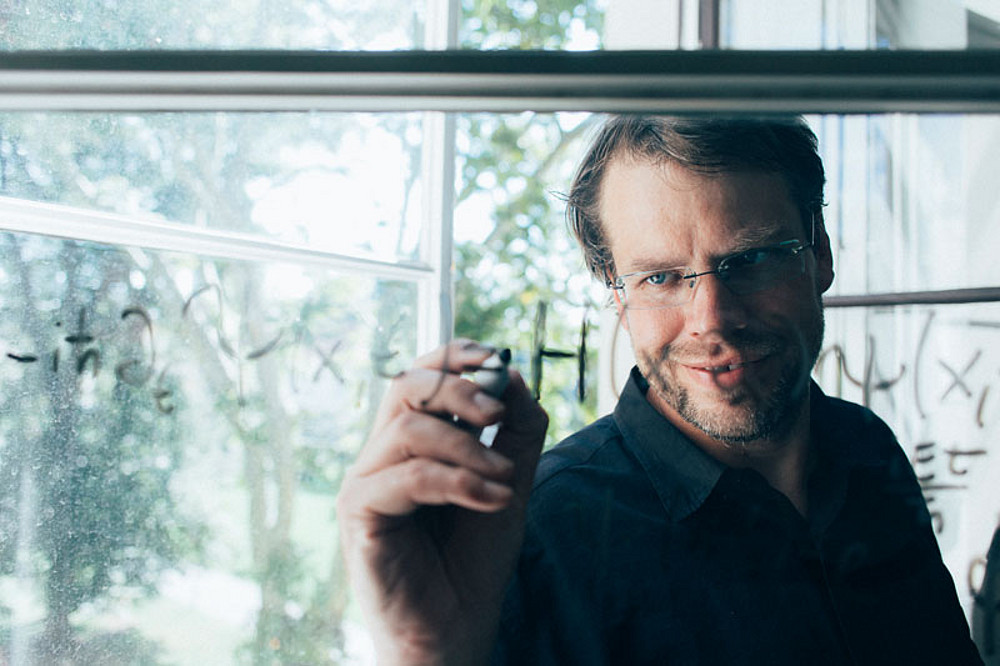
Axel Maas ist einer der PhysikerInnen der Uni Graz, die an der Studie zum Future Circular Collider, einem Teilchenbeschleuniger der nächsten Generation, beteiligt sind. Foto: Uni Graz/Kanizaj ©Kanizaj | 2018
©Kanizaj | 2018

Axel Maas ist einer der PhysikerInnen der Uni Graz, die an der Studie zum Future Circular Collider, einem Teilchenbeschleuniger der nächsten Generation, beteiligt sind. Foto: Uni Graz/Kanizaj

Uni Graz kooperiert mit dem Kernforschungszentrum CERN

Die kleinsten Bausteine des Universums werden seit 2008 am CERN in der Schweiz mit dem größten Teilchenbeschleuniger der Welt, dem Large Hadron Collider (LHC) erforscht. Zu den bislang spektakulärsten Entdeckungen zählte 2012 der Nachweis des Higgs-Teilchens. Doch es ist absehbar, dass der LHC an seine Grenzen stoßen wird. Um Licht in weitere rätselhafte Phänomene bringen zu können, befassen sich Wissenschaft und Technik bereits mit der nächsten Generation von Teilchenbeschleunigern, insbesondere mit dem Future Circular Collider (FCC). Die Universität Graz ist eine der KooperationspartnerInnen, die nun in Machbarkeitsstudien daran forschen, welche Technologien zu welchen neuen Erkenntnissen führen könnten.

Der LHC am CERN hat der Teilchenphysik zu einigen bahnbrechenden Entdeckungen verholfen. Nach wie vor aber gibt es viele Ungereimtheiten, die sich mit den bisherigen Beobachtungen nicht erklären lassen. Das Thema Dunkle Materie ist nur eine der offenen Fragen. „Es liegt nahe, dass weitere Bausteine des Universums und Wechselwirkungen existieren, doch um alle diese zu finden, wird der LHC alleine nicht leistungsstark genug sein“, sagt Axel Maas, Leiter des Instituts für Physik der Universität Graz. Mit dem Future Circular Collider soll es gelingen, Teilchen mit extrem hohen Energien von bis zu 100 Teraelektronenvolt – mehr als das Siebenfache des LHC – kollidieren zu lassen und dabei neue Phänomene zu entdecken. Mehrere Teams des Instituts für Physik sind an der Studie zum FCC beteiligt.

„Das weltweit führende Kernforschungszentrum CERN ruft WissenschafterInnen der Universität Graz zur Mitgestaltung seiner Zukunftsausrichtung auf. Das ist eine Anerkennung und Bestätigung der international sichtbaren Kompetenzen am Institut für Physik. Gleichzeitig eröffnet die Zusammenarbeit unseren ForscherInnen fantastische Möglichkeiten, sich bei der Entwicklung neuer Perspektiven für die Elementarteilchenphysik einzubringen“, unterstreicht Joachim Reidl, Vizerektor für Forschung und Nachwuchsförderung der Uni Graz, die Bedeutung der Kooperation.

>> mehr Informationen zur Future Circular Collider Study

Für die ForscherInnen von morgen
Von der international vernetzten Forschung der Uni Graz profitieren am 1. April 2022 auch interessierte Jugendliche. Im Rahmen der Masterclass für Teilchenphysik bekommen SchülerInnen der Oberstufe von WissenschafterInnen an der Universität Einblick in Grundlagen und Arbeitsweisen dieses faszinierenden Fachgebiets und können dabei Experimente durchführen sowie Daten vom LHC analysieren. Auch eine Video-Konferenz mit ExpertInnen im CERN steht auf dem Programm. Diese Masterclasses finden einmal jährlich auf der ganzen Welt statt. In Graz werden sie vom Institut für Physik und dem Regionalen Fachdidaktikzentrum Physik Steiermark gemeinsam mit der IPPOG (International Particle Physics Outreach Group) organisiert.
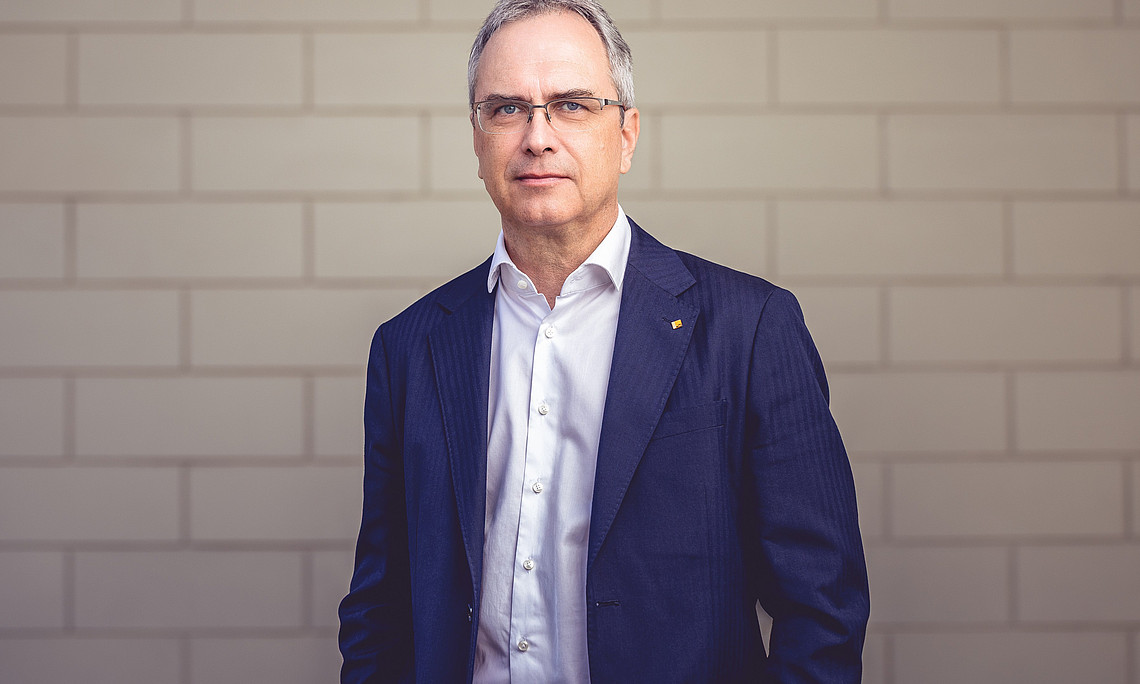

created by Gudrun Pichler

Related news

Electrifying: Researchers film the first moments on the way from light to electricity

Physicists at the University of Graz (Austria), in collaboration with colleagues from Marburg University and Forschungszentrum Jülich (Germany), have achieved a scientific breakthrough. For the first time, the generation of electrical energy from light has been filmed and described theoretically. This work is of far-reaching significance, not least for optimising sustainable energy production from photovoltaics. This is because it provides fundamental building blocks for understanding the physical processes that take place, for example, in organic solar cells. The paper was published in the journal Physical Review X, one of the world’s most prestigious physics journals.

University of Graz: Working together to make Styria a sustainable centre of learning

Round table calls for sustainable funding for the 2028–2030 performance agreement period between the five Styrian universities and the federal government.

How can we teach using YouTube and AI? The University of Graz is strengthening media education in schools

A journey through the blood vessels using VR headsets brings biology lessons to life. An interactive quiz brings physics to life. The YouTube video explains the First World War. Whilst mobile phones are increasingly being banned from the classroom, social media platforms, apps and AI are playing an ever-greater role in knowledge transfer at school. But how can teaching with media be made even more effective? What are the challenges in media-based teaching? At the University of Graz, researchers are discussing these issues at a conference being held in Austria for the first time.

Jurassic Sounds: Biologist reconstructs insect songs from 165 million years ago

It was apparently not just the roars of the dinosaurs that made up the soundscape of the animal world during the Jurassic period. Crickets and grasshoppers communicated through a variety of songs and high-pitched sounds, as Thorin Jonsson from the Institute of Biology at the University of Graz discovered together with colleagues from the universities of Lincoln, Bristol (UK), Beijing (China) and Tempe (USA). The findings on what are so far the oldest traces of sound on Earth have just been published in the journal PNAS.

Begin of page section:
Additional information:

University of Graz
Universitaetsplatz 3
8010 Graz
Austria
  • Contact
  • Web Editors
  • Moodle
  • UNIGRAZonline
  • Imprint
  • Data Protection Declaration
  • Accessibility Declaration
Weatherstation
Uni Graz

End of this page section. Go to overview of page sections

End of this page section. Go to overview of page sections

Begin of page section:

End of this page section. Go to overview of page sections

