



Begin of page section:
Page sections:

  • Go to contents (Accesskey 1)
  • Go to position marker (Accesskey 2)
  • Go to main navigation (Accesskey 3)
  • Go to sub navigation (Accesskey 4)
  • Go to additional information (Accesskey 5)
  • Go to page settings (user/language) (Accesskey 8)
  • Go to search (Accesskey 9)

End of this page section. Go to overview of page sections

Begin of page section:
Page settings:

English en
Deutsch de
Search
Login

End of this page section. Go to overview of page sections

Begin of page section:
Search:

Search for details about Uni Graz
Close

End of this page section. Go to overview of page sections


Search

Begin of page section:
Main navigation:

Page navigation:

  • University

    University
    • About the University
    • Organisation
    • Faculties
    • Library
    • Working at University of Graz
    • Campus
    Developing solutions for the world of tomorrow - that is our mission. Our students and our researchers take on the great challenges of society and carry the knowledge out.
  • Research Profile

    Research Profile
    • Our Expertise
    • Research Questions
    • Research Portal
    • Promoting Research
    • Research Transfer
    • Ethics in Research
    • Commission for Scientific Integrity
    Scientific excellence and the courage to break new ground. Research at the University of Graz creates the foundations for making the future worth living.
  • Studies

    Studies
    • Prospective Students
    • Students
    • Welcome Weeks for First Year Students
  • Community

    Community
    • International
    • Location
    • Research and Business
    • Alumni
    The University of Graz is a hub for international research and brings together scientists and business experts. Moreover, it fosters the exchange and cooperation in study and teaching.
Topics
  • Sustainable University
  • Researchers answer
  • Work for us
Close menu

End of this page section. Go to overview of page sections

Begin of page section:
You are here:

University of Graz News Verborgener Code

End of this page section. Go to overview of page sections

Tuesday, 04 September 2018

Verborgener Code

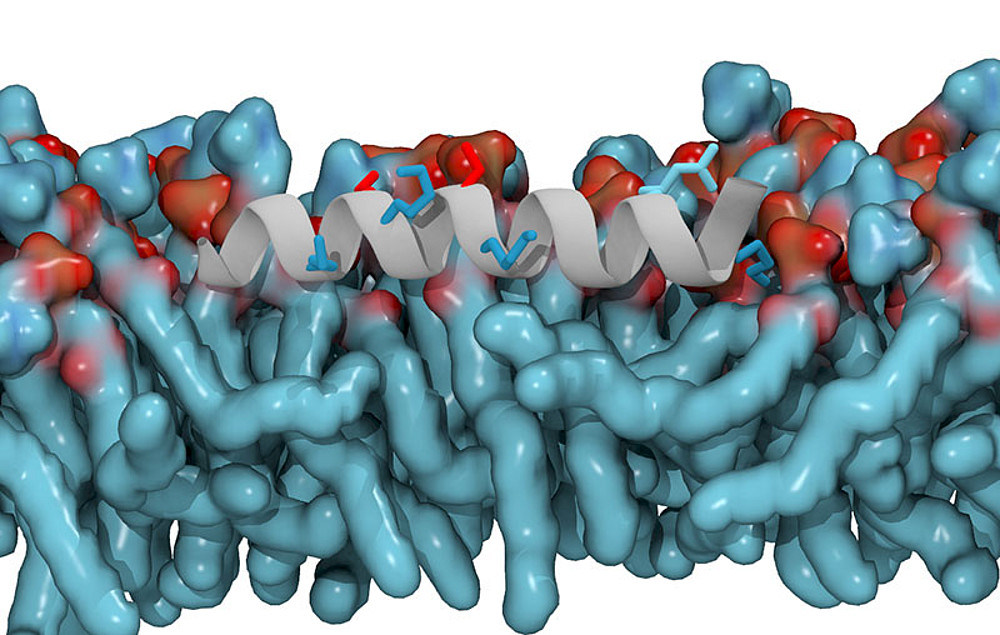
Computersimulation einer amphipathischen Helix in einer Modellmembran bestehend aus Phosphatidsäure und Phosphatidylcholin. Positiv geladene Aminosäure-Seitenketten sind blau, negativ geladene Aminosäure-Seitenketten rot dargestellt. Grafik: Max-Planck Institut Frankfurt, Michael Gecht.

Computersimulation einer amphipathischen Helix in einer Modellmembran bestehend aus Phosphatidsäure und Phosphatidylcholin. Positiv geladene Aminosäure-Seitenketten sind blau, negativ geladene Aminosäure-Seitenketten rot dargestellt. Grafik: Max-Planck Institut Frankfurt, Michael Gecht.

Grazer Forscher fand heraus, wie Zellen kritische Membraneigenschaften erkennen und regulieren

Damit hochkomplexe Prozesse in der Zelle geordnet ablaufen können, müssen molekulare Wechselwirkungen zwischen Biomolekülen reibungslos funktionieren. Gestörte Interaktionen können eine Vielzahl von Krankheiten auslösen, weshalb es essenziell ist, diese Wechselwirkungen genau zu erforschen. Eine besonders wichtige Rolle kommt in dieser Hinsicht Protein-Interaktionen mit biologischen Membranen zu. Diese Membranen grenzen eine Zelle nach außen ab oder bilden abgeteilte Bereiche innerhalb einer Zelle und sind aus verschiedenen speziellen Fetten (Lipiden) aufgebaut. Sie verleihen der Membran Stabilität, Dynamik und eine hohe Flexibilität. „Die für ihre Funktion entscheidenden Membraneigenschaften werden von speziellen Membran-Sensoren kontrolliert. Sie können bei gestörter Lipidzusammensetzung auch geeignete zelluläre Reparaturprozesse einleiten“, erklärt Harald Hofbauer vom Institut für Molekulare Biowissenschaften der Universität Graz.

Bislang war die Selektivität dieses Erkennungsprozesses weitgehend ungeklärt. Harald Hofbauer hat während seines Auslandsaufenthaltes in der Arbeitsgruppe von Robert Ernst in Frankfurt/Main jedoch herausgefunden, dass bestimmte Strukturen in diesen Lipidsensoren, sogenannte „amphipathische Helices“, dafür verantwortlich sind, um neben der spezifischen Lipidzusammensetzung auch biophysikalische Eigenschaften wie Membranfluidität und Membrankrümmung zu erkennen. „Es scheint eine Art verborgener Membran-Erkennungscode in diesen amphipathischen Helices zu existieren, um Membraneigenschaften zu detektieren und bei nicht tolerierbaren Abweichungen Gegenmaßnahmen einzuleiten oder sogar den zellulären Notstand auszurufen“ erläutert Hofbauer, dessen Forschungsergebnisse kürzlich im höchst renommierten Fachblatt „The Journal of Cell Biology“ erschienen sind. Die Erkenntnisse könnten einen wichtigen Beitrag für die Entwicklung neuartiger Antibiotika auf Basis von Membran-aktiven Peptiden liefern.

Zukünftig will Hofbauer, der aktuell wieder in der Arbeitsgruppe von Sepp-Dieter Kohlwein am Institut für Molekulare Biowissenschaften an der Universität Graz tätig ist, gemeinsam mit den Biophysikern Karl Lohner und Georg Pabst und KooperationspartnerInnen am Max-Planck-Institut in Frankfurt im Detail untersuchen, wie solche amphipathischen Helices kritische Membraneigenschaften erkennen und eine speziell darauf zugeschnittene zelluläre Antwort einleiten. „Meine Forschungsergebnisse sollen in Zukunft zur Optimierung von Membran-spezifischen Lipidsensoren beitragen und auch die Herstellung von hoch-selektiven antimikrobiellen Peptiden ermöglichen“ so Hofbauer. Graz sei aufgrund der exzellenten Zusammenarbeit zwischen verschiedenen Forschungseinrichtungen ein besonders gutes Pflaster für die zukunftsweisenden Arbeiten, so der Wissenschafter.
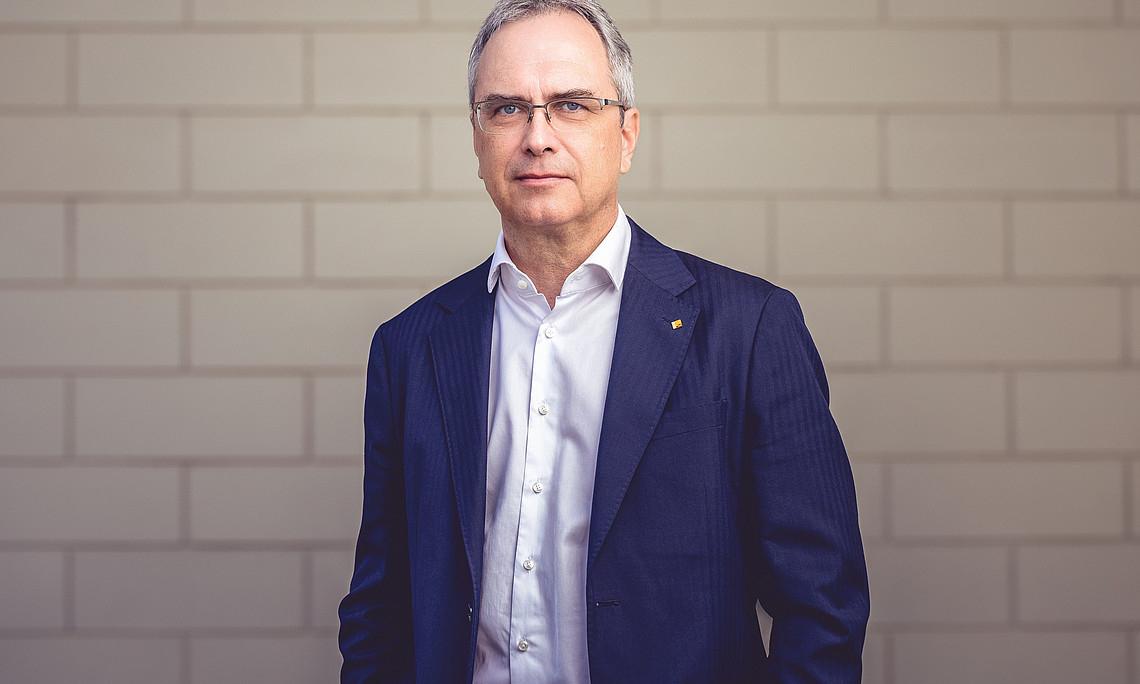

created by Harald Hofbauer & Gerhild Leljak

Related news

Jurassic Sounds: Biologist reconstructs insect songs from 165 million years ago

It was apparently not just the roars of the dinosaurs that made up the soundscape of the animal world during the Jurassic period. Crickets and grasshoppers communicated through a variety of songs and high-pitched sounds, as Thorin Jonsson from the Institute of Biology at the University of Graz discovered together with colleagues from the universities of Lincoln, Bristol (UK), Beijing (China) and Tempe (USA). The findings on what are so far the oldest traces of sound on Earth have just been published in the journal PNAS.

EU funding boosts international exchange between universities

The University of Graz is further expanding its international study opportunities through the European university alliance Arqus and is taking the lead in two key projects. In future, students will benefit from even more joint degree programmes and from simplified recognition of academic achievements through the Joint European Degree Label.

Rescue and risks: Researchers have surveyed public perceptions of AI

The use of artificial intelligence has had to be made transparent since 2 August 2026. The EU’s AI Act, which has been in force since then, also sets out how risky an application is and which security measures apply as a result. However, the assessment of risks by the legislation differs in some cases significantly from the perceptions of the Austrian public. This is the finding of a representative study carried out by data scientist Stefan Thalmann from the University of Graz and his team.

The Healing Sea: Researchers discover new approaches to treating chronic inflammation in sponges

Chronic inflammation plays a key role in many diseases, ranging from metabolic disorders and cardiovascular diseases to tissue damage following injuries or infections. “Normally, the body is able to resolve inflammation on its own. If this process becomes unbalanced, immune cells remain permanently active and continue to drive negative changes in the tissue,” explains Andreas Koeberle, a pharmacist at the University of Graz.

Begin of page section:
Additional information:

University of Graz
Universitaetsplatz 3
8010 Graz
Austria
  • Contact
  • Web Editors
  • Moodle
  • UNIGRAZonline
  • Imprint
  • Data Protection Declaration
  • Accessibility Declaration
Weatherstation
Uni Graz

End of this page section. Go to overview of page sections

End of this page section. Go to overview of page sections

Begin of page section:

End of this page section. Go to overview of page sections

