Begin of page section:
Page sections:

  • Go to contents (Accesskey 1)
  • Go to position marker (Accesskey 2)
  • Go to main navigation (Accesskey 3)
  • Go to sub navigation (Accesskey 4)
  • Go to additional information (Accesskey 5)
  • Go to page settings (user/language) (Accesskey 8)
  • Go to search (Accesskey 9)

End of this page section. Go to overview of page sections

Begin of page section:
Page settings:

English en
Deutsch de
Search
Login

End of this page section. Go to overview of page sections

Begin of page section:
Search:

Search for details about Uni Graz
Close

End of this page section. Go to overview of page sections


Search

Begin of page section:
Main navigation:

Page navigation:

  • University

    University
    • About the University
    • Organisation
    • Faculties
    • Library
    • Working at University of Graz
    • Campus
    Developing solutions for the world of tomorrow - that is our mission. Our students and our researchers take on the great challenges of society and carry the knowledge out.
  • Research Profile

    Research Profile
    • Our Expertise
    • Research Questions
    • Research Portal
    • Promoting Research
    • Research Transfer
    • Ethics in Research
    • Commission for Scientific Integrity
    Scientific excellence and the courage to break new ground. Research at the University of Graz creates the foundations for making the future worth living.
  • Studies

    Studies
    • Prospective Students
    • Students
    • Registration for Study Programme (Winter semester 2026/27)
  • Community

    Community
    • International
    • Location
    • Research and Business
    • Alumni
    The University of Graz is a hub for international research and brings together scientists and business experts. Moreover, it fosters the exchange and cooperation in study and teaching.
Topics
  • Sustainable University
  • Researchers answer
  • Work for us
Close menu

End of this page section. Go to overview of page sections

Begin of page section:
You are here:

University of Graz News Uni macht Schule 

End of this page section. Go to overview of page sections

Monday, 03 December 2018

Uni macht Schule 

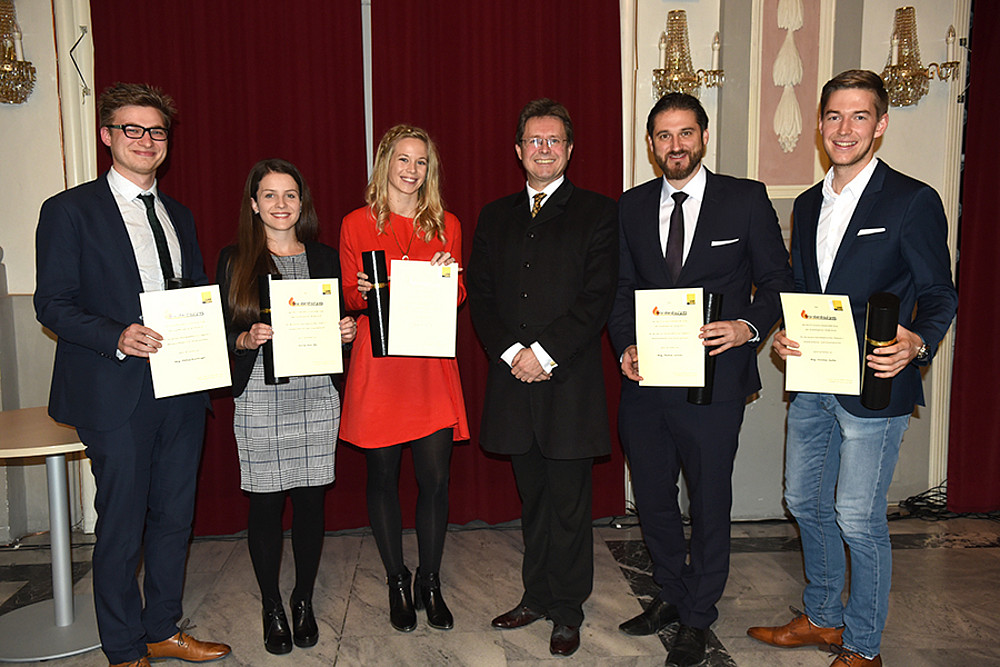
Ausgezeichnete Arbeiten: Philipp Baschinger, Denise Diex, Eva Wenig, Vizerektor Polaschek, Thomas Lechner und Christian Dorfer (v. l.) Fotos: Uni Graz/Schweiger

Ausgezeichnete Arbeiten: Philipp Baschinger, Denise Diex, Eva Wenig, Vizerektor Polaschek, Thomas Lechner und Christian Dorfer (v. l.) Fotos: Uni Graz/Schweiger

Wie Wissenschaft im Klassenzimmer ankommt: fachdidaktische Forschung im Fokus

Wie bringe ich Wissenschaft gut in den Unterricht? Wie profitieren davon die SchülerInnen im Klassenzimmer? Fachdidaktik lautet dazu der dazugehörige Begriff und Bereich. Und genau diesen hat die Universität Graz in den vergangenen Jahren massiv ausgebaut. Unter anderem mit zusätzlichen Hochschulraumstrukturmitteln, die die Einrichtung zahlreicher Professuren für Fachdidaktik ermöglichten. Mit dem Viktor-Obendrauf-Preis, der fachdidaktische Abschlussarbeiten von Studierenden auszeichnet. Die PädagogInnenbildung Neu, die gemeinsame Lehramtsausbildung mit den Pädagogischen Hochschulen, hat den wissenschaftlichen Stellenwert des Fachs ebenso vorangetrieben. Und das alles wird regelmäßig beim Tag der Fachdidaktik ins Rampenlicht gestellt. Dieser fand am 29. November 2018 zum bereits vierten Mal statt. „Ein lebendiges und starkes Zeichen für die Fachdidaktik“, wie Martin Polaschek, Vizerektor für Studium und Lehre, bei der Begrüßung hervorhob. 
Der inhaltliche Fokus lag heuer auf dem Aufbau und der Betreuung von Abschlussarbeiten sowie auf fachdidaktischen Forschungsmethoden und Qualitätsstandards. Damit befassten sich auch die beiden Impulsreferate von Sabine Schmölzer-Eibinger und Uwe Simon. „Was bedeutet es, wissenschaftlich zu schreiben und wie können Schule und Universität darauf vorbereiten?“, stellte Schmölzer-Eibinger, Leiterin des Fachdidaktikzentrums der Geisteswissenschaftlichen Fakultät, in den Mittelpunkt ihres Vortrags. Simon gab Einblicke in Beispiele hervorragender Abschlussarbeiten – und was man von ihnen lernen kann.

Viktor-Obendrauf-Preise

Den feierlichen Abschluss der Veranstaltung bildete die Verleihung des Viktor-Obendrauf-Preises, der, so Vizerektor Polaschek, an einen "großartigen Fachdidaktiker" erinnert und die besten fachdidaktischen Diplom-/Masterarbeiten und Dissertationen an der Universität Graz vor den Vorhang holen soll. Ausgezeichnet wurden heuer: 

  • Mag. Thomas Lechner (Unterrichtsfach Psychologie-Philosophie): Das Paradigmenkonzept als strukturierendes Element der kompetenzorientierten Psychologiedidaktik, Betreuer: Dr. Franz Zeder.
  • Denise Diex, BSC (Wirtschaftspädagogik): Einsatz interkultureller Trainings an Handelsakademien - Potenziale und Umsetzung zur Förderung interkultureller Kompetenz, Betreuerin: Univ.-Prof Michaela Stock
  • Mag. Eva Wenig (Unterrichtsfach Religion): Phantasie und religiöser Erkenntnisgewinn: Die Dimension der Imagination im Religionsunterricht und der Beitrag biblischer Phantasiereisen zur Förderung der Vorstellungskraft, Betreuer: DDr. Christian Feichtinger
  • Mag Christian Dorfer (Unterrichtsfach Bewegung und Sport): Bewegungsgeschichten als Mittel zur Entwicklung sozialer Kompetenz im Primärbereich. Ein Projekt in der Volksschule Ranten, Betreuerin: Ao.Univ.-Prof. Dr. Andrea Paletta
  • Mag. Philipp Baschinger (Unterrichtsfach Chemie): Wie erleben SchülerInnen unter Betrachtung ihrer Lern- und Leistungsmotivation sowie ihres LernerInnenselbstbildes kognitiven Konflikt, Betreuerin: Dr. Helga Voglhuber


Der Tag der Fachdidaktik wurde vom Praxis Netzwerk Fachdidaktik und dem Zentrum für PädagogInnenbildung der Universität Graz in Kooperation mit der Pädagogischen Hochschule Steiermark veranstaltet. 
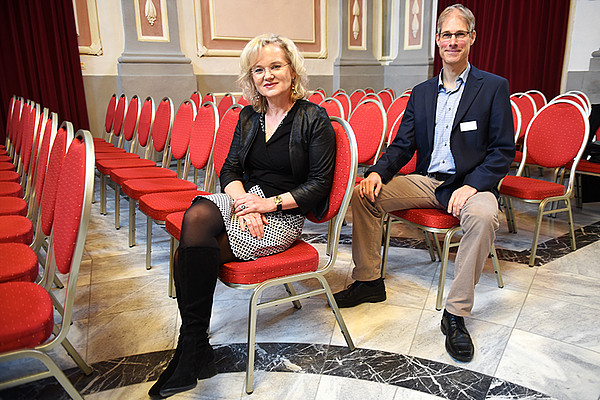
Impulsreferate hielten die beiden Fachdidaktik-ProfessorInnen Sabine Schmölzer-Eibinger und Uwe Simon.
created by Andreas Schweiger

Related news

Desert sand, microplastics, cancer cells: David Clases awarded ERC grant for analytical method

Nanoparticles trapped in polar ice can reveal a great deal about the climate 100,000 years ago. Chemist David Clases is developing unique methods to analyse them in detail. He will now adapt these methods for use with larger particles in order to glean even more information about Earth’s history. The method can be used for a wide range of other purposes – for example, in medical diagnostics or the investigation of environmental pollution. Clases has been awarded a Proof-of-Concept Grant by the European Research Council (ERC) for this work.

Staying fit during the holidays: summer sports on the University of Graz campus

The Kleeblattlauf is not the end of the fitness term. Following last year’s successful launch, the University of Graz is once again offering summer sports on campus this year. From 30 June to 16 July 2026, there will be a free exercise programme in the open air. On the shady Südwiese (between the main building and Universitätsplatz 2), anyone interested can get in shape in the afternoons with body workouts, fascia training and yoga.

Getting even hotter: Researchers predict global warming of 1.7 degrees by 2027

While Europe is currently sweltering in the heat, global temperatures are also rising towards concerning record levels. In 2026, Earth’s surface air temperature is expected to reach 1.62 degrees, and in 2027 even 1.71 degrees Celsius above pre-industrial levels. The long-term temperature rise – an average over a 20-year period – is predicted to exceed the 1.5-degree threshold of the Paris Agreement as of 2026 already. For the first time, researchers at the University of Graz have been able to make such a forecast so far in advance. The intensifying El Niño climate event favors forecast skill and thereby facilitates a reliable computation.

Forest fire at Rosenhain: Volunteer fire brigade carried out an evacuation drill at the Jesuit refectory

Thick smoke in the stairwell, flames at the edge of the forest, people missing in the Jesuit refectory at the University of Graz: at Rosenhain, the Graz Volunteer Fire Brigade carried out a drill simulating a scenario that is becoming increasingly realistic given the heat and drought

Begin of page section:
Additional information:

University of Graz
Universitaetsplatz 3
8010 Graz
Austria
  • Contact
  • Web Editors
  • Moodle
  • UNIGRAZonline
  • Imprint
  • Data Protection Declaration
  • Accessibility Declaration
Weatherstation
Uni Graz

End of this page section. Go to overview of page sections

End of this page section. Go to overview of page sections

Begin of page section:

End of this page section. Go to overview of page sections