Begin of page section:
Page sections:

  • Go to contents (Accesskey 1)
  • Go to position marker (Accesskey 2)
  • Go to main navigation (Accesskey 3)
  • Go to sub navigation (Accesskey 4)
  • Go to additional information (Accesskey 5)
  • Go to page settings (user/language) (Accesskey 8)
  • Go to search (Accesskey 9)

End of this page section. Go to overview of page sections

Begin of page section:
Page settings:

English en
Deutsch de
Search
Login

End of this page section. Go to overview of page sections

Begin of page section:
Search:

Search for details about Uni Graz
Close

End of this page section. Go to overview of page sections


Search

Begin of page section:
Main navigation:

Page navigation:

  • University

    University
    • About the University
    • Organisation
    • Faculties
    • Library
    • Working at University of Graz
    • Campus
    Developing solutions for the world of tomorrow - that is our mission. Our students and our researchers take on the great challenges of society and carry the knowledge out.
  • Research Profile

    Research Profile
    • Our Expertise
    • Research Questions
    • Research Portal
    • Promoting Research
    • Research Transfer
    • Ethics in Research
    Scientific excellence and the courage to break new ground. Research at the University of Graz creates the foundations for making the future worth living.
  • Studies

    Studies
    • Prospective Students
    • Students
  • Community

    Community
    • International
    • Location
    • Research and Business
    • Alumni
    The University of Graz is a hub for international research and brings together scientists and business experts. Moreover, it fosters the exchange and cooperation in study and teaching.
  • Spotlight
Topics
  • Our digital Advent calendar
  • Sustainable University
  • Researchers answer
  • Work for us
Close menu

End of this page section. Go to overview of page sections

Begin of page section:
You are here:

University of Graz News Uni macht Schule 

End of this page section. Go to overview of page sections

Monday, 03 December 2018

Uni macht Schule 

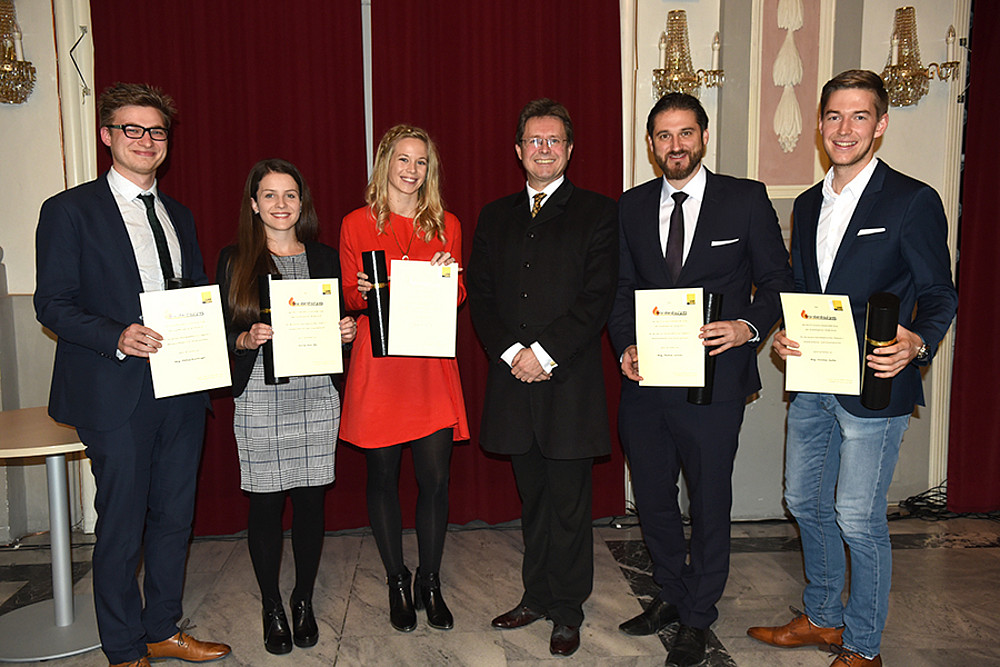
Ausgezeichnete Arbeiten: Philipp Baschinger, Denise Diex, Eva Wenig, Vizerektor Polaschek, Thomas Lechner und Christian Dorfer (v. l.) Fotos: Uni Graz/Schweiger

Ausgezeichnete Arbeiten: Philipp Baschinger, Denise Diex, Eva Wenig, Vizerektor Polaschek, Thomas Lechner und Christian Dorfer (v. l.) Fotos: Uni Graz/Schweiger

Wie Wissenschaft im Klassenzimmer ankommt: fachdidaktische Forschung im Fokus

Wie bringe ich Wissenschaft gut in den Unterricht? Wie profitieren davon die SchülerInnen im Klassenzimmer? Fachdidaktik lautet dazu der dazugehörige Begriff und Bereich. Und genau diesen hat die Universität Graz in den vergangenen Jahren massiv ausgebaut. Unter anderem mit zusätzlichen Hochschulraumstrukturmitteln, die die Einrichtung zahlreicher Professuren für Fachdidaktik ermöglichten. Mit dem Viktor-Obendrauf-Preis, der fachdidaktische Abschlussarbeiten von Studierenden auszeichnet. Die PädagogInnenbildung Neu, die gemeinsame Lehramtsausbildung mit den Pädagogischen Hochschulen, hat den wissenschaftlichen Stellenwert des Fachs ebenso vorangetrieben. Und das alles wird regelmäßig beim Tag der Fachdidaktik ins Rampenlicht gestellt. Dieser fand am 29. November 2018 zum bereits vierten Mal statt. „Ein lebendiges und starkes Zeichen für die Fachdidaktik“, wie Martin Polaschek, Vizerektor für Studium und Lehre, bei der Begrüßung hervorhob. 
Der inhaltliche Fokus lag heuer auf dem Aufbau und der Betreuung von Abschlussarbeiten sowie auf fachdidaktischen Forschungsmethoden und Qualitätsstandards. Damit befassten sich auch die beiden Impulsreferate von Sabine Schmölzer-Eibinger und Uwe Simon. „Was bedeutet es, wissenschaftlich zu schreiben und wie können Schule und Universität darauf vorbereiten?“, stellte Schmölzer-Eibinger, Leiterin des Fachdidaktikzentrums der Geisteswissenschaftlichen Fakultät, in den Mittelpunkt ihres Vortrags. Simon gab Einblicke in Beispiele hervorragender Abschlussarbeiten – und was man von ihnen lernen kann.

Viktor-Obendrauf-Preise

Den feierlichen Abschluss der Veranstaltung bildete die Verleihung des Viktor-Obendrauf-Preises, der, so Vizerektor Polaschek, an einen "großartigen Fachdidaktiker" erinnert und die besten fachdidaktischen Diplom-/Masterarbeiten und Dissertationen an der Universität Graz vor den Vorhang holen soll. Ausgezeichnet wurden heuer: 

  • Mag. Thomas Lechner (Unterrichtsfach Psychologie-Philosophie): Das Paradigmenkonzept als strukturierendes Element der kompetenzorientierten Psychologiedidaktik, Betreuer: Dr. Franz Zeder.
  • Denise Diex, BSC (Wirtschaftspädagogik): Einsatz interkultureller Trainings an Handelsakademien - Potenziale und Umsetzung zur Förderung interkultureller Kompetenz, Betreuerin: Univ.-Prof Michaela Stock
  • Mag. Eva Wenig (Unterrichtsfach Religion): Phantasie und religiöser Erkenntnisgewinn: Die Dimension der Imagination im Religionsunterricht und der Beitrag biblischer Phantasiereisen zur Förderung der Vorstellungskraft, Betreuer: DDr. Christian Feichtinger
  • Mag Christian Dorfer (Unterrichtsfach Bewegung und Sport): Bewegungsgeschichten als Mittel zur Entwicklung sozialer Kompetenz im Primärbereich. Ein Projekt in der Volksschule Ranten, Betreuerin: Ao.Univ.-Prof. Dr. Andrea Paletta
  • Mag. Philipp Baschinger (Unterrichtsfach Chemie): Wie erleben SchülerInnen unter Betrachtung ihrer Lern- und Leistungsmotivation sowie ihres LernerInnenselbstbildes kognitiven Konflikt, Betreuerin: Dr. Helga Voglhuber


Der Tag der Fachdidaktik wurde vom Praxis Netzwerk Fachdidaktik und dem Zentrum für PädagogInnenbildung der Universität Graz in Kooperation mit der Pädagogischen Hochschule Steiermark veranstaltet. 
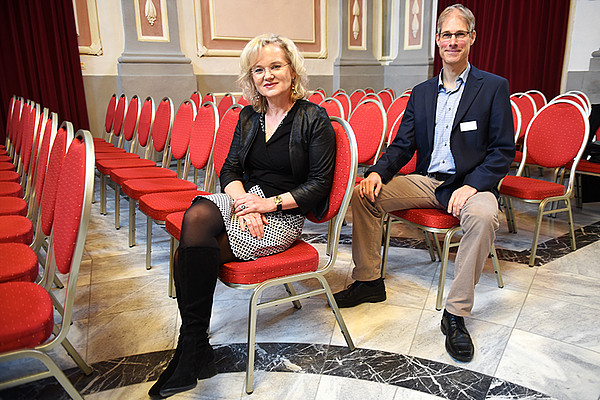
Impulsreferate hielten die beiden Fachdidaktik-ProfessorInnen Sabine Schmölzer-Eibinger und Uwe Simon.
created by Andreas Schweiger

Related news

Fair distribution: Researchers determine just greenhouse gas budgets for all EU regions

Ten years ago, on 12 December 2015, the Paris Climate Agreement was signed at the UN Climate Conference. In order to limit global warming to well below two degrees, only a certain amount of CO2 may be emitted worldwide. While the focus was originally on national emission targets, more than 200 subnational regions and almost 300 cities have now adopted their own targets. But how many emissions are they fairly entitled to? Researchers at the University of Graz have now developed transparent criteria for fair distribution at the subnational level for the first time and determined corresponding greenhouse gas budgets for all European regions. The paper was published today in the scientific journal Nature Communications.

Chemical Christmas show at the University of Graz: An explosive evening at the Schauspielh

At the beginning of December, the University of Graz transformed the theater into a laboratory: as part of “Chemical Life,” teacher training students staged a chemical Christmas show for Styrian school classes—complete with ethanol rockets, nitrogen snow, and glowing effects. An evening designed to inspire interest in studying chemistry.

Train by train: Koralm railway accelerates exchange between the Universities

Lectures at the University of Klagenfurt in the morning, seminars at the University of Graz in the afternoon: Austria's longest tunnel and a journey time of around 45 minutes make it easy. The Koralm railway increases the speed of networking between the two university locations. The collaboration builds on existing cooperation - for example in the areas of teacher training, Slavic studies and as employers, the universities are well coordinated.

On the trail of the Big Bang: University of Graz receives 1.5 million euros for doctoral programmes

The Austrian Science Fund FWF has selected the Doctoral Programme in Theoretical Particle Physics at the University of Graz for funding from the Doc.funds. Six young scientists will be funded for 3.5 years. They will gain fundamentally new insights into the origins of the world.

Begin of page section:
Additional information:

University of Graz
Universitaetsplatz 3
8010 Graz
Austria
  • Contact
  • Web Editors
  • Moodle
  • UNIGRAZonline
  • Imprint
  • Data Protection Declaration
  • Accessibility Declaration
Weatherstation
Uni Graz

End of this page section. Go to overview of page sections

End of this page section. Go to overview of page sections

Begin of page section:

End of this page section. Go to overview of page sections