Begin of page section:
Page sections:

  • Go to contents (Accesskey 1)
  • Go to position marker (Accesskey 2)
  • Go to main navigation (Accesskey 3)
  • Go to sub navigation (Accesskey 4)
  • Go to additional information (Accesskey 5)
  • Go to page settings (user/language) (Accesskey 8)
  • Go to search (Accesskey 9)

End of this page section. Go to overview of page sections

Begin of page section:
Page settings:

English en
Deutsch de
Search
Login

End of this page section. Go to overview of page sections

Begin of page section:
Search:

Search for details about Uni Graz
Close

End of this page section. Go to overview of page sections


Search

Begin of page section:
Main navigation:

Page navigation:

  • University

    University
    • About the University
    • Organisation
    • Faculties
    • Library
    • Working at University of Graz
    • Campus
    Developing solutions for the world of tomorrow - that is our mission. Our students and our researchers take on the great challenges of society and carry the knowledge out.
  • Research Profile

    Research Profile
    • Our Expertise
    • Research Questions
    • Research Portal
    • Promoting Research
    • Research Transfer
    • Ethics in Research
    • Commission for Scientific Integrity
    Scientific excellence and the courage to break new ground. Research at the University of Graz creates the foundations for making the future worth living.
  • Studies

    Studies
    • Prospective Students
    • Students
    • Post-registration Law
  • Community

    Community
    • International
    • Location
    • Research and Business
    • Alumni
    The University of Graz is a hub for international research and brings together scientists and business experts. Moreover, it fosters the exchange and cooperation in study and teaching.
Topics
  • Sustainable University
  • Researchers answer
  • Work for us
Close menu

End of this page section. Go to overview of page sections

Begin of page section:
You are here:

University of Graz News Umbruchszeiten

End of this page section. Go to overview of page sections

Friday, 25 February 2022

Umbruchszeiten

Steirisches Wappen aus dem Druck der Landes-privilegien von 1523, Steiermärkisches Landesarchiv ©Steiermärkisches Landesarchiv

Steirisches Wappen aus dem Druck der Landes-privilegien von 1523, Steiermärkisches Landesarchiv

Wie epochale Krisen und Neuanfänge die steirische Landesgeschichte prägten

Der Angriffskrieg Russlands auf die Ukraine markiert gerade die geopolitisch wohl größte Zäsur in der Geschichte Europas seit dem Zweiten Weltkrieg. Krisen der Vergangenheit und ihre Auswirkungen auf die Gesellschaft – vom Mittelalter bis in die Gegenwart – sind Thema einer öffentlichen Ringvorlesung der Universität Graz in Kooperation mit der Historischen Landeskommission für Steiermark (HLK) im Sommersemester 2022. In zwölf Vorträgen zeigen ForscherInnen verschiedener Fachrichtungen auf, wie sich epochale Umbrüche in der Geschichte des Landes widerspiegeln.

Was scherte die SteirerInnen der Untergang des Römischen Reichs? Was haben die Habsburgischen Verwaltungsreformen verändert? Welche Brüche gab es in der steirisch-jüdischen Geschichte und wohin führte das Wirtschaftswunder der 1950er-Jahre? Sieben WissenschafterInnen der Universität Graz beantworten diese und weitere Fragen rund um historische Umwälzungen in der neuen Vortragsreihe.

„Mit der Kraft der Geschichte den Blick und das Verständnis für die Gegenwart schärfen, das ist die Grundidee hinter der Ringvorlesung“, erklärt der Germanist und Mittelalter-Experte Wernfried Hofmeister, der diese Form der Lehrkooperation von Uni Graz und HLK 2018 ins Leben gerufen hat. Seit 2019 ist Hofmeister neben seiner Tätigkeit an der Universität auch der Geschäftsführende Sekretär der Historischen Landeskommission für Steiermark.

>> Nähere Informationen zur Ringvorlesung „Umbruchszeiten“

Buchvorstellung
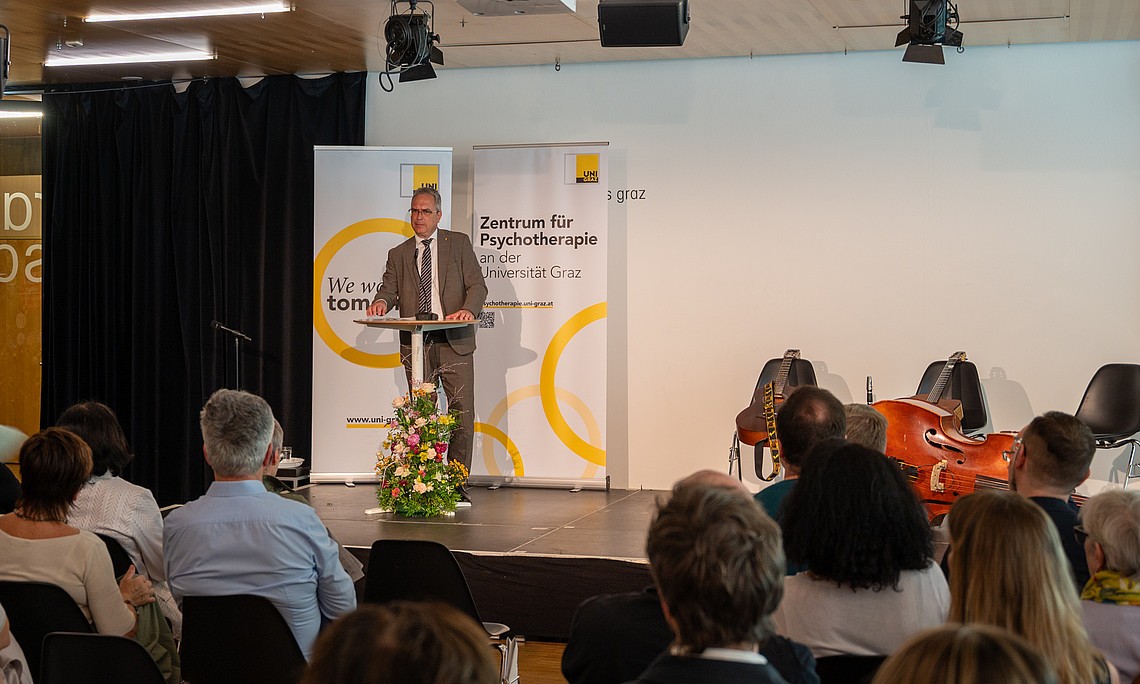
Am 9. März 2022 wird im Rahmen der Ringvorlesung der Sammelband zur Vortragsreihe vom Sommersemester 2020 vorgestellt. Diese widmete sich dem Thema „Fälschung! Eine fächerübergreifende Spurensuche in der steirisch‐innerösterreichischen Landesgeschichte“.

 

created by Gudrun Pichler

Related news

The future of Styria as a knowledge region is at risk

It is reported that 500 million euros are to be cut from Styrian universities. University vice-chancellors fear that this will sacrifice the development and competitiveness of the region as a centre for science, culture and business in favour of short-term cost-cutting targets.

A good winter for honeybees: mortality rate in Austria below ten per cent

20 May is World Bee Day. Local beekeepers can celebrate it with confidence this year, as their colonies have come through the winter relatively well.

Whistles against division: Rivka Saltiel experienced both unrest and solidarity in the US

Rivka Saltiel, a geographer from the University of Graz, has been working as a visiting professor in Minneapolis for the past five months and has witnessed first-hand the state of emergency and the deadly raids carried out by the immigration agency ICE. She reports on the collective solidarity of the population, the resistance to the President’s attempts to divide the community, and the power of informal social networks that ensure day-to-day provision and safety. These practices of solidarity are also relevant for Europe.

Record of reported species: Styria wins the global City Nature Challenge

Observers in Styria recorded 5,158 different animals, plants and fungi as part of the international City Nature Challenge between 24 and 27 April 2026. This saw the region take first place in the "species" category. Ostrava in the Czech Republic made the most observations, with just under 140,000, whilst the San Francisco Bay Area had the highest number of participants, namely 3,019.

Begin of page section:
Additional information:

University of Graz
Universitaetsplatz 3
8010 Graz
Austria
  • Contact
  • Web Editors
  • Moodle
  • UNIGRAZonline
  • Imprint
  • Data Protection Declaration
  • Accessibility Declaration
Weatherstation
Uni Graz

End of this page section. Go to overview of page sections

End of this page section. Go to overview of page sections

Begin of page section:

End of this page section. Go to overview of page sections