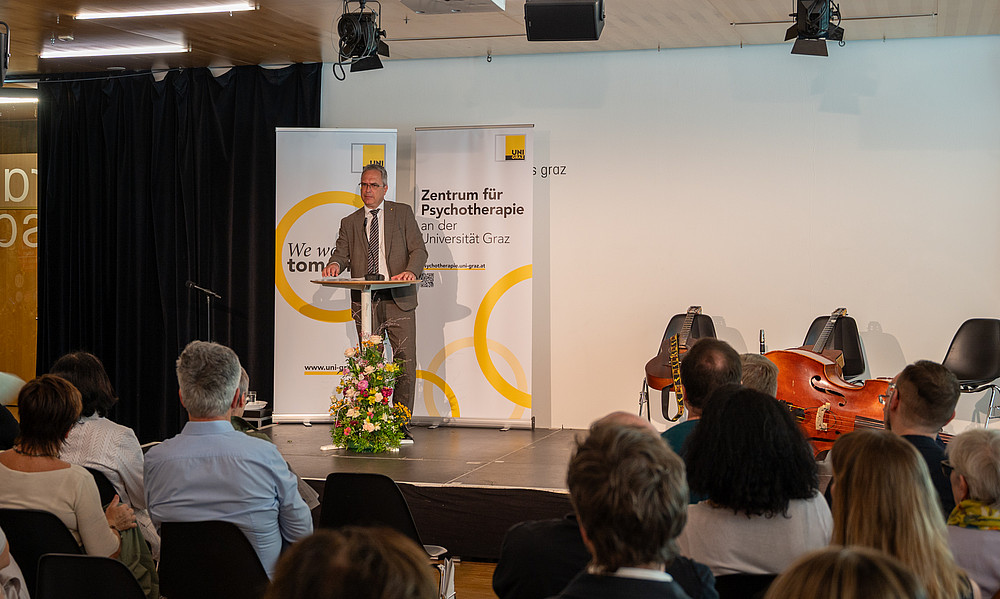
At the start of the 2026/27 winter term, the first students on the new Master’s programme in Psychotherapy in Graz began their seminars and lectures. Prior to this, the new Centre for Psychotherapy at the University of Graz (ZPT) was officially opened. This is where teaching and research in the field of psychotherapy come together. Five professorships are being established for this purpose. Furthermore, there is a lively exchange with the professional associations that organise the final phase of training to become a psychotherapist following graduation.
Consequently, there was a large turnout for the official opening of the ZPT at the Literaturhaus. Peter Riedler, Rector of the University of Graz, emphasised the importance of collaboration within the higher education sector: “Graz is now the largest centre for psychotherapy training in Austria. Thanks to the close collaboration between the University of Graz and the Medical University of Graz, we have succeeded in securing 140 places for the Master’s programme in Psychotherapy here.” Another distinctive feature is that students here can specialise in all four clusters of psychotherapy; one is offered at the Medical University of Graz, whilst the other three are offered at the University of Graz
This is because there are 23 state-recognised schools of psychotherapy in Austria, grouped into four clusters: Humanistic Therapy, Psychoanalytic-Psychodynamic Therapy, Systemic Therapy and Behavioural Therapies. Students have a full range of options: they can specialise in any of these clusters and, after completing their Master’s degree, focus on one of the schools.
Strength in unity
Andrea Kurz, Rector of the Medical University of Graz, summed it up: “Thanks to our close collaboration, we are not only the largest centre for psychotherapy training in Austria. We have also played a decisive role in shaping the curriculum for aspiring psychotherapists. This shows that when universities work together, we can achieve great things.”
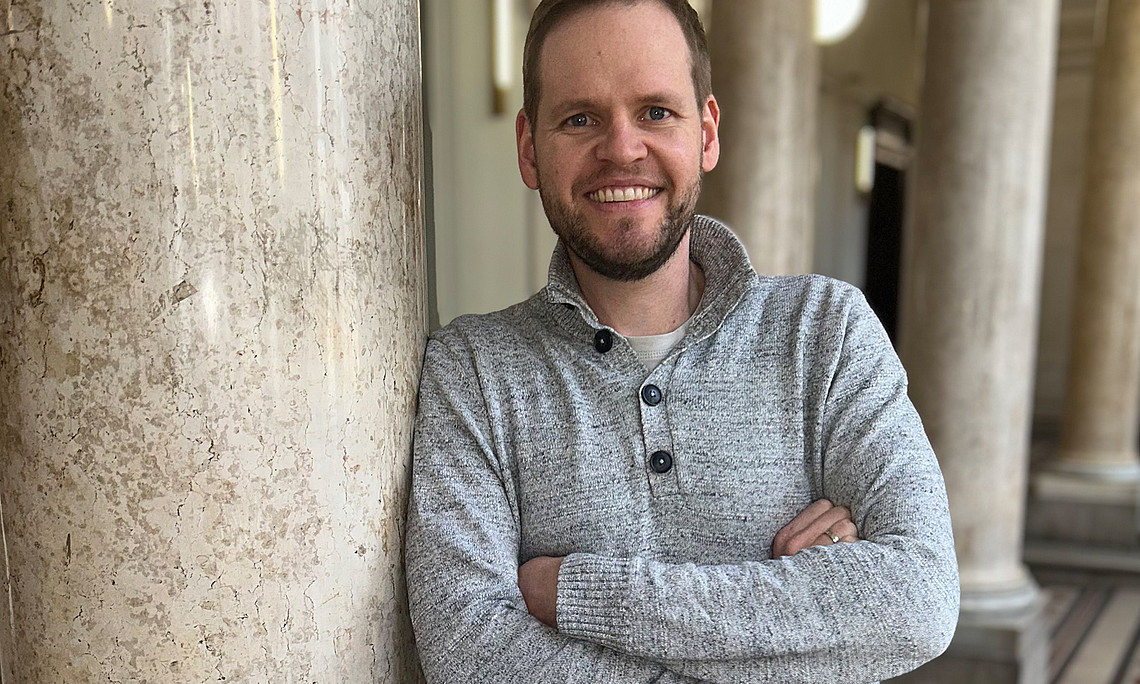
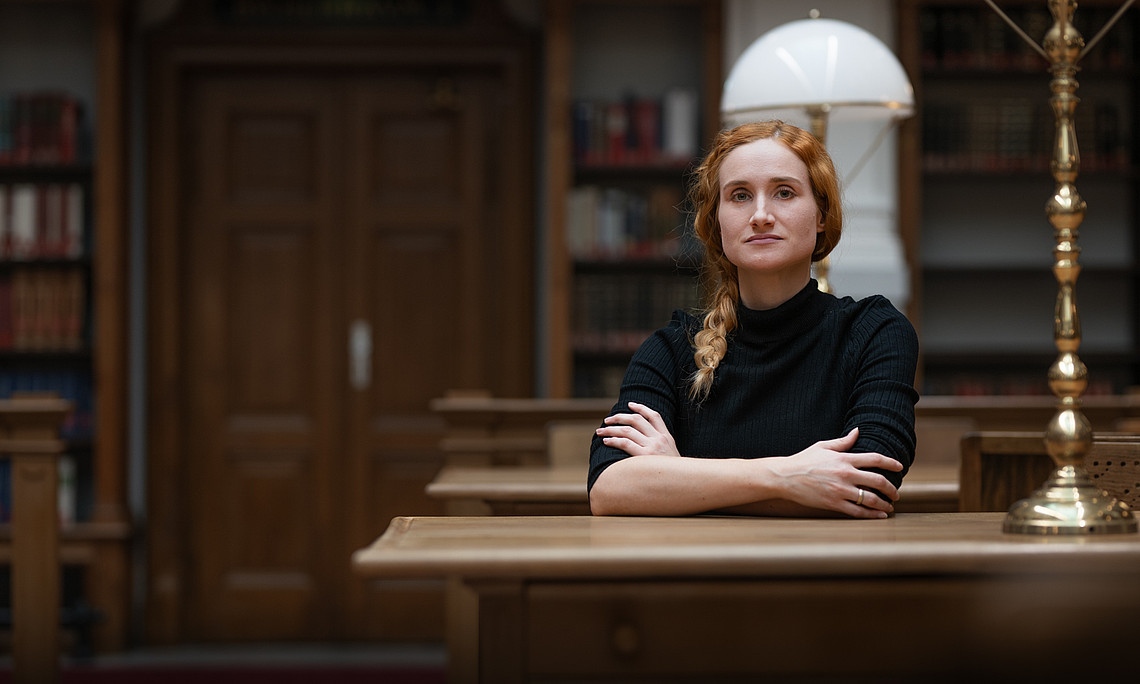
The combination of many different specialist fields is what makes the degree programme in Styria unique, explained Klemens Fellner, Dean of the Faculty of Natural Sciences at the University of Graz: “Here, the full breadth of scientific disciplines flows into both training and research.” This is supported not only by the new professors, but also by the involvement of practising psychotherapists, as Barbara Pammer emphasised. She has been heading the ZPT for a year.
Another key figure for the Master’s programme in Psychotherapy is Michael Kierein, who played a leading role in drafting the new Psychotherapy Act, as well as its predecessor. For him, the launch of the degree programme and the opening of the ZPT mark a kind of culmination of decades of development in which psychotherapy has evolved into a science to be taken seriously. “This was made possible by cooperation and a willingness to compromise, and by the fact that we managed to bring all parties – the universities and the specialist training institutions – together around one table. The Centre for Psychotherapy at the University of Graz is the result of this success,” he emphasised during the opening ceremony. “What we are witnessing here is historic.”
Anyone interested in the Master’s programme in Psychotherapy (next intake: winter semester 2027/28) can find all the necessary information here >> Master’s programme in Psychotherapy.
Traslated with DeepL