



Begin of page section:
Page sections:

  • Go to contents (Accesskey 1)
  • Go to position marker (Accesskey 2)
  • Go to main navigation (Accesskey 3)
  • Go to sub navigation (Accesskey 4)
  • Go to additional information (Accesskey 5)
  • Go to page settings (user/language) (Accesskey 8)
  • Go to search (Accesskey 9)

End of this page section. Go to overview of page sections

Begin of page section:
Page settings:

English en
Deutsch de
Search
Login

End of this page section. Go to overview of page sections

Begin of page section:
Search:

Search for details about Uni Graz
Close

End of this page section. Go to overview of page sections


Search

Begin of page section:
Main navigation:

Page navigation:

  • University

    University
    • About the University
    • Organisation
    • Faculties
    • Library
    • Working at University of Graz
    • Campus
    Developing solutions for the world of tomorrow - that is our mission. Our students and our researchers take on the great challenges of society and carry the knowledge out.
  • Research Profile

    Research Profile
    • Our Expertise
    • Research Questions
    • Research Portal
    • Promoting Research
    • Research Transfer
    • Ethics in Research
    • Commission for Scientific Integrity
    Scientific excellence and the courage to break new ground. Research at the University of Graz creates the foundations for making the future worth living.
  • Studies

    Studies
    • Prospective Students
    • Students
    • Registration for Study Programme (Winter semester 2026/27)
  • Community

    Community
    • International
    • Location
    • Research and Business
    • Alumni
    The University of Graz is a hub for international research and brings together scientists and business experts. Moreover, it fosters the exchange and cooperation in study and teaching.
Topics
  • Sustainable University
  • Researchers answer
  • Work for us
Close menu

End of this page section. Go to overview of page sections

Begin of page section:
You are here:

University of Graz News Überraschende Entdeckung

End of this page section. Go to overview of page sections

Thursday, 20 July 2017

Überraschende Entdeckung

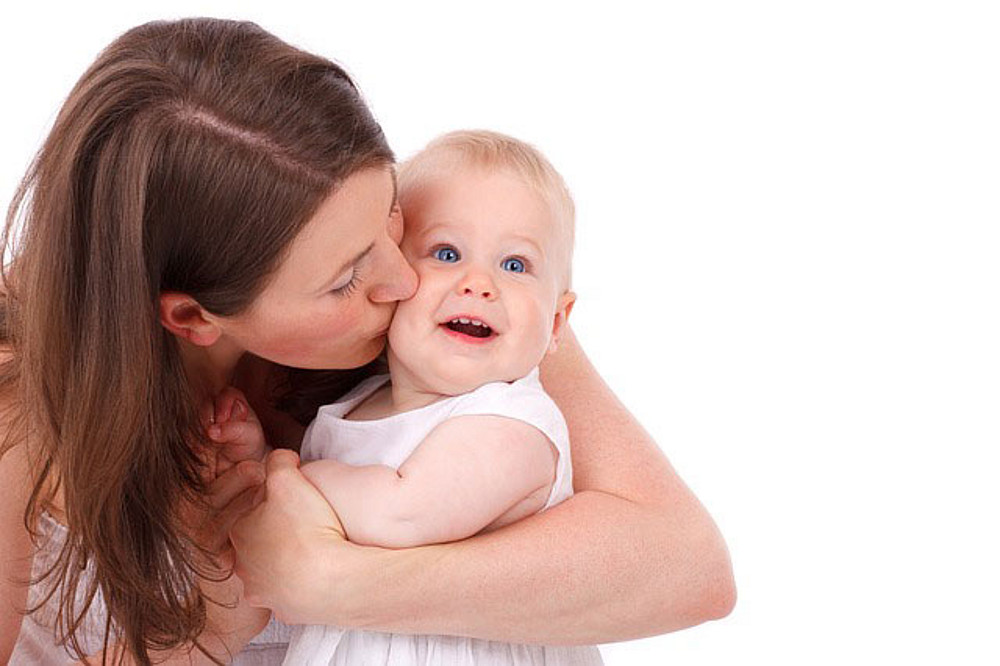
Junge Frau herzt Baby. Foto: pixabay

Grund zur Sorge liefert die Entdeckung von Arsen-Lipiden in Muttermilch vorerst nicht. Die Konzentrationen lagen weit unter dem aktuell empfohlenen Grenzwert für Arsen in Trinkwasser. Foto: pixabay

Chemiker der Uni Graz weisen erstmals fettlösliches Arsen in Muttermilch nach

Als perfektes Gift, um ungeliebte ZeitgenossInnen loszuwerden, hat sich Arsen im Laufe der Geschichte einen Namen gemacht. Weniger bekannt ist, dass das Spurenelement fast überall in der Natur zu finden ist. Im Gegensatz zum giftigen anorganischen Arsen sind die fettlöslichen Verbindungen, die Arsen-Lipide, und ihre eventuelle Toxizität noch kaum erforscht. Chemikern der Arbeitsgruppe um Univ.-Prof. Dr. Kevin Francesconi von der Karl-Franzens-Universität Graz ist es nun erstmals gelungen, Arsen-Lipide in menschlicher Muttermilch zu identifizieren. Die Ergebnisse der Studie, die in Kooperation mit KollegInnen des Norwegian Institute of Public Health und der Norwegian University of Life Sciences durchgeführt wurde, sind kürzlich im US-Fachjournal „Environmental Science & Technology Letters“ erschienen.

„Untersuchungen der letzten Jahre haben gezeigt, dass Arsen unter anderem in Wasser, Reis und Meereslebewesen zu finden ist“, weiß Kevin Francesconi. Um zu klären, ob das Spurenelement über die Nahrung auch in die Muttermilch gelangt, wurde der für seine Arsen-Forschungen international renommierte Chemiker beauftragt, Proben von Frauen aus Norwegen, wo viel Fisch und Meeresfrüchte gegessen werden, zu analysieren.
Glücklicherweise fanden die Grazer Wissenschafter kaum toxisches, anorganisches Arsen in der Milch, sehr wohl aber unterschiedliche Arsen-Lipide. Von diesen fettlöslichen Verbindungen, die von Algen aus anorganischem Arsen im Wasser produziert werden, ist bekannt, dass sie sich in Meereslebewesen anreichern.

„Wir konnten acht verschiedene Arsen-Lipide identifizieren“, berichtet Mag. Michael Stiboller, Erstautor der aktuellen Studie und Doktorand an der Uni Graz. Der Nachweis stellte eine große Herausforderung dar, da die fettlöslichen Verbindungen schwer zu isolieren und analysieren sind. Eine von Stiboller entwickelte Methode zur Fraktionierung von Arsen – zur Aufspaltung in wasser- und lipidlösliche Formen – trug wesentlich zur Lösung des Problems bei. Das extrem hochauflösende Massenspektrometer des „NAWI Graz Central Lab – Environmental, Plant & Microbial Metabolomics“, das von Karl-Franzens-Universität und TU Graz gemeinsam betrieben wird, ermöglichte die anschließende exakte Analyse.

Interessant sind die Ergebnisse vor allem, weil zum ersten Mal Arsen-Lipide in Muttermilch nachgewiesen werden konnten. Grund zur Sorge liefern sie aber noch nicht. „Die Konzentration aller in der Muttermilch entdeckten organischen Arsen-Verbindungen betrug insgesamt rund 0,5 Mikrogramm pro Kilogramm. Der derzeit empfohlene Grenzwert für Arsen in Trinkwasser liegt bei zehn Mikrogramm pro Liter“, beruhigt Stiboller. „Angesichts der Bedeutung von Muttermilch für die Entwicklung eines Kindes sollten die neuen Erkenntnisse aber auf jeden Fall weitere Forschungen anregen, da die Toxizität und die Auswirkungen von organischem Arsen auf den Organismus noch weitgehend ungeklärt sind“, mahnt Francesconi. Frühere Studien an menschlichen Zellen hätten gezeigt, dass manche Arsen-Lipide toxisch seien, und kürzlich durchgeführte Untersuchungen an Fruchtfliegen würden darauf hindeuten, dass Arsen-Lipide die Blut-Hirn-Schranke passieren könnten.

Publikation
Arsenolipids Detected in the Milk of Nursing Mothers
Michael Stiboller, Georg Raber, Virissa Lenters, Elin Lovise Folven Gjengedal, Merete Eggesbø, and Kevin A. Francesconi
Environmental Science & Technology Letters, June 12, 2017
DOI: 10.1021/acs.estlett.7b00181


created by Gudrun Pichler

Related news

In hot water: New Report reveals record losses in glaciers, permafrost and snow cover

Climate change is driving up temperatures not only in summer. Winters are also getting warmer – with dramatic consequences for glaciers, permafrost, snow cover and the freezing of lakes. The recently published cryosphere report provides specific figures for Austria. “Our monitoring shows a clear trend with record losses of ice and snow,” says project leader Wolfgang Schöner from the University of Graz.

Theologian at the University of Graz: What the excommunication of the Society of St Pius X

Following the schism involving the Society of St Pius X, there is a need for discussion. Bernd Hillebrand from the University of Graz explains why the Vatican took this step, what role anti-democratic tendencies play, and why the Society’s sacraments are no longer recognised as valid under canon law for Catholics with immediate effect.

“HeinrichBiCool”: University of Graz demonstrates the effects of green facades and roofs

The University of Graz has launched a pioneering project at the University Centre for Theology. Its name, “HeinrichBiCool”, says it all: a comprehensive system of green facades and roof will cool the building at Heinrichstraße 80 during the summer. At the same time, this will create a new habitat for plants and animals, helping to increase biodiversity. The accompanying monitoring programme will provide detailed data on the impact of the measures on indoor climate, energy consumption and biodiversity. The findings will lay a scientifically sound foundation for further projects aimed at making cities sustainable, climate-resilient and liveable. The partners in this project, funded by the Austrian Research Promotion Agency (FFG), are AEE INTEC – Institute for Sustainable Technologies, Technisches Büro Siegfried Stark, the landscape architecture and urban planning firm “studio boden”, and Ökoteam Graz.

When stress melts away in your mouth: nicotine pouches are widespread among Styrian students

Sociologists at the University of Graz, in collaboration with VIVID – the Centre for Addiction Prevention, have carried out a survey involving more than 600 participants. Around a quarter of them use these products. The ability to use them discreetly and flexibly is a key motivation.

Begin of page section:
Additional information:

University of Graz
Universitaetsplatz 3
8010 Graz
Austria
  • Contact
  • Web Editors
  • Moodle
  • UNIGRAZonline
  • Imprint
  • Data Protection Declaration
  • Accessibility Declaration
Weatherstation
Uni Graz

End of this page section. Go to overview of page sections

End of this page section. Go to overview of page sections

Begin of page section:

End of this page section. Go to overview of page sections

