Begin of page section:
Page sections:

  • Go to contents (Accesskey 1)
  • Go to position marker (Accesskey 2)
  • Go to main navigation (Accesskey 3)
  • Go to sub navigation (Accesskey 4)
  • Go to additional information (Accesskey 5)
  • Go to page settings (user/language) (Accesskey 8)
  • Go to search (Accesskey 9)

End of this page section. Go to overview of page sections

Begin of page section:
Page settings:

English en
Deutsch de
Search
Login

End of this page section. Go to overview of page sections

Begin of page section:
Search:

Search for details about Uni Graz
Close

End of this page section. Go to overview of page sections


Search

Begin of page section:
Main navigation:

Page navigation:

  • University

    University
    • About the University
    • Organisation
    • Faculties
    • Library
    • Working at University of Graz
    • Campus
    Developing solutions for the world of tomorrow - that is our mission. Our students and our researchers take on the great challenges of society and carry the knowledge out.
  • Research Profile

    Research Profile
    • Our Expertise
    • Research Questions
    • Research Portal
    • Promoting Research
    • Research Transfer
    • Ethics in Research
    • Commission for Scientific Integrity
    Scientific excellence and the courage to break new ground. Research at the University of Graz creates the foundations for making the future worth living.
  • Studies

    Studies
    • Prospective Students
    • Students
    • Registration for Study Programme (Winter semester 2026/27)
    • Study Days 22-26 June 2026
  • Community

    Community
    • International
    • Location
    • Research and Business
    • Alumni
    The University of Graz is a hub for international research and brings together scientists and business experts. Moreover, it fosters the exchange and cooperation in study and teaching.
Topics
  • Sustainable University
  • Researchers answer
  • Work for us
Close menu

End of this page section. Go to overview of page sections

Begin of page section:
You are here:

University of Graz News Über die Meere

End of this page section. Go to overview of page sections

Wednesday, 16 March 2022

Über die Meere

Das Mittelmeer, seit jeher Raum für den Transfer von Waren, Informationen, Ideen, aber auch von Menschen, ist ein Forschungsgegenstand von Romanist Kurt Hahn. Foto: pexels.com

Das Mittelmeer, seit jeher Raum für den Transfer von Waren, Informationen, Ideen, aber auch von Menschen, ist ein Forschungsgegenstand von Romanist Kurt Hahn. Foto: pexels.com

Romanist Kurt Hahn erforscht die literarischen Beziehungen zwischen Europa und Lateinamerika 

Im 19. Jahrhundert herrschte reger Austausch zwischen der „alten“ und der „neuen“ Welt – auch wenn nach blutigen Unabhängigkeitskämpfen die koloniale Bindung endlich Geschichte war. Trends aus Mode, Medien und Architektur kamen über das Meer, vor allem von Frankreich nach Lateinamerika. Dort erhielten sie einen eigenen „Touch“. Kehrten sie in neuer Form nach Europa zurück, wurden sie nicht mehr nur als exotisch verklärt, sondern auch als innovativ gewürdigt. Wie sich dieses transkulturelle Wechselspiel in der Literatur darstellt, erforscht Kurt Hahn. Er ist seit März 2021 Professor für Romanische Literatur- und Kulturwissenschaft an der Universität Graz. 

Besonderen Fokus legt Hahn auf die Lyrik sowie auf die Erzählliteratur. Darin finden sich wiederkehrende Motive, wie die romantische Ursprungs- und Naturverklärung, die angesichts des weiten Kontinents in Lateinamerika neue Dimensionen annimmt. „Auch das Gedankengut der französischen Aufklärung rund um Jean-Jacques Rousseau scheint in der hispanoamerikanischen Literatur jener Zeit auf und inspiriert die Unabhängigkeitsbestrebungen vom Ende des 18. Jahrhunderts an“, erzählt Kurt Hahn. Neben dem transatlantischen Austausch interessieren ihn auch inter- bzw. transmediale Bezüge, etwa in Literaturverfilmungen. Ein weiterer Schwerpunkt des Forschers ist das Verhältnis zwischen Literatur und Ökonomie. Damit gemeint sind etwa Erzählungen, die sich ums Exzessive des Geldes drehen und die, wie  Émile Zolas Roman L’Argent (1890/91), „finanzielle Krisen als politische Krisen aushandeln“.

Gemeinsam mit seinem Kollegen Steffen Schneider wird sich Kurt Hahn an der Uni Graz zudem einem anderen spannenden Gebiet widmen: dem Mittelmeer und seiner Bedeutung in den romanischsprachigen Ländern in Europa sowie darüber hinaus. „Wie der Atlantik war das Mittelmeer seit jeher ein Raum für den Transfer von Waren, Informationen, Ideen, aber auch von Menschen. Wir möchten uns ansehen, wie sich dieser Natur- und Kulturraum entwickelt hat, wie er literarisch dargestellt wird und welchen Herausforderungen er heute, zum Beispiel durch den Klimawandel, ausgesetzt ist“, umreißt Hahn das gerade entstehende Forschungsvorhaben. Er selbst ist von der Ludwig-Maximilians-Universität München nach Graz gekommen, mit früheren Stationen in Heidelberg, Eichstätt-Ingolstadt und Würzburg. 

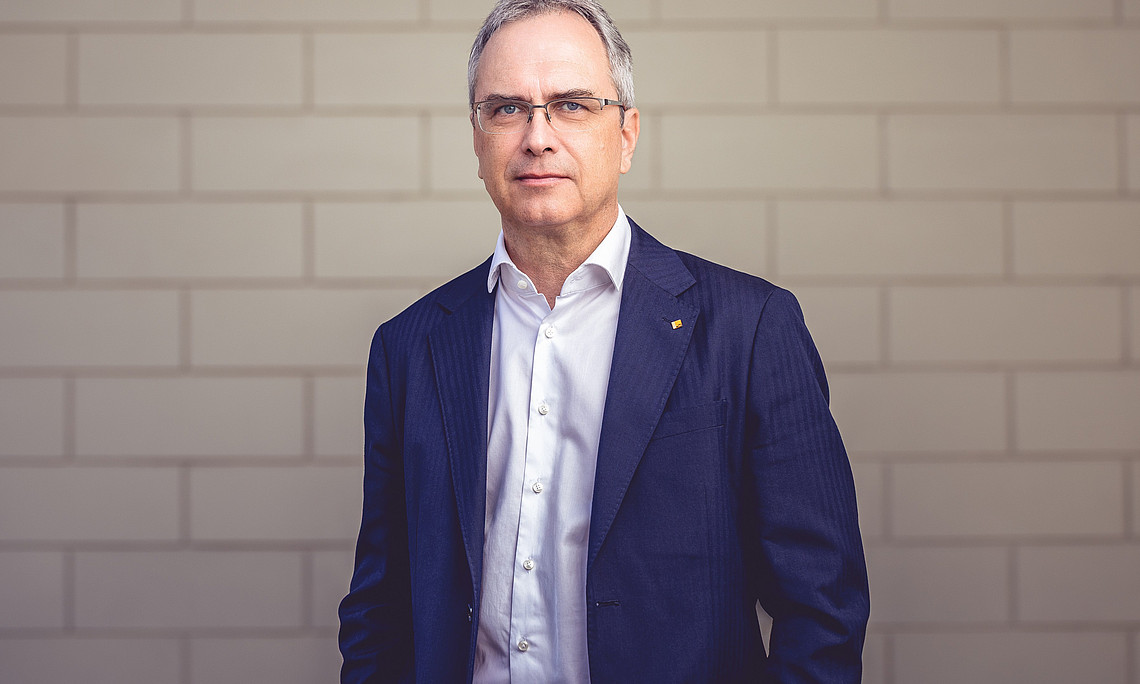
Romanist Kurt Hahn erforscht die literarischen Beziehungen zwischen Europa und Lateinamerika. Foto: Hahn.
created by Gerhild Leljak

Related news

Full effort in the heat: the Sports Centre was in full swing at the Kleeblattlauf

On 19 June 2026, 2,000 runners and hundreds of supporters made their way to the Rosenhain for a sporting end-of-term event.

Save, invest or guarantee: What Austrians expect from the state

Austria needs to make savings. But where? And what should the Republic actually be spending its money on? The answers are provided by the initial findings of a major study involving the University of Graz. 99 per cent of those surveyed are in favour of the state ensuring healthcare provision. Almost three-quarters would like to see more public funding for education, whilst only around three per cent are in favour of cuts in this sector.

Science meets blockbuster: Campus cinema at the University of Graz

A cinematic treat for the scientific community: the courtyard of the University of Graz’s main building is once again being transformed into an atmospheric open-air cinema this year. From 29 June to 10 July 2026 (Mondays to Fridays from 8.30 pm), blockbusters and documentaries will be shown on the open-air screen. Academics from the University of Graz will be taking a closer look at the films shown, examining them to distinguish fact from fiction.

Complying with the norm: Why Do Standards Shape Our Lives, Elisabeth Staudegger?

Standards determine whether a sheet of paper fits in a printer or whether a charging plug can power multiple devices. These standards shape our everyday lives. But who actually sets these standards? Where are the weaknesses, and how could science help to improve them? Elisabeth Staudegger, Head of the ‘Law and IT’ Department at the Institute for Legal Foundations at the University of Graz, host the Academic Standards Day on 16 June. Here she relays how sciences can contribute to the topic of standardisation and reveals her personal favourite standard.

Begin of page section:
Additional information:

University of Graz
Universitaetsplatz 3
8010 Graz
Austria
  • Contact
  • Web Editors
  • Moodle
  • UNIGRAZonline
  • Imprint
  • Data Protection Declaration
  • Accessibility Declaration
Weatherstation
Uni Graz

End of this page section. Go to overview of page sections

End of this page section. Go to overview of page sections

Begin of page section:

End of this page section. Go to overview of page sections