Begin of page section:
Page sections:

  • Go to contents (Accesskey 1)
  • Go to position marker (Accesskey 2)
  • Go to main navigation (Accesskey 3)
  • Go to sub navigation (Accesskey 4)
  • Go to additional information (Accesskey 5)
  • Go to page settings (user/language) (Accesskey 8)
  • Go to search (Accesskey 9)

End of this page section. Go to overview of page sections

Begin of page section:
Page settings:

English en
Deutsch de
Search
Login

End of this page section. Go to overview of page sections

Begin of page section:
Search:

Search for details about Uni Graz
Close

End of this page section. Go to overview of page sections


Search

Begin of page section:
Main navigation:

Page navigation:

  • University

    University
    • About the University
    • Organisation
    • Faculties
    • Library
    • Working at University of Graz
    • Campus
    Developing solutions for the world of tomorrow - that is our mission. Our students and our researchers take on the great challenges of society and carry the knowledge out.
  • Research Profile

    Research Profile
    • Our Expertise
    • Research Questions
    • Research Portal
    • Promoting Research
    • Research Transfer
    • Ethics in Research
    • Commission for Scientific Integrity
    Scientific excellence and the courage to break new ground. Research at the University of Graz creates the foundations for making the future worth living.
  • Studies

    Studies
    • Prospective Students
    • Students
    • Registration for Study Programme (Winter semester 2026/27)
    • Welcome Weeks for First Year Students
  • Community

    Community
    • International
    • Location
    • Research and Business
    • Alumni
    The University of Graz is a hub for international research and brings together scientists and business experts. Moreover, it fosters the exchange and cooperation in study and teaching.
Topics
  • Sustainable University
  • Researchers answer
  • Work for us
Close menu

End of this page section. Go to overview of page sections

Begin of page section:
You are here:

University of Graz News Trinkwasseruntersuchung

End of this page section. Go to overview of page sections

Wednesday, 16 July 2014

Trinkwasseruntersuchung

Blei-Grenzwert in einigen Wasserleitungen leicht erhöht. Trinkwasser kann bedenkenlos konsumiert werden. Maßnahmen wurden gesetzt.

Im Rahmen einer Novellierung der Trinkwasserverordnung in Österreich und der EU-weiten Anpassung der maximalen Inhaltsstoffe im Trinkwasser wurde der Grenzwert für Blei auf Empfehlung der WHO von bisher 25 Mikrogramm pro Liter auf den Wert 10 Mikrogramm pro Liter – gesenkt. Die Universität Graz hat diese Gesetzesänderung zum Anlass genommen und sämtlichen Wasserleitungen am Campus und in angemieteten Räumlichkeiten Wasserproben entnommen. Am Institut für Chemie der Uni Graz wurden die Proben schließlich untersucht und die Ergebnisse in einem Endbericht zusammengefasst.

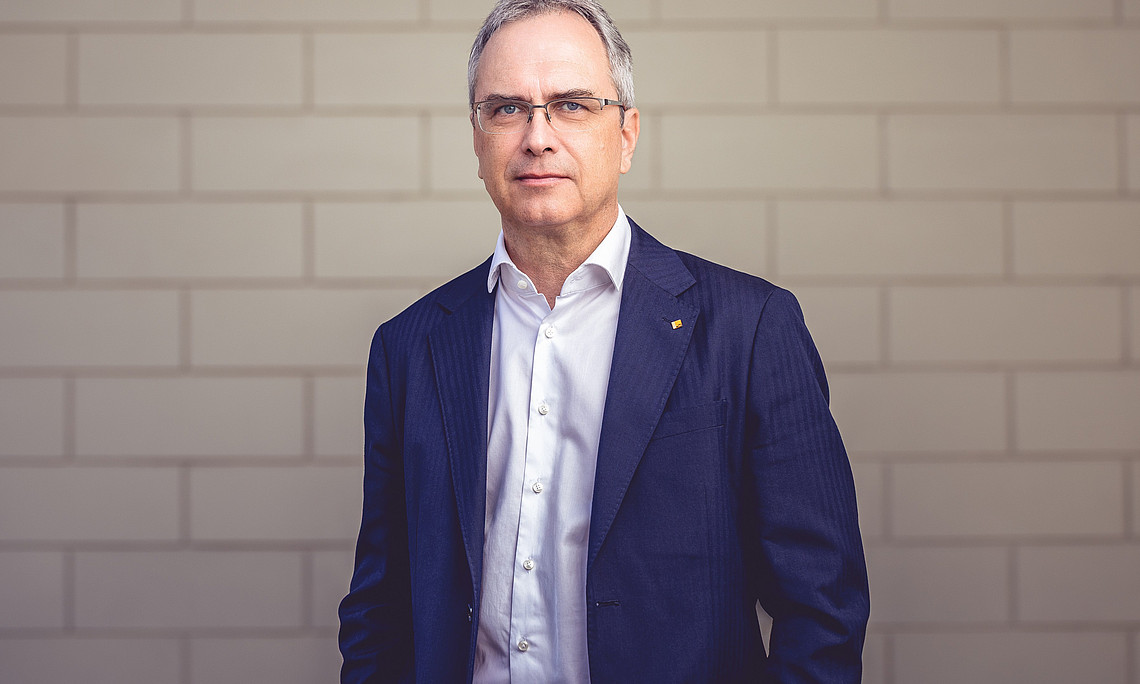
Die Untersuchungen haben gezeigt, dass in einigen Gebäuden der Universität Graz eine geringe Überschreitung der Grenzwerte im stehenden Wasser, dem so genannten Stagnationswasser wie es zum Beispiel über Nacht oder nach einem Wochenende in den Leitungen entsteht, vorliegt. „Es handelt sich dabei um eine leichte Erhöhung der Werte, die aber keinesfalls gesundheitsgefährdent sind. Auch der alte Grenzwert von 25 Mikrogramm pro Liter war für erwachsene Personen unbedenklich“, betont Verena Lackner, Arbeitsmedizinerin an der Uni Graz. 

Die Erhöhung der Werte im Stagnationswasser wurde in folgenden Gebäuden gemessen:

  • Universitätsplatz 3
  • Universitätsplatz 5
  • Heinrichstraße 28
  • Strassoldogasse 10
  • Beethovenstraße 19
  • Goethestraße 28
  • Mozartgasse 8
  • Universitätsstraße 27
  • Johann-Fux-Gasse 30
  • Zinzendorfgasse 34
  • Holteigasse 6
  • Merangasse 70
  • Merangasse 18
  • Heinrichstraße 33
  • Harrachgasse 23
  • Harrachgasse 28
  • Elisabethstraße 32
  • Maiffredygasse 12b
  • Heinrichstraße 11
  • Elisabethstraße 32
  • Harrachgasse 32
  • Attemsgasse 11

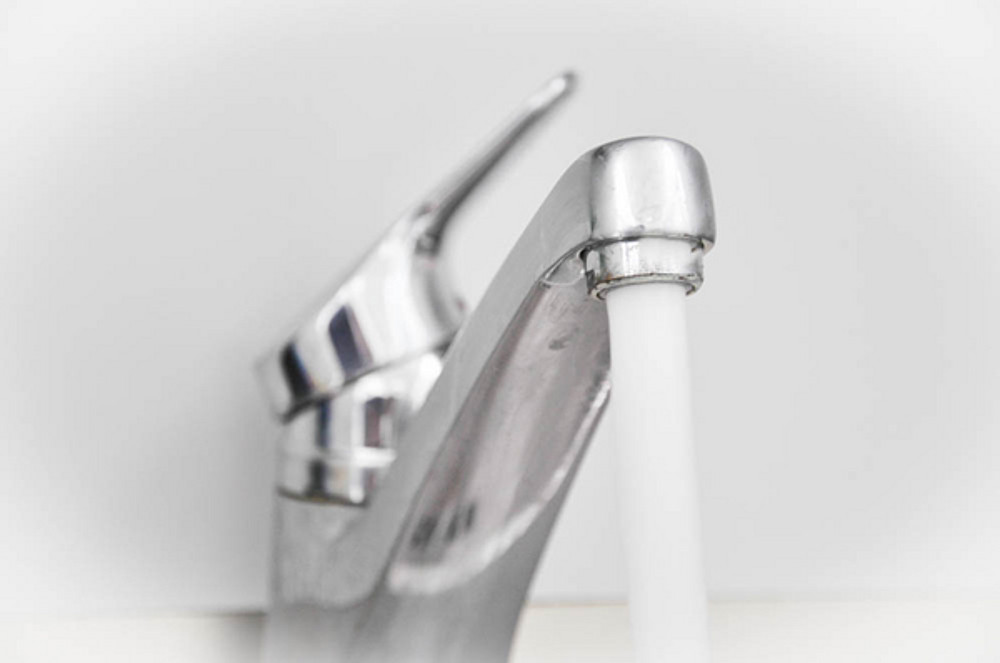
Um bedenkenlos das Trinkwasser konsumieren zu können, wird empfohlen, bei erstmaligem Gebrauch nach einer längeren Stehzeit das Wasser aus dem betroffenen Wasserhahn für mindestens fünf Minuten rinnen zu lassen. Danach kann das Wasser uneingeschränkt verwendet werden!

Um die Sichtbarkeit zu erhöhen, werden in den nächsten Tagen bei den betroffenen Objekten bzw. Objektteilen Informationsaufkleber neben den betroffenen Wasserentnahmestellen angebracht:

Die Eigentümer der betroffenen Gebäudekomplexe, die BIG Bundesimmobiliengesellschaft mbH sowie private VermieterInnen, wurden von der Direktion für Ressourcen und Planung bereits informiert. 

Für nähere Informationen und Fragen steht die Arbeitsmedizinerin der Uni Graz, Verena Lackner, telefonisch unter 380 – 1372 zur Verfügung

created by Konstantinos Tzivanopoulos

Related news

Commissioned by NATO: University of Graz tests high-tech textiles

As part of an international project, antimicrobial and fire-resistant fabrics with UV protection are being developed in Zagreb. Pharmacists from the University of Graz are ensuring that these fabrics are skin-friendly.

The Arctic up close: ORF special feature on the University of Graz’s research station in S

Students from the University of Graz are spending two weeks conducting research at the Univerisity of Graz research station at the Sermilik Fjord in Greenland, which has been operational for three years. They are measuring glacial runoff, tracking ice melt in real time and installing weather stations. ORF is following the expedition and will be reporting on the special feature ‘Arctic Adventure’ across its various channels from 20 July.

Medicine for ants: Caffeine prolongs the life of infected insects

Black coffee stimulates us and acts against bacteria. So, can caffeine also be good for insects? Yes, confirm biologists of the University of Graz. When ants suffer from a fungal disease, they consume more caffeine and remain active for longer.

How formulas are making medicine more personalised

When Federica Caforio talks about the heart, it doesn’t sound like an operating theatre, but rather like equations, parameters and simulations. Yet this is precisely where the medical promise of her research lies: one day, clinical data will be used to create a digital twin of the heart – a virtual model that will enable a better understanding of diseases and allow for more personalised treatment plans. She will be presenting her research at the ‘ECMTB 2026’ mathematics conference.

Begin of page section:
Additional information:

University of Graz
Universitaetsplatz 3
8010 Graz
Austria
  • Contact
  • Web Editors
  • Moodle
  • UNIGRAZonline
  • Imprint
  • Data Protection Declaration
  • Accessibility Declaration
Weatherstation
Uni Graz

End of this page section. Go to overview of page sections

End of this page section. Go to overview of page sections

Begin of page section:

End of this page section. Go to overview of page sections