




Begin of page section:
Page sections:

  • Go to contents (Accesskey 1)
  • Go to position marker (Accesskey 2)
  • Go to main navigation (Accesskey 3)
  • Go to sub navigation (Accesskey 4)
  • Go to additional information (Accesskey 5)
  • Go to page settings (user/language) (Accesskey 8)
  • Go to search (Accesskey 9)

End of this page section. Go to overview of page sections

Begin of page section:
Page settings:

English en
Deutsch de
Search
Login

End of this page section. Go to overview of page sections

Begin of page section:
Search:

Search for details about Uni Graz
Close

End of this page section. Go to overview of page sections


Search

Begin of page section:
Main navigation:

Page navigation:

  • University

    University
    • About the University
    • Organisation
    • Faculties
    • Library
    • Working at University of Graz
    • Campus
    Developing solutions for the world of tomorrow - that is our mission. Our students and our researchers take on the great challenges of society and carry the knowledge out.
  • Research Profile

    Research Profile
    • Our Expertise
    • Research Questions
    • Research Portal
    • Promoting Research
    • Research Transfer
    • Ethics in Research
    • Commission for Scientific Integrity
    Scientific excellence and the courage to break new ground. Research at the University of Graz creates the foundations for making the future worth living.
  • Studies

    Studies
    • Prospective Students
    • Students
    • Registration for Study Programme (Winter semester 2026/27)
  • Community

    Community
    • International
    • Location
    • Research and Business
    • Alumni
    The University of Graz is a hub for international research and brings together scientists and business experts. Moreover, it fosters the exchange and cooperation in study and teaching.
Topics
  • Sustainable University
  • Researchers answer
  • Work for us
Close menu

End of this page section. Go to overview of page sections

Begin of page section:
You are here:

University of Graz News Shaping the Future

End of this page section. Go to overview of page sections

Friday, 26 April 2019

Shaping the Future

Digitalisation is on the rise. Artificial intelligence is going to fundamentally change the job market. Photo: Pixabay.com

Digitalisation is on the rise. Artificial intelligence is going to fundamentally change the job market. Photo: Pixabay.com

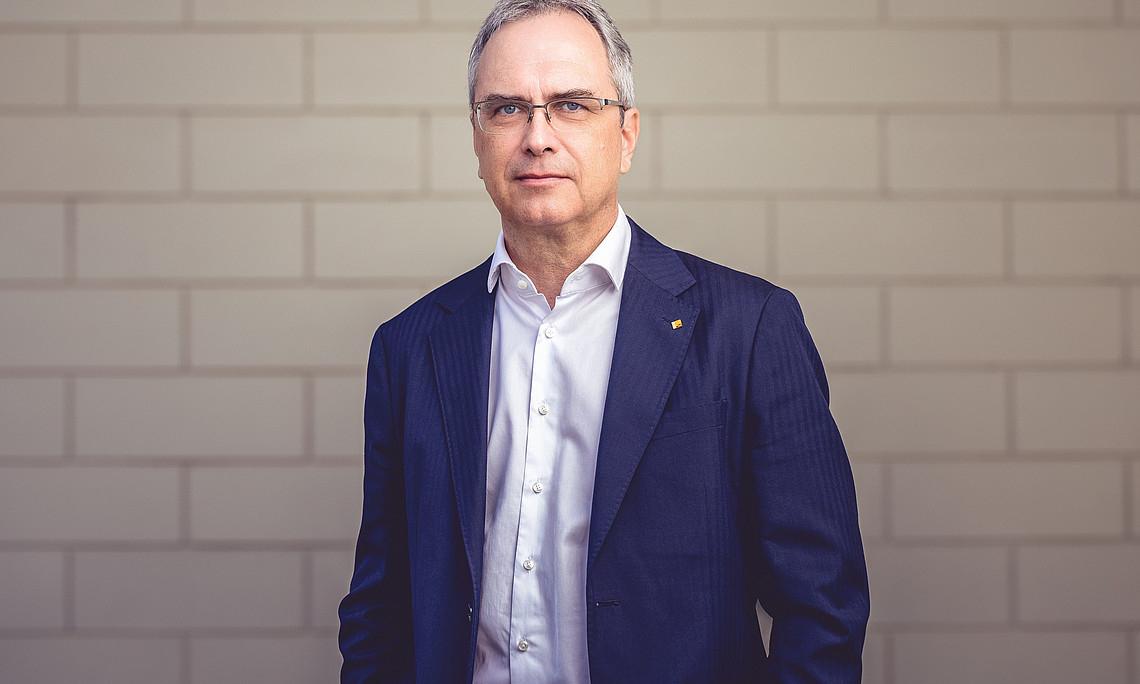
Economist Jörn Kleinert reflects on some challenges arising from the digital transformation

If artificial intelligence is able to perform management functions in companies, will the salaries of managers fall? “That’s a perfectly legitimate question,” says Jörn Kleinert, Professor of Economics at the University of Graz, “but at this point noone is likely to have a clear answer.” As part of his research work, Professor Kleinert is studying the changes associated with digital transformation and the new challenges they present in a business context. This is also the focus for the Annual Meeting of the Austrian Economic Association (NOeG) on April 25 and 26 at the University of Graz.
Digitalisation began as a technological phenomenon, but in the meantime it affects our entire society. Easy access to information and the wide-ranging potential uses of information processing have set off a structural change. “This disruption, which will change the way we live and work even more dramatically in future, is certainly comparable with the impact of industrialisation,” claims Kleinert. “And as yet we have no idea what direction these developments will take us in.”
One issue of central importance to the whole of society is how we want production to be structured in the future. What role should artificial intelligence play in the production process? Which jobs will disappear? Will humans still be needed for production processes? And if so, for what functions? Related to these are questions of redistribution: Who should be paid how much, and for what? If it is not production that drives this kind of decision, then what does? What will it do to our society if production and distribution decisions become separated from one another?

Freedom without regulation?
When it comes to economic competition, other answers are needed too. The possibilities offered by digitalisation are resulting in a huge quantity of information, that to a large extent is free of government regulation. For example, if private individuals provide taxi services via Uber or accommodation through Airbnb, these commercial relationships are not subject to the regulations that otherwise apply to companies. This has enormous effects on the fabric of the economy and creates unfair trading conditions. “How do we deal with this? Do we want this? What do we want? There are still many questions concerning regulation and institutional integration in the economy and society that have not been properly addressed, and certainly not answered,” according to Kleinert. The aim of the conference in Graz is to stimulate academic discussion of these issues.
As an economist specialising in international trade, Kleinert is particularly interested in the structures that have arisen from digitalisation in the international information market. “How can we structure a market so that it remains as open as possible and accessible to all competitors and users?” This is one central question that the economist hopes to answer. At present this market is dominated by five major providers: Google, Amazon, Facebook, Microsoft and Apple. What are the power relationships between these dominant companies and their demand-side stakeholders?
Information networks depend on their size for success and survival. “If we wanted to break up the big five in order to reduce their power, we would probably also lose the network effect,” points out Kleinert. “However, that does not mean we are completely at their mercy and unable to make any regulatory interventions, such as on rights of personal privacy. Legislators must decide which has greater value in our society, unlimited freedom or the protection of personal data,” says the professor, giving a specific example.
The same is true in business. Referring to the EU’s digital single market, Kleinert points out: “Competition law permits a government, or group of governments acting as a community, to bar something that would have negative effects on competition in their domestic market. This enabled the European Commission to force Microsoft to publish the source code for its operating system, allowing competitors to develop applications that run on this operating system.”
At the University of Graz, addressing the major changes caused by digitalisation and its effects at all levels, is a key topic. In the university’s research network “The Human Factor in Digital Transformation”, researchers in sociology, psychology, philosophy, theology, systems sciences, law and economics are working together to develop strategies for managing this disruption, and taking advantage of new opportunities.

 

created by Gudrun Pichler

Related news

Complying with the norm: Why Do Standards Shape Our Lives, Elisabeth Staudegger?

Standards determine whether a sheet of paper fits in a printer or whether a charging plug can power multiple devices. These standards shape our everyday lives. But who actually sets these standards? Where are the weaknesses, and how could science help to improve them? Elisabeth Staudegger, Head of the ‘Law and IT’ Department at the Institute for Legal Foundations at the University of Graz, host the Academic Standards Day on 16 June. Here she relays how sciences can contribute to the topic of standardisation and reveals her personal favourite standard.

More body awareness than a culture war

In Italy, sex education lessons will in future only be permitted with parental consent, and will be banned entirely in nurseries and primary schools. At the same time, Pride Month highlights why knowledge about the body, relationships, boundaries and diversity is important for young people. A study by the University of Graz shows how important knowledge about the body, contraception, relationship skills and protection against violence is

Will Austria win the World Cup? Mathematician reveals calculation method

Michael Fischer uses the football tournament as a practical example for highschool lessons.

Survival strategies: How plants respond to drought

According to Geosphere Austria, this spring was the driest in Austria since records began around 170 years ago. The low rainfall put particular pressure on the agricultural sector. And climate change is set to make the situation even worse in the coming decades. We asked Johannes Liesche, a professor at the Department of Biology at the University of Graz, how plants react to water shortages and how they survive periods of drought.

Begin of page section:
Additional information:

University of Graz
Universitaetsplatz 3
8010 Graz
Austria
  • Contact
  • Web Editors
  • Moodle
  • UNIGRAZonline
  • Imprint
  • Data Protection Declaration
  • Accessibility Declaration
Weatherstation
Uni Graz

End of this page section. Go to overview of page sections

End of this page section. Go to overview of page sections

Begin of page section:

End of this page section. Go to overview of page sections

