



Begin of page section:
Page sections:

  • Go to contents (Accesskey 1)
  • Go to position marker (Accesskey 2)
  • Go to main navigation (Accesskey 3)
  • Go to sub navigation (Accesskey 4)
  • Go to additional information (Accesskey 5)
  • Go to page settings (user/language) (Accesskey 8)
  • Go to search (Accesskey 9)

End of this page section. Go to overview of page sections

Begin of page section:
Page settings:

English en
Deutsch de
Search
Login

End of this page section. Go to overview of page sections

Begin of page section:
Search:

Search for details about Uni Graz
Close

End of this page section. Go to overview of page sections


Search

Begin of page section:
Main navigation:

Page navigation:

  • University

    University
    • About the University
    • Organisation
    • Faculties
    • Library
    • Working at University of Graz
    • Campus
    Developing solutions for the world of tomorrow - that is our mission. Our students and our researchers take on the great challenges of society and carry the knowledge out.
  • Research Profile

    Research Profile
    • Our Expertise
    • Research Questions
    • Research Portal
    • Promoting Research
    • Research Transfer
    • Ethics in Research
    • Commission for Scientific Integrity
    Scientific excellence and the courage to break new ground. Research at the University of Graz creates the foundations for making the future worth living.
  • Studies

    Studies
    • Prospective Students
    • Students
  • Community

    Community
    • International
    • Location
    • Research and Business
    • Alumni
    The University of Graz is a hub for international research and brings together scientists and business experts. Moreover, it fosters the exchange and cooperation in study and teaching.
  • Spotlight
Topics
  • Sustainable University
  • Researchers answer
  • Work for us
Close menu

End of this page section. Go to overview of page sections

Begin of page section:
You are here:

University of Graz News What the rhythm tells us

End of this page section. Go to overview of page sections

Tuesday, 10 December 2019

What the rhythm tells us

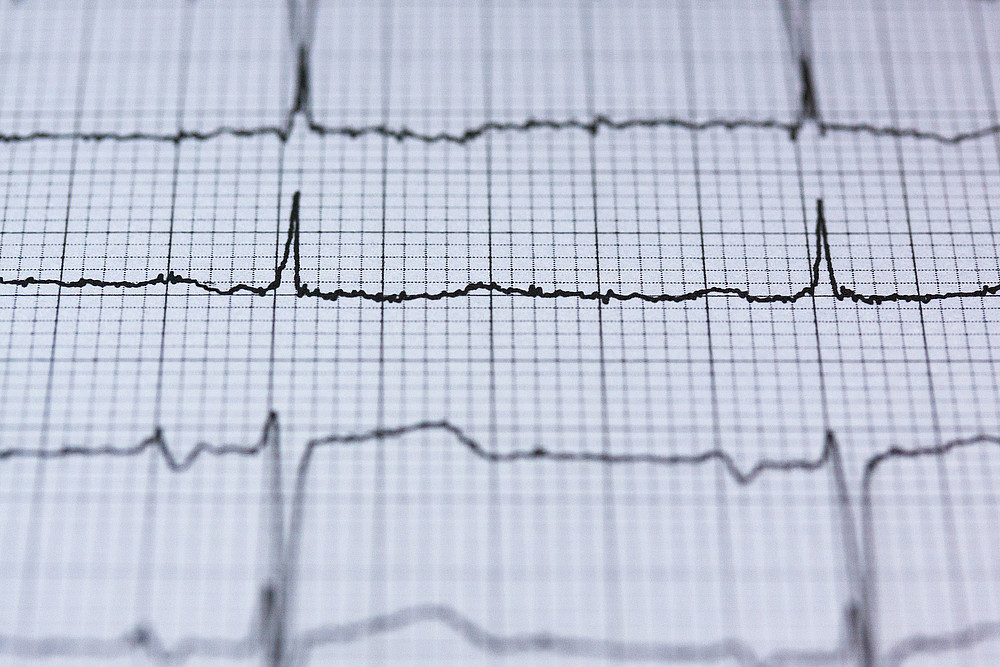
A healthy heartbeat is not completely regular. This heart rate variability is a sign of physical and mental vitality. Photo: pixabay

A healthy heartbeat is not completely regular. This heart rate variability is a sign of physical and mental vitality. Photo: pixabay

Graz scientists publish latest research on heart rate variability

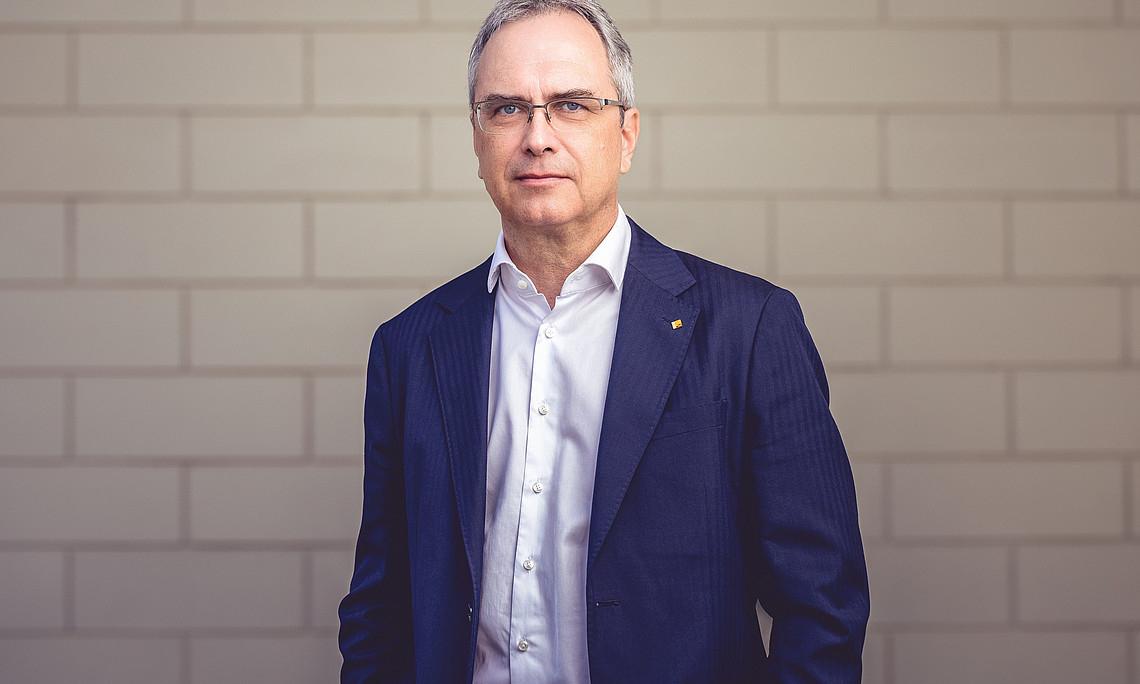
A healthy heartbeat is not completely regular. The intervals are affected by breathing, hormonal reactions, metabolic processes, stress, cognitive activity and other influences of the autonomic nervous system. “This so-called heart rate variability (HRV) is a sign of physical and mental vitality and flexibility. If the HRV is low, i.e. the heart beats too evenly as is the case with people suffering from depression, it is a sign that there is a disturbance in communication between the heart and the brain,” explains Andreas Schwerdtfeger, health psychologist at the University of Graz. In a recent publication in the specialist journal Clinical Neurophysiology, he and colleagues from the Graz University of Technology, the Medical University of Graz, the University of Ulm and the University of California, Irvine summarised the current state of research on HRV. Their findings unlock new diagnostic and therapeutic possibilities.

Due to the close ties to structures of the central nervous system, the HRV can provide information about communication between the heart and the brain. Based on clinical findings, the authors show that heart rate variability can be used in high-end medicine to help evaluate various situations such as when premature babies require intensive therapy, patients have had a heart transplantation, people are on artificial respiration or suffer brain death. “HRV can be used to determine whether and to what extent the connection between the heart and the brain is disturbed,” say Gert Pfurtscheller (Graz University of Technology) and clinical cooperation partners Gerhard Schwarz and Klaus Pfurtscheller (Medical University of Graz). In this context, Schwarz considers the “rigidity of variability” of coma patients and Klaus Pfurtscheller the monitoring of HRV in preterm infants to be particularly relevant.

The publication also discusses current imaging findings of functional magnetic resonance imaging for heart-brain interaction and for identifying central nervous pacemakers of HRV. “Not only can a pacemaker in the brain synchronise different slow body rhythms such as blood pressure waves, heart rate and respiration and thus optimise energy requirements, it can also increase heart rate variability,” says Gert Pfurtscheller, retired professor of medical informatics, who evaluated most of the magnetic resonance data.

Conversely, an increase in the HRV also leads to changes in the brain. Schwerdtfeger, who has investigated the psychological relationships and therapeutic possibilities of HRV, knows: “When we control the breathing, we can improve the heart rate variability and thus physical and psychological well-being.” Six breaths per minute, i.e. one cycle every ten seconds, provide for an optimal oxygen supply to the brain. “This technique not only reduces anxiety, it may also improve brain functions such as working memory and reaction time,” reports the psychologist.

Publication
Schwerdtfeger, A. R., Schwarz, G., Pfurtscheller, K., Thayer, J. F., Jarczok, M. N. & Pfurtscheller, G. (2019)
Invited review: Heart rate variability (HRV): From brain death to resonance breathing at 6 breaths/minute
Clinical Neurophysiology

created by Gudrun Pichler

Related news

Long Night of Research: How many languages are there in the world?

From a linguistic perspective, there are worlds of difference between Bern, Berlin and Vienna. A dialect impersonator will demonstrate live just how varied German can sound. How many languages are there in the world? What are their distinctive features? Which of these are spoken in Austria? These and other questions will be answered during the Long Night of Research at the University of Graz: on Friday, 24 April 2025, from 5 pm to 11 pm, in the University Library. Visitors can immerse themselves in the diversity of languages without travelling far by taking part in a quiz at the station.

Dual role: Researchers show that platelets can worsen disease

Platelets are best known as rapid responders in the event of injury. They stop bleeding and are indispensable for wound healing. “However, thrombocytes can also aggravate diseases, especially when inflammatory processes are involved,” explains Marion Mußbacher, a pharmacist at the University of Graz. She investigated the “dual role” of platelets in relation to fatty liver disease, a condition closely linked to obesity and type 2 diabetes.

Forscher:innen entdecken natürlichen Wirkstoff zum Schutz vor Lebererkrankungen

Die Leber leidet still. „Fetteinlagerungen, strukturelle Zerstörung des Gewebes oder mutierende Tumorzellen – all das fliegt eine Weile unter dem Radar. Begleitet werden diese Veränderungen oft von leichten, jedoch chronischen Entzündungen“, erklärt Andreas Koeberle, Pharmazeut an der Universität Graz. Er hat mit seinem Team und Kolleg:innen der Universität Innsbruck den Wirkstoff Mitrephoron B untersucht, der neue Behandlungsansätze ermöglicht. Die Ergebnisse der Studie wurden kürzlich in der Open-Access-Fachzeitschrift „Theranostics“ veröffentlicht.

Climate at the cliffs: Researchers unravel the evolution of the Greenland ice margin

Vertical ice walls, up to 40 metres high: in "Game of Thrones" they were dramatised as fortifications; during the Cold War, they were studied with great interest. How these imposing walls along Greenland’s 80,000-kilometre-long ice margin formed, how they are evolving, and what impact they have on the climate is not yet fully understood. Researchers from the Universities of Graz and Innsbruck have come one step closer to solving the mystery. The results of their latest study have been published in the journal The Cryosphere.

Begin of page section:
Additional information:

University of Graz
Universitaetsplatz 3
8010 Graz
Austria
  • Contact
  • Web Editors
  • Moodle
  • UNIGRAZonline
  • Imprint
  • Data Protection Declaration
  • Accessibility Declaration
Weatherstation
Uni Graz

End of this page section. Go to overview of page sections

End of this page section. Go to overview of page sections

Begin of page section:

End of this page section. Go to overview of page sections

