



Begin of page section:
Page sections:

  • Go to contents (Accesskey 1)
  • Go to position marker (Accesskey 2)
  • Go to main navigation (Accesskey 3)
  • Go to sub navigation (Accesskey 4)
  • Go to additional information (Accesskey 5)
  • Go to page settings (user/language) (Accesskey 8)
  • Go to search (Accesskey 9)

End of this page section. Go to overview of page sections

Begin of page section:
Page settings:

English en
Deutsch de
Search
Login

End of this page section. Go to overview of page sections

Begin of page section:
Search:

Search for details about Uni Graz
Close

End of this page section. Go to overview of page sections


Search

Begin of page section:
Main navigation:

Page navigation:

  • University

    University
    • About the University
    • Organisation
    • Faculties
    • Library
    • Working at University of Graz
    • Campus
    Developing solutions for the world of tomorrow - that is our mission. Our students and our researchers take on the great challenges of society and carry the knowledge out.
  • Research Profile

    Research Profile
    • Our Expertise
    • Research Questions
    • Research Portal
    • Promoting Research
    • Research Transfer
    • Ethics in Research
    • Commission for Scientific Integrity
    Scientific excellence and the courage to break new ground. Research at the University of Graz creates the foundations for making the future worth living.
  • Studies

    Studies
    • Prospective Students
    • Students
    • Registration for Study Programme (Winter semester 2026/27)
  • Community

    Community
    • International
    • Location
    • Research and Business
    • Alumni
    The University of Graz is a hub for international research and brings together scientists and business experts. Moreover, it fosters the exchange and cooperation in study and teaching.
Topics
  • Sustainable University
  • Researchers answer
  • Work for us
Close menu

End of this page section. Go to overview of page sections

Begin of page section:
You are here:

University of Graz News Ecological footprint

End of this page section. Go to overview of page sections

Thursday, 05 December 2019

Ecological footprint

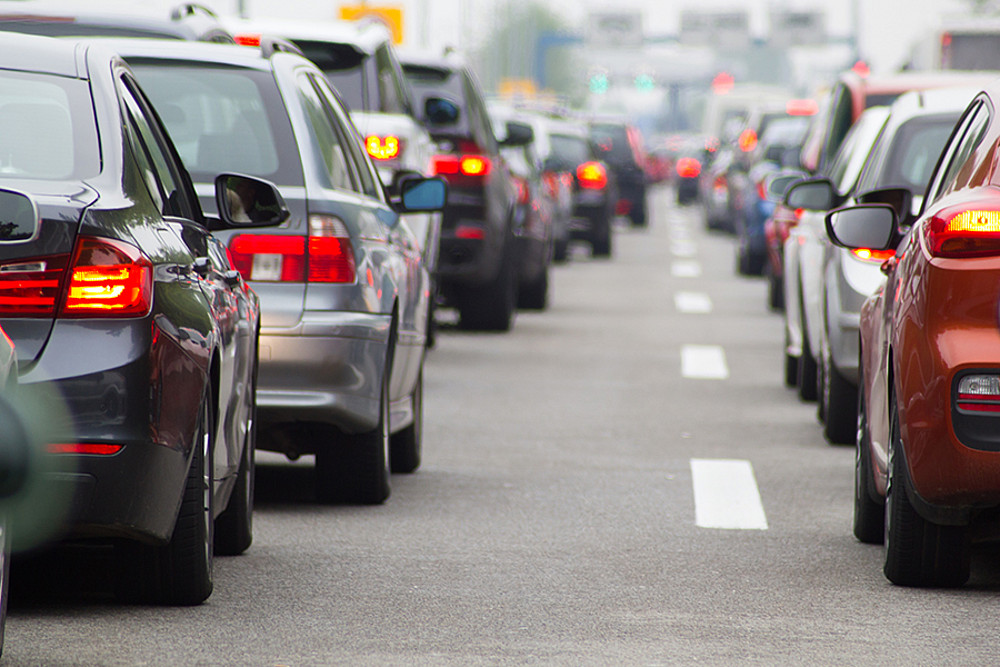
The results of the survey of the University of Graz indicate that car use is most dependent on the socio-demographic characteristics of income, place of residence, age and gender. Photo: disq/shutterstock.com

Car use, air travel, diet and heating are the most emission-intensive areas of individual behaviour. The results of the survey of the University of Graz indicate that car use is most dependent on the socio-demographic characteristics of income, place of residence, age and gender. Photo: disq/shutterstock.com

Sociologists at the University of Graz record Austrians’ climate-relevant behaviour

Who causes the most CO2 emissions in everyday and private life? Sociologists from the University of Graz interviewed Austrians about their climate-relevant environmental behaviour and discovered some significant relations: income, residential area and age have the strongest influence on the greenhouse gas emissions caused by the individual way of life. Personal attitudes about climate and environmental protection, on the other hand, play virtually no role.
As part of a research project funded by the Austrian National Bank, sociologists from the University of Graz under the direction of Markus Hadler are working on surveys that measure CO2-relevant environmental behaviour and other environmental attitudes. In a first survey, over 200 people in Austria were interviewed with a questionnaire. The preliminary results show three clear effects.

Car use makes the difference
“The higher the household income, the higher the emission levels. For each additional € 500 net per capita in a month there is about one additional tonne of CO2 equivalents per year on average,” reports project staff member Markus Schweighart. “Those with higher incomes use more cars with combustion engines and their consumption and leisure time behaviour also lead to higher emissions,” the sociologist explains.
People living in rural or suburban areas produce about two tonnes more greenhouse gases per year than urban dwellers. “The main reason for this is their significantly higher average car use, which is partly due to less developed public transport in rural areas,” explains Schweighart.
People of retirement age, on the other hand, cause less CO2, mainly because they do not drive as much and travel by plane less often. The female respondents in the sample also showed a smaller carbon footprint, mainly due to their mobility behaviour: around one and a half tonnes less CO2 per year.
Schweighart names car use, air travel, diet and heating as the most emission-intensive areas of individual behaviour. The results of the survey indicate that car use is most dependent on the socio-demographic characteristics of income, place of residence, age and gender.

Not a question of attitude
What may come as a surprise is that the attitude towards the environment – how much you care about it – has almost no influence on emission-relevant behaviour. “A person who is generally concerned about the environment will more often separate waste, save water and energy, and buy more organic food – these are usually people with a higher level of education. However, the associated CO2 reduction is so low that it hardly matters”, Schweighart explains, referring to the evaluation of the questionnaire items. “Only those with a greater willingness to make sacrifices for the benefit of the environment – for example by paying higher prices and taxes or lowering their standard of living – consume significantly less goods and thus contribute to a substantial reduction in CO2 emissions,” states the sociologist. According to the survey results, higher earners are slightly more likely to make such sacrifices. “This could be a suitable starting point for considering effective measures such as pricing greenhouse gas emissions”, says Schweighart.

One goal of the project is to develop a scale for measuring CO2-relevant behaviour. “We were able to show that five questions are enough to cover around two-thirds of total CO2 emissions due to individual behavior. These are: car kilometres per year, number of flights per year, the frequency of beef or lamb consumption, the size of the home, and the number of people living in the household,” says Schweighart.

created by Gudrun Pichler

Related news

Staying fit during the holidays: summer sports on the University of Graz campus

The Kleeblattlauf is not the end of the fitness term. Following last year’s successful launch, the University of Graz is once again offering summer sports on campus this year. From 30 June to 16 July 2026, there will be a free exercise programme in the open air. On the shady Südwiese (between the main building and Universitätsplatz 2), anyone interested can get in shape in the afternoons with body workouts, fascia training and yoga.

Getting even hotter: Researchers predict global warming of 1.7 degrees by 2027

While Europe is currently sweltering in the heat, global temperatures are also rising towards concerning record levels. In 2026, Earth’s surface air temperature is expected to reach 1.62 degrees, and in 2027 even 1.71 degrees Celsius above pre-industrial levels. The long-term temperature rise – an average over a 20-year period – is predicted to exceed the 1.5-degree threshold of the Paris Agreement as of 2026 already. For the first time, researchers at the University of Graz have been able to make such a forecast so far in advance. The intensifying El Niño climate event favors forecast skill and thereby facilitates a reliable computation.

Forest fire at Rosenhain: Volunteer fire brigade carried out an evacuation drill at the Jesuit refectory

Thick smoke in the stairwell, flames at the edge of the forest, people missing in the Jesuit refectory at the University of Graz: at Rosenhain, the Graz Volunteer Fire Brigade carried out a drill simulating a scenario that is becoming increasingly realistic given the heat and drought

Full effort in the heat: the Sports Centre was in full swing at the Kleeblattlauf

On 19 June 2026, 2,000 runners and hundreds of supporters made their way to the Rosenhain for a sporting end-of-term event.

Begin of page section:
Additional information:

University of Graz
Universitaetsplatz 3
8010 Graz
Austria
  • Contact
  • Web Editors
  • Moodle
  • UNIGRAZonline
  • Imprint
  • Data Protection Declaration
  • Accessibility Declaration
Weatherstation
Uni Graz

End of this page section. Go to overview of page sections

End of this page section. Go to overview of page sections

Begin of page section:

End of this page section. Go to overview of page sections

