Begin of page section:
Page sections:

  • Go to contents (Accesskey 1)
  • Go to position marker (Accesskey 2)
  • Go to main navigation (Accesskey 3)
  • Go to sub navigation (Accesskey 4)
  • Go to additional information (Accesskey 5)
  • Go to page settings (user/language) (Accesskey 8)
  • Go to search (Accesskey 9)

End of this page section. Go to overview of page sections

Begin of page section:
Page settings:

English en
Deutsch de
Search
Login

End of this page section. Go to overview of page sections

Begin of page section:
Search:

Search for details about Uni Graz
Close

End of this page section. Go to overview of page sections


Search

Begin of page section:
Main navigation:

Page navigation:

  • University

    University
    • About the University
    • Organisation
    • Faculties
    • Library
    • Working at University of Graz
    • Campus
    Developing solutions for the world of tomorrow - that is our mission. Our students and our researchers take on the great challenges of society and carry the knowledge out.
  • Research Profile

    Research Profile
    • Our Expertise
    • Research Questions
    • Research Portal
    • Promoting Research
    • Research Transfer
    • Ethics in Research
    Scientific excellence and the courage to break new ground. Research at the University of Graz creates the foundations for making the future worth living.
  • Studies

    Studies
    • Prospective Students
    • Students
  • Community

    Community
    • International
    • Location
    • Research and Business
    • Alumni
    The University of Graz is a hub for international research and brings together scientists and business experts. Moreover, it fosters the exchange and cooperation in study and teaching.
  • Spotlight
Topics
  • Our digital Advent calendar
  • Sustainable University
  • Researchers answer
  • Work for us
Close menu

End of this page section. Go to overview of page sections

Begin of page section:
You are here:

University of Graz News Ecological footprint

End of this page section. Go to overview of page sections

Thursday, 05 December 2019

Ecological footprint

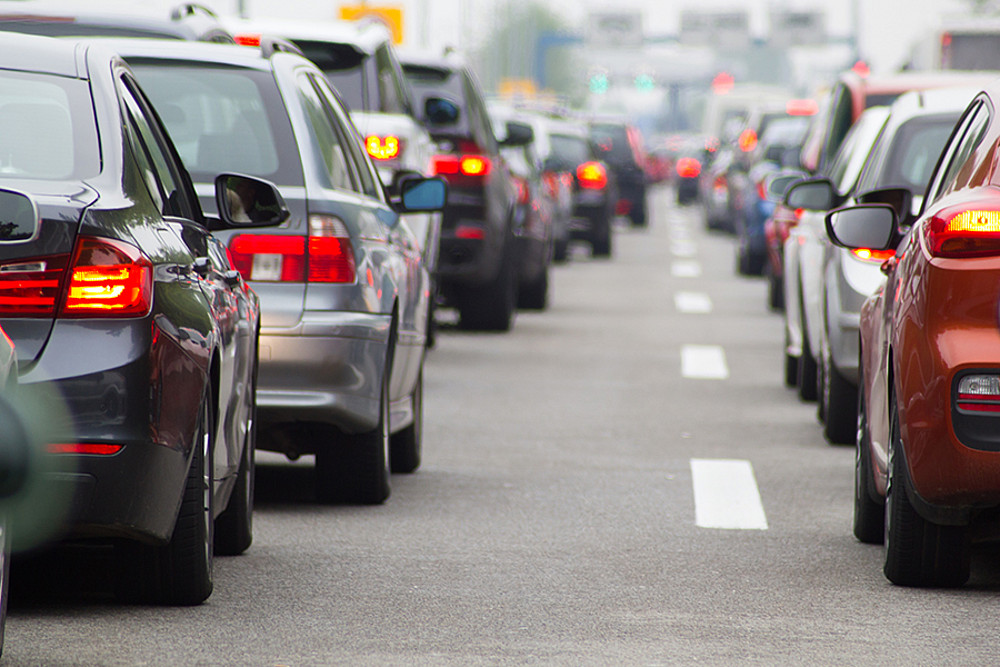
The results of the survey of the University of Graz indicate that car use is most dependent on the socio-demographic characteristics of income, place of residence, age and gender. Photo: disq/shutterstock.com

Car use, air travel, diet and heating are the most emission-intensive areas of individual behaviour. The results of the survey of the University of Graz indicate that car use is most dependent on the socio-demographic characteristics of income, place of residence, age and gender. Photo: disq/shutterstock.com

Sociologists at the University of Graz record Austrians’ climate-relevant behaviour

Who causes the most CO2 emissions in everyday and private life? Sociologists from the University of Graz interviewed Austrians about their climate-relevant environmental behaviour and discovered some significant relations: income, residential area and age have the strongest influence on the greenhouse gas emissions caused by the individual way of life. Personal attitudes about climate and environmental protection, on the other hand, play virtually no role.
As part of a research project funded by the Austrian National Bank, sociologists from the University of Graz under the direction of Markus Hadler are working on surveys that measure CO2-relevant environmental behaviour and other environmental attitudes. In a first survey, over 200 people in Austria were interviewed with a questionnaire. The preliminary results show three clear effects.

Car use makes the difference
“The higher the household income, the higher the emission levels. For each additional € 500 net per capita in a month there is about one additional tonne of CO2 equivalents per year on average,” reports project staff member Markus Schweighart. “Those with higher incomes use more cars with combustion engines and their consumption and leisure time behaviour also lead to higher emissions,” the sociologist explains.
People living in rural or suburban areas produce about two tonnes more greenhouse gases per year than urban dwellers. “The main reason for this is their significantly higher average car use, which is partly due to less developed public transport in rural areas,” explains Schweighart.
People of retirement age, on the other hand, cause less CO2, mainly because they do not drive as much and travel by plane less often. The female respondents in the sample also showed a smaller carbon footprint, mainly due to their mobility behaviour: around one and a half tonnes less CO2 per year.
Schweighart names car use, air travel, diet and heating as the most emission-intensive areas of individual behaviour. The results of the survey indicate that car use is most dependent on the socio-demographic characteristics of income, place of residence, age and gender.

Not a question of attitude
What may come as a surprise is that the attitude towards the environment – how much you care about it – has almost no influence on emission-relevant behaviour. “A person who is generally concerned about the environment will more often separate waste, save water and energy, and buy more organic food – these are usually people with a higher level of education. However, the associated CO2 reduction is so low that it hardly matters”, Schweighart explains, referring to the evaluation of the questionnaire items. “Only those with a greater willingness to make sacrifices for the benefit of the environment – for example by paying higher prices and taxes or lowering their standard of living – consume significantly less goods and thus contribute to a substantial reduction in CO2 emissions,” states the sociologist. According to the survey results, higher earners are slightly more likely to make such sacrifices. “This could be a suitable starting point for considering effective measures such as pricing greenhouse gas emissions”, says Schweighart.

One goal of the project is to develop a scale for measuring CO2-relevant behaviour. “We were able to show that five questions are enough to cover around two-thirds of total CO2 emissions due to individual behavior. These are: car kilometres per year, number of flights per year, the frequency of beef or lamb consumption, the size of the home, and the number of people living in the household,” says Schweighart.

created by Gudrun Pichler

Related news

Fair distribution: Researchers determine just greenhouse gas budgets for all EU regions

Ten years ago, on 12 December 2015, the Paris Climate Agreement was signed at the UN Climate Conference. In order to limit global warming to well below two degrees, only a certain amount of CO2 may be emitted worldwide. While the focus was originally on national emission targets, more than 200 subnational regions and almost 300 cities have now adopted their own targets. But how many emissions are they fairly entitled to? Researchers at the University of Graz have now developed transparent criteria for fair distribution at the subnational level for the first time and determined corresponding greenhouse gas budgets for all European regions. The paper was published today in the scientific journal Nature Communications.

Chemical Christmas show at the University of Graz: An explosive evening at the Schauspielh

At the beginning of December, the University of Graz transformed the theater into a laboratory: as part of “Chemical Life,” teacher training students staged a chemical Christmas show for Styrian school classes—complete with ethanol rockets, nitrogen snow, and glowing effects. An evening designed to inspire interest in studying chemistry.

Train by train: Koralm railway accelerates exchange between the Universities

Lectures at the University of Klagenfurt in the morning, seminars at the University of Graz in the afternoon: Austria's longest tunnel and a journey time of around 45 minutes make it easy. The Koralm railway increases the speed of networking between the two university locations. The collaboration builds on existing cooperation - for example in the areas of teacher training, Slavic studies and as employers, the universities are well coordinated.

On the trail of the Big Bang: University of Graz receives 1.5 million euros for doctoral programmes

The Austrian Science Fund FWF has selected the Doctoral Programme in Theoretical Particle Physics at the University of Graz for funding from the Doc.funds. Six young scientists will be funded for 3.5 years. They will gain fundamentally new insights into the origins of the world.

Begin of page section:
Additional information:

University of Graz
Universitaetsplatz 3
8010 Graz
Austria
  • Contact
  • Web Editors
  • Moodle
  • UNIGRAZonline
  • Imprint
  • Data Protection Declaration
  • Accessibility Declaration
Weatherstation
Uni Graz

End of this page section. Go to overview of page sections

End of this page section. Go to overview of page sections

Begin of page section:

End of this page section. Go to overview of page sections