




Begin of page section:
Page sections:

  • Go to contents (Accesskey 1)
  • Go to position marker (Accesskey 2)
  • Go to main navigation (Accesskey 3)
  • Go to sub navigation (Accesskey 4)
  • Go to additional information (Accesskey 5)
  • Go to page settings (user/language) (Accesskey 8)
  • Go to search (Accesskey 9)

End of this page section. Go to overview of page sections

Begin of page section:
Page settings:

English en
Deutsch de
Search
Login

End of this page section. Go to overview of page sections

Begin of page section:
Search:

Search for details about Uni Graz
Close

End of this page section. Go to overview of page sections


Search

Begin of page section:
Main navigation:

Page navigation:

  • University

    University
    • About the University
    • Organisation
    • Faculties
    • Library
    • Working at University of Graz
    • Campus
    Developing solutions for the world of tomorrow - that is our mission. Our students and our researchers take on the great challenges of society and carry the knowledge out.
  • Research Profile

    Research Profile
    • Our Expertise
    • Research Questions
    • Research Portal
    • Promoting Research
    • Research Transfer
    • Ethics in Research
    • Commission for Scientific Integrity
    Scientific excellence and the courage to break new ground. Research at the University of Graz creates the foundations for making the future worth living.
  • Studies

    Studies
    • Prospective Students
    • Students
  • Community

    Community
    • International
    • Location
    • Research and Business
    • Alumni
    The University of Graz is a hub for international research and brings together scientists and business experts. Moreover, it fosters the exchange and cooperation in study and teaching.
  • Spotlight
Topics
  • Sustainable University
  • Researchers answer
  • Work for us
Close menu

End of this page section. Go to overview of page sections

Begin of page section:
You are here:

University of Graz News Closing the gap

End of this page section. Go to overview of page sections

Monday, 11 November 2019

Closing the gap

How does digitalisation help economy? Stefan Thalmann is searching for answers, and so is the new Business Analytics and Data Science Center, which will be opened on November 12th. Photo: Pixabay

How does digitalisation help economy? Stefan Thalmann is searching for answers, and so is the new Business Analytics and Data Science Center, which will be opened on November 12th. Photo: Pixabay

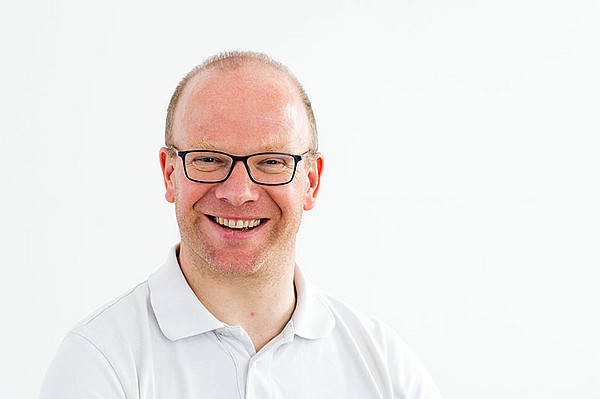
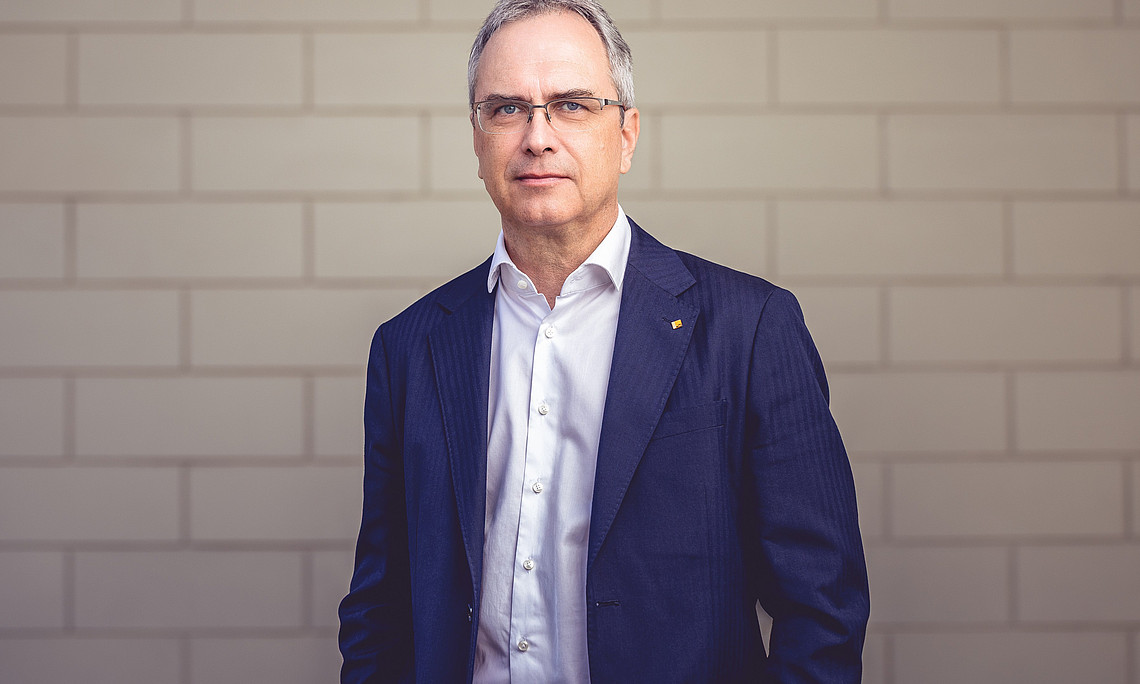
Stefan Thalmann is the head of the new Business Analytics and Data Science Centre, which makes him a crucial link between business and technology

Everyone is talking about Big Data these days, which is compiled from a wide range of sources and channels. How do you deal with it? What information can you get from it and what can it be used for? And how do data-based technologies change the economy and society? Stefan Thalmann answers these questions with his research and with the new Business Analytics and Data Science Centre at the University of Graz, which will open its doors for the first time on November 12. “We’re closing a gap between technology and its users in the social and economic sciences,” emphasises Thalmann, who considers himself a “translator” to communicate what the specific application areas need from computer science – and, conversely, to convey the benefits of new technologies.
“Digitisation affects many day-to-day workflows at most companies, the job profiles are changing and furthermore, entirely new segments and occupations are being created,” Thalmann summarises. The wealth of data that are collected and exchanged in industrial value-creation chains, for example, make it possible for the production process to become much more flexible. The quality and efficiency are improving at the same time. On the other hand, this exchange creates additional risks – for example that competitors might be able to reconstruct critical know-how from transmitted data.
The researcher is also interested in what these changes might mean for society. He is involved in the “Smart Regulation” Field of Excellence as much as in the research group “Human Factor and Digital Transformation”.

Explaining decisions
The use of artificial intelligence-based chatbots in personnel selection is a subject that Thalmann deals with on a scientific level. There is technical difficulty in tracking the algorithms’ decision-making process. “However, users expect even more precise explanations from artificial intelligence than they do from humans,” the business informatics expert determined. He is now looking for ways to make the chatbots’ steps explainable and thus increase trust in the technology. “This also applies when artificial intelligence is used during court processes or in public administration,” Thalmann says.

Getting students up to speed
Stefan Thalmann studied business informatics in Halle, Germany, received his degree in Innsbruck and then headed an application-oriented research group at the Graz University of Technology. He has been a professor in Business Analytics and Data Science at the University of Graz since October 2018. A priority in his teaching is to break down barriers to understanding between management experts and technicians to make it easier to find expedient technology solutions. He is closely involved in the cooperation with the Graz University of Technology as part of “Route 63” and, with Uni for Life, plans a university course for professionals who want to stay on the ball with their technological skills.


University of Graz - Hotspot of Climate Research

University of Graz - Hotspot of Climate Research

Effective and ethically justifiable strategies for reducing emissions can only be developed in interdisciplinary cooperation. The Field of Excellence Climate Change Graz is based on many years of interdisciplinary research experience and expertise in the following areas:

  • Physical Climate Science
  • Earth Sciences and Climate
  • Climate and Environmental Economics
  • Innovation and Sustainability Research
  • Environmental Social Science
  • Climate and Environmental Ethics
  • Climate and Environmental Law
  • Environmental Biology
  • Environmental Chemistry

An important pillar for interdiciplinary research is the Doctoral Programme "Climate Change", in which more than 20 young scientists from eleven countries conduct research. The Wegener Center for Climate and Global Change is the linchpin of the cooperation, embedded in a dense international network.The Wegener Center also hosts a joint research focus area on hydrological extremes in a changing climate.

(Kopie 4)

Stefan Thalmann, Professor for Business Analytics and Data Science, is a crucial link between business science and technology. Photo: Jorj Konstantinov ©Jorj Konstantinov
©Jorj Konstantinov
Stefan Thalmann, Professor for Business Analytics and Data Science, is a crucial link between business science and technology. Photo: Jorj Konstantinov

(Kopie 4)

created by Dagmar Eklaude

Related news

Long Night of Research: How many languages are there in the world?

From a linguistic perspective, there are worlds of difference between Bern, Berlin and Vienna. A dialect impersonator will demonstrate live just how varied German can sound. How many languages are there in the world? What are their distinctive features? Which of these are spoken in Austria? These and other questions will be answered during the Long Night of Research at the University of Graz: on Friday, 24 April 2025, from 5 pm to 11 pm, in the University Library. Visitors can immerse themselves in the diversity of languages without travelling far by taking part in a quiz at the station.

Dual role: Researchers show that platelets can worsen disease

Platelets are best known as rapid responders in the event of injury. They stop bleeding and are indispensable for wound healing. “However, thrombocytes can also aggravate diseases, especially when inflammatory processes are involved,” explains Marion Mußbacher, a pharmacist at the University of Graz. She investigated the “dual role” of platelets in relation to fatty liver disease, a condition closely linked to obesity and type 2 diabetes.

Forscher:innen entdecken natürlichen Wirkstoff zum Schutz vor Lebererkrankungen

Die Leber leidet still. „Fetteinlagerungen, strukturelle Zerstörung des Gewebes oder mutierende Tumorzellen – all das fliegt eine Weile unter dem Radar. Begleitet werden diese Veränderungen oft von leichten, jedoch chronischen Entzündungen“, erklärt Andreas Koeberle, Pharmazeut an der Universität Graz. Er hat mit seinem Team und Kolleg:innen der Universität Innsbruck den Wirkstoff Mitrephoron B untersucht, der neue Behandlungsansätze ermöglicht. Die Ergebnisse der Studie wurden kürzlich in der Open-Access-Fachzeitschrift „Theranostics“ veröffentlicht.

Climate at the cliffs: Researchers unravel the evolution of the Greenland ice margin

Vertical ice walls, up to 40 metres high: in "Game of Thrones" they were dramatised as fortifications; during the Cold War, they were studied with great interest. How these imposing walls along Greenland’s 80,000-kilometre-long ice margin formed, how they are evolving, and what impact they have on the climate is not yet fully understood. Researchers from the Universities of Graz and Innsbruck have come one step closer to solving the mystery. The results of their latest study have been published in the journal The Cryosphere.

Begin of page section:
Additional information:

University of Graz
Universitaetsplatz 3
8010 Graz
Austria
  • Contact
  • Web Editors
  • Moodle
  • UNIGRAZonline
  • Imprint
  • Data Protection Declaration
  • Accessibility Declaration
Weatherstation
Uni Graz

End of this page section. Go to overview of page sections

End of this page section. Go to overview of page sections

Begin of page section:

End of this page section. Go to overview of page sections


