Begin of page section:
Page sections:

  • Go to contents (Accesskey 1)
  • Go to position marker (Accesskey 2)
  • Go to main navigation (Accesskey 3)
  • Go to sub navigation (Accesskey 4)
  • Go to additional information (Accesskey 5)
  • Go to page settings (user/language) (Accesskey 8)
  • Go to search (Accesskey 9)

End of this page section. Go to overview of page sections

Begin of page section:
Page settings:

English en
Deutsch de
Search
Login

End of this page section. Go to overview of page sections

Begin of page section:
Search:

Search for details about Uni Graz
Close

End of this page section. Go to overview of page sections


Search

Begin of page section:
Main navigation:

Page navigation:

  • University

    University
    • About the University
    • Organisation
    • Faculties
    • Library
    • Working at University of Graz
    • Campus
    Developing solutions for the world of tomorrow - that is our mission. Our students and our researchers take on the great challenges of society and carry the knowledge out.
  • Research Profile

    Research Profile
    • Our Expertise
    • Research Questions
    • Research Portal
    • Promoting Research
    • Research Transfer
    • Ethics in Research
    Scientific excellence and the courage to break new ground. Research at the University of Graz creates the foundations for making the future worth living.
  • Studies

    Studies
    • Prospective Students
    • Students
  • Community

    Community
    • International
    • Location
    • Research and Business
    • Alumni
    The University of Graz is a hub for international research and brings together scientists and business experts. Moreover, it fosters the exchange and cooperation in study and teaching.
  • Spotlight
Topics
  • Our digital Advent calendar
  • Sustainable University
  • Researchers answer
  • Work for us
Close menu

End of this page section. Go to overview of page sections

Begin of page section:
You are here:

University of Graz News Sloughing off

End of this page section. Go to overview of page sections

Wednesday, 22 January 2020

Sloughing off

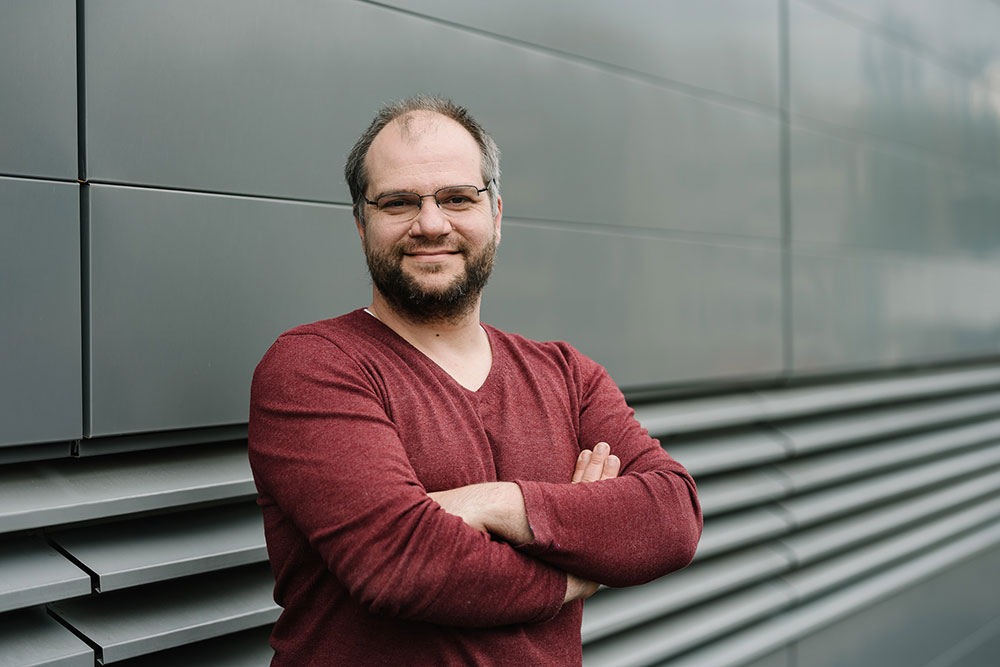
Stefan Schild and his team investigate the survival strategies of bacterial pathogenes. Photo: Uni Graz/Kernasenko

Stefan Schild and his team investigate the survival strategies of bacterial pathogenes. Photo: Uni Graz/Kernasenko

researchers at the University of Graz show how bacterial pathogens adapt quickly to a host

Most bacterial pathogens produce so-called OMVs – outer membrane vesicles, which are liberated from the bacterial surface. Researchers at the University of Graz have managed to identify for the first time how the pathogens benefit from this energy-intensive process: it enables the microorganisms to adapt faster to the adverse conditions in the host and evade the defence mechanisms of the immune system. The findings of this study will be published in the February edition of the prestigious journal Cell Host & Microbe, and have just become available online.

Franz Zingl from the Institute of Molecular Biosciences at the University of Graz, a doctoral student working with Stefan Schild, focused on OMVs derived from Vibrio cholerae, the causative agent of cholera. Between epidemics this bacterium survives in the aquatic ecosystem and has to cope with very different conditions to those in a host organism. To ensure adequate nutrition, it has numerous uptake systems on its surface, including outer membrane porins such as OmpT.
Yet once inside the human body, the bacterium would absorb bile salts and antimicrobial peptides through this porin, which would kill it. “So the bacterium shuts down OmpT synthesis upon oral ingestion by the human host. But previous studies could not clarify how the bacterium gets rid of OmpT already present in the surface,” explains Stefan Schild. In this study the researchers were able to show that when the pathogens enter the host, they activate outer membrane vesiculation. In this way they are able to rapidly rid themselves of unfavourable surface components like OmpT, which are no longer required. Similarly, they “dispose” of so-called lipopolysaccharides – LPS for short –, which are integral parts of the outer membrane and replace it efficiently by newly synthesised modified LPS variants. Bacterial surfaces built by such modified LPS constitutes an effective barrier against the body’s immune system responses.

“This vesiculation, i.e. the shedding of the OMVs, gives the pathogens a competitive advantage in colonising the host,” explains Schild in summary. The process is set in motion when the bacteria face iron limitation, because they – like humans – need this trace element for all their biological processes. One defensive strategy our body uses is to bind in the iron so that it is not available to harmful invaders, which causes stress in the bacteria.
Similarly, there is also some evidence that contact with small doses of antibiotics or disinfectants can also stimulate the shedding of outer membrane vesicles. “Residues of germicidal medications in water or foodstuffs are therefore a problem, because they can give pathogens a fitness advantage along adaptation processes,” as the molecular biologist maintains.
The mechanisms that the Graz team has been studying in Vibrio cholerae are generally valid for almost all bacterial pathogens – including Salmonella, Pseudomonas and Neisseria, for example. Their findings may also be relevant for new treatments to combat infectious diseases: the researchers are now looking for a substance that will inhibit vesiculation. This could enable the body's own immune system to deal with the invaders more easily. At the same time – in contrast to the use of antibiotics – the natural microbiome in the human digestive system would remain unaffected.

This research programme is part of the university’s “BioHealth” Field of Excellence and was funded by the Austrian Science Fund (FWF) and the BioTechMed Graz project “Secretome”.
Publication:
Franz G. Zingl, Paul Kohl, Fatih Cakar, Deborah R. Leitner, Fabian Mitterer, Katherine E. Bonnington, Gerald N. Rechberger, Meta J. Kuehn, Ziqiang Guan, Joachim Reidl, Stefan Schild, „Outer Membrane Vesiculation Facilitates Surface Exchange and In Vivo Adaptation of Vibrio cholerae“, Cell Host & Microbe, DOI: 10.1016/j.chom.2019.12.002


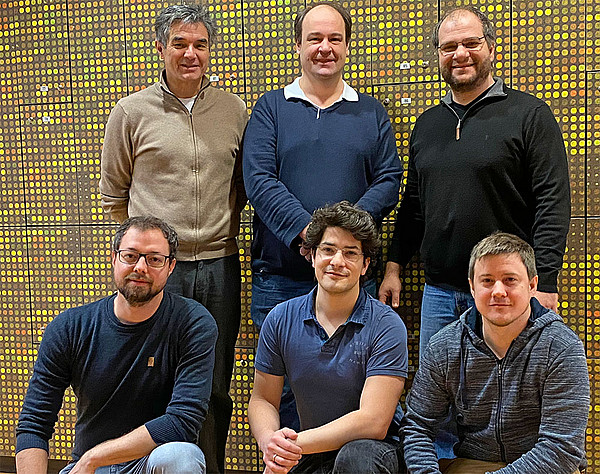
Teamwork: Joachim Reidl, Gerald Rechberger, Stefan Schild (back f.l.t.r.), Franz G. Zingl, Fabian Mitterer und Paul Kohl (front f.l.t.r.) are authors of the latest publication. Photo: Uni Graz/IMB
created by Dagmar Eklaude

Related news

Semester abroad without barriers: University of Graz wins award for promoting inclusion

The University of Graz has been awarded the Internationalization Award for its new inclusion initiative. Students with fewer opportunities now also receive financial support for their semester abroad outside Europe.

Fair distribution: Researchers determine just greenhouse gas budgets for all EU regions

Ten years ago, on 12 December 2015, the Paris Climate Agreement was signed at the UN Climate Conference. In order to limit global warming to well below two degrees, only a certain amount of CO2 may be emitted worldwide. While the focus was originally on national emission targets, more than 200 subnational regions and almost 300 cities have now adopted their own targets. But how many emissions are they fairly entitled to? Researchers at the University of Graz have now developed transparent criteria for fair distribution at the subnational level for the first time and determined corresponding greenhouse gas budgets for all European regions. The paper was published today in the scientific journal Nature Communications.

Chemical Christmas show at the University of Graz: An explosive evening at the Schauspielh

At the beginning of December, the University of Graz transformed the theater into a laboratory: as part of “Chemical Life,” teacher training students staged a chemical Christmas show for Styrian school classes—complete with ethanol rockets, nitrogen snow, and glowing effects. An evening designed to inspire interest in studying chemistry.

Train by train: Koralm railway accelerates exchange between the Universities

Lectures at the University of Klagenfurt in the morning, seminars at the University of Graz in the afternoon: Austria's longest tunnel and a journey time of around 45 minutes make it easy. The Koralm railway increases the speed of networking between the two university locations. The collaboration builds on existing cooperation - for example in the areas of teacher training, Slavic studies and as employers, the universities are well coordinated.

Begin of page section:
Additional information:

University of Graz
Universitaetsplatz 3
8010 Graz
Austria
  • Contact
  • Web Editors
  • Moodle
  • UNIGRAZonline
  • Imprint
  • Data Protection Declaration
  • Accessibility Declaration
Weatherstation
Uni Graz

End of this page section. Go to overview of page sections

End of this page section. Go to overview of page sections

Begin of page section:

End of this page section. Go to overview of page sections