Begin of page section:
Page sections:

  • Go to contents (Accesskey 1)
  • Go to position marker (Accesskey 2)
  • Go to main navigation (Accesskey 3)
  • Go to sub navigation (Accesskey 4)
  • Go to additional information (Accesskey 5)
  • Go to page settings (user/language) (Accesskey 8)
  • Go to search (Accesskey 9)

End of this page section. Go to overview of page sections

Begin of page section:
Page settings:

English en
Deutsch de
Search
Login

End of this page section. Go to overview of page sections

Begin of page section:
Search:

Search for details about Uni Graz
Close

End of this page section. Go to overview of page sections


Search

Begin of page section:
Main navigation:

Page navigation:

  • University

    University
    • About the University
    • Organisation
    • Faculties
    • Library
    • Working at University of Graz
    • Campus
    Developing solutions for the world of tomorrow - that is our mission. Our students and our researchers take on the great challenges of society and carry the knowledge out.
  • Research Profile

    Research Profile
    • Our Expertise
    • Research Questions
    • Research Portal
    • Promoting Research
    • Research Transfer
    • Ethics in Research
    Scientific excellence and the courage to break new ground. Research at the University of Graz creates the foundations for making the future worth living.
  • Studies

    Studies
    • Prospective Students
    • Students
  • Community

    Community
    • International
    • Location
    • Research and Business
    • Alumni
    The University of Graz is a hub for international research and brings together scientists and business experts. Moreover, it fosters the exchange and cooperation in study and teaching.
  • Spotlight
Topics
  • Sustainable University
  • Researchers answer
  • Work for us
Close menu

End of this page section. Go to overview of page sections

Begin of page section:
You are here:

University of Graz News Tief Luft holen

End of this page section. Go to overview of page sections

Wednesday, 16 June 2021

Tief Luft holen

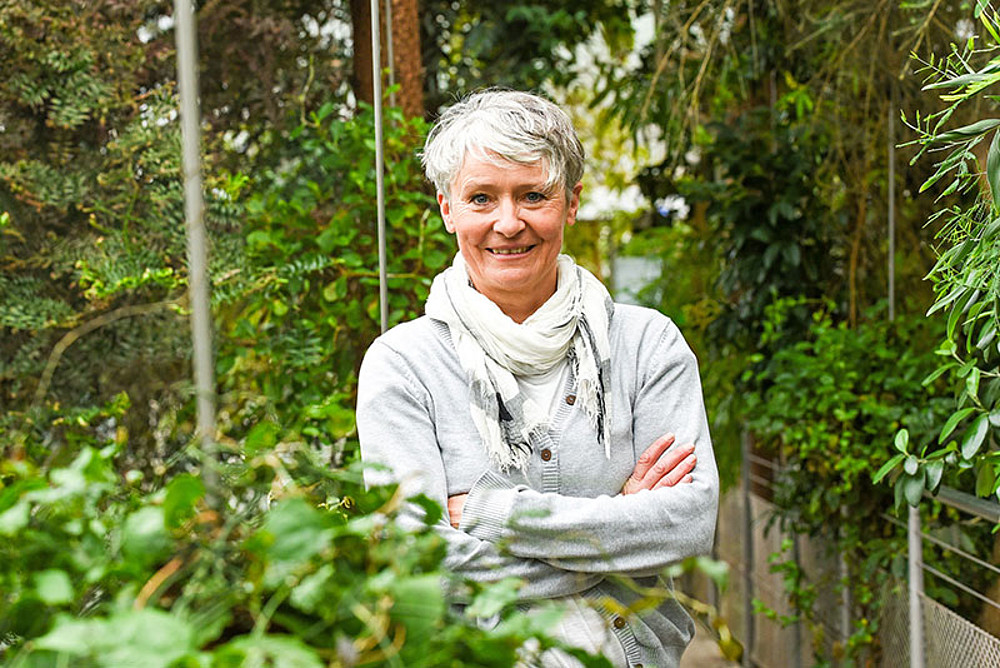
Claudia Traunmüller beschäftigt sich mit Stressforschung und Gesundheitspsychologie, speziell auch mit Belastungen in der Covid-Krise. Foto: Uni Graz/Tzivanopoulos

Claudia Traunmüller beschäftigt sich mit Stressforschung und Gesundheitspsychologie, speziell auch mit Belastungen in der Covid-Krise. Foto: Uni Graz/Tzivanopoulos

Psychologin Claudia Traunmüller gibt Tipps zur Krisenbewältigung

Kaum schaut es nach einem Nachlassen der Pandemie aus, kommt schon die nächste Bedrohung: Die Delta-Variante macht sich breit und stellt weitere Öffnungsschritte in Frage. „Diese Unsicherheit verursacht Stress, ebenso wie schwer nachvollziehbare Maßnahmen und der Zickzack-Kurs der Regierung“, weiß Gesundheitspsychologin Claudia Traunmüller von der Universität Graz.
Wie kann man sich in einem solchen Sommer erholen? Funktioniert „Beine hoch“ auf Balkonien? „Ein Ortswechsel tut immer gut. Mit kleinem Gepäck verreisen, die Haustüre zusperren, Pflichten, Routinen, die Mühen des Alltags zurücklassen – all das ist wichtig zur Entspannung“, weiß die Forscherin. Dafür müsse es aber nicht fremdes Flair und Meeresrauschen sein, auch eine andere Landschaft in der Nähe liefert frische Inputs für den Geist und neue Energie.

Denken umpolen
Traunmüller hat mit Studien belegt, dass die ÖsterreicherInnen generell zu wenig auf sich selbst achten – was weder die Politik noch das Gesundheitssystem das resolut einfordern. Etwa ein Viertel ist körperlich nicht voll leistungsfähig und verfügt damit über keinerlei Stresspuffer. Statt in der Krise in Lethargie zu verfallen, solle man alle Möglichkeiten nutzen, die der Moment bietet. Man müsse sich ausreichend Zeit nehmen, um darüber nachzudenken, wie man die Phase für sich nützen könnte, welche positiven Seiten sie mit sich bringt. „Das fehlt komplett, dazu gibt es keine Anregungen“, kritisiert die Psychologin.  
Wie man mit Belastungen umgeht und wie sehr diese an den Kräften zehren, ist auch persönlichkeitsabhängig. „Man kann aber trainieren, Krisen als Herausforderung anzusehen und ihnen zu sportlich begegnen: die Vorteile suchen, statt mit der Situation zu hadern“, empfiehlt die Expertin.

Fragliche Entspannung
Die schrittweise Rückkehr in die angebliche Normalität bringt bei weitem nicht für alle die große Erleichterung: „Es herrscht weiterhin große Unsicherheit über gerade geltende Regeln, und die Resozialisierung kann doch problematisch werden“, so Traunmüller. Manche SchülerInnen hat beispielsweise der ungewohnt volle Klassenraum nach Ende des Schichtbetriebs in Stress versetzt. Auch Erwachsene finden mitunter aus der Einsamkeit des Homeoffice schwer zurück ins geschäftige Treiben in Öffis oder am Arbeitsplatz. Empirische Daten, wie sich die Bevölkerung auf die neue Situation einstellt, fehlen derzeit noch. „Es wird aber spannend zu beobachten sein, wie sich die Lage entwickelt“, meint die Psychologin.

Ein ausführlicherer Bericht über die Forschungen von Claudia Traunmüller findet sich in der aktuellen Ausgabe der Unizeit.
 

created by Dagmar Eklaude

Related news

Cosmetics in the environment: University of Graz proves danger to ants

Titanium dioxide, which is found in cosmetics, for example, is increasingly entering the environment in the form of nanoparticles. This could also put insects at risk. If ants ingest the substance in combination with the pesticide glyphosate, it disturbs the development of their offspring. Scientists at the University of Graz are drawing attention to the negative consequences of this toxic cocktail.

How are tech companies changing democracy? Uni Graz designs exhibition for schools

Filtered information, conspiracy theories, fake news – certain groups and corporations are using social media and algorithms to try to influence public opinion in their favour. Their goal: to weaken fundamental rights and diversity of opinion and seize power. In a new exhibition, researchers at the University of Graz are working with pupils to explore the impact of social media and AI on democracy. In accompanying workshops, the scientists want to encourage young people to develop their own ideas for a socially and ecologically viable future and to actively help shape it. The exhibition, designed as a travelling exhibition for schools, will open on 9 March 2026 at the Dreihackengasse Gymnasium in Graz.

Step by step: What motivates Mireille van Poppel as a scientist and vice-rector

Improving people's health and eliminating inequalities: Mireille van Poppel pursues these goals both as a public health researcher and as vice-rector for Internationalisation and Equality. In both roles, she pays particular attention to individual needs.

Master's degree in psychotherapy in Graz: registration opens in March

Graz is becoming a hotspot for psychotherapy: from 2026, the University of Graz and the Medical University of Graz will jointly offer the new master's programme. Registration for the admission procedure for the 140 study places will start in March.

Begin of page section:
Additional information:

University of Graz
Universitaetsplatz 3
8010 Graz
Austria
  • Contact
  • Web Editors
  • Moodle
  • UNIGRAZonline
  • Imprint
  • Data Protection Declaration
  • Accessibility Declaration
Weatherstation
Uni Graz

End of this page section. Go to overview of page sections

End of this page section. Go to overview of page sections

Begin of page section:

End of this page section. Go to overview of page sections