




Begin of page section:
Page sections:

  • Go to contents (Accesskey 1)
  • Go to position marker (Accesskey 2)
  • Go to main navigation (Accesskey 3)
  • Go to sub navigation (Accesskey 4)
  • Go to additional information (Accesskey 5)
  • Go to page settings (user/language) (Accesskey 8)
  • Go to search (Accesskey 9)

End of this page section. Go to overview of page sections

Begin of page section:
Page settings:

English en
Deutsch de
Search
Login

End of this page section. Go to overview of page sections

Begin of page section:
Search:

Search for details about Uni Graz
Close

End of this page section. Go to overview of page sections


Search

Begin of page section:
Main navigation:

Page navigation:

  • University

    University
    • About the University
    • Organisation
    • Faculties
    • Library
    • Working at University of Graz
    • Campus
    Developing solutions for the world of tomorrow - that is our mission. Our students and our researchers take on the great challenges of society and carry the knowledge out.
  • Research Profile

    Research Profile
    • Our Expertise
    • Research Questions
    • Research Portal
    • Promoting Research
    • Research Transfer
    • Ethics in Research
    • Commission for Scientific Integrity
    Scientific excellence and the courage to break new ground. Research at the University of Graz creates the foundations for making the future worth living.
  • Studies

    Studies
    • Prospective Students
    • Students
    • Registration for Study Programme (Winter semester 2026/27)
  • Community

    Community
    • International
    • Location
    • Research and Business
    • Alumni
    The University of Graz is a hub for international research and brings together scientists and business experts. Moreover, it fosters the exchange and cooperation in study and teaching.
Topics
  • Sustainable University
  • Researchers answer
  • Work for us
Close menu

End of this page section. Go to overview of page sections

Begin of page section:
You are here:

University of Graz News Tarnkappe

End of this page section. Go to overview of page sections

Wednesday, 29 March 2023

Tarnkappe

Der Chemiker Sigurd Schober beschäftigte sich intensiv mit e-fuels, deren Produktion und Einsatz. Foto: Uni Graz/Tzivanopoulos ©Uni Graz/Tzivanopoulos

Der Chemiker Sigurd Schober beschäftigte sich intensiv mit e-fuels, deren Produktion und Einsatz. Foto: Uni Graz/Tzivanopoulos

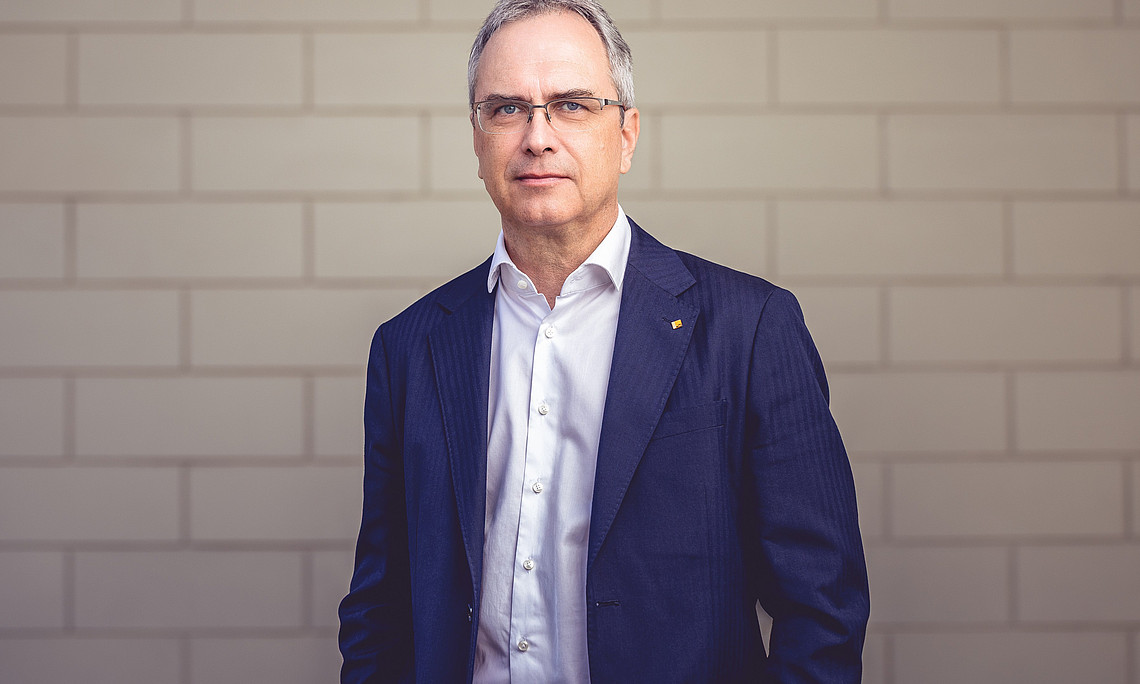
e-fuels sind nicht der Weisheit letzter Schluss, ist Chemiker Sigurd Schober überzeugt. Er beäugt die Entwicklung dieser Strömung durchaus kritisch

Alle reden davon: e-fuels. Als Alternative zu Benzin und Diesel sollen diese mit viel Energie erzeugten synthetischen Treibstoffe die politische Lebensdauer von Fahrzeugen mit Verbrennungsmotoren in der Europäischen Union verlängern. So der Plan am Papier. In Wahrheit hat diese Technologie aber einige Schattenseiten, die, bei einer näheren Betrachtung, den Gegenspieler e-Mobilität klar ins bessere Licht rücken. Der Grazer Chemiker Sigurd Schober beschäftigte sich lang mit der Entwicklung von alternativen Kraftstoffen, sein vorsichtiges Urteil: „Für Schifffahrt und Flugverkehr sind e-fuels in Kombination mit anderen zum Teil schon verfügbaren alternativen Energieträgern durchaus sinnvoll, überall werden sie sich nicht durchsetzen können.“

Was unterscheidet e-fuels von fossilen Kraftstoffen?
Diese Art von Kraftstoffen werden nicht aus fossilen Quellen, wie zum Beispiel Erdöl, gewonnen, sondern – wie der Name schon sagt – mit viel Energieaufwand „künstlich“ erzeugt. Dazu wird Wasserstoff aus Wasser gewonnen und mit CO2 zu Kohlenwasserstoffen synthetisiert – die Grundlage für Treibstoffe. Nur im optimalen Fall sind e-fuels klimaneutral einzustufen, da bei der Produktion genauso viel CO2 verarbeitet wird wie später bei der Verbrennung durch einen Motor wieder ausgeschieden werden. „Das Rechenbeispiel funktioniert aber nur, wenn der Strom für den Herstellungsprozess wirklich grün und wenn man die beim Verbrennungsprozess gebildeten, anderen Schadstoffe ignoriert,“ betont Schober.

Könnten aktuell produzierte Fahrzeuge mit diesem neuen Kraftstoff betankt werden?
Ja. Ein großer Vorteil von e-fuels wäre, dass man die bestehende Infrastruktur für Betankung, Transport und Lagerung problemlos weiterverwenden könnte. Auch nehmen Benzin- oder Dieselmotoren keinen Schaden davon, wenn sie damit betrieben werden. Aber der Wirkungsgrad, also das Verhältnis zwischen der bei der Produktion verwendeten Energie und der Energie, die bei der Verbrennung schlussendlich mechanisch auf die Straße gebracht wird, liegt bei zehn bis 20 Prozent.

Sind sie günstiger als fossile Brennstoffe?
Hier lautet die Antwort: nein! Der Herstellungsprozess für e-fuels ist nach heutigen Standards so aufwendig, dass sich der Preis für einen Liter eher in Richtung zweistelligen Europreis bewegen wird. Wobei: Die Technologie ist prinzipiell entwickelt, jetzt geht es noch darum, die Abläufe zu optimieren.

Wo macht der Einsatz von e-fuels wirklich Sinn?
In allen Bereichen des Transportes auf längere Strecken wird sich die e-Mobilität nur schwer durchsetzen können, ist Schober sicher. Die Kapazitäten der Batterien, die Ladezeiten sowie die Infrastruktur für elektrische Zapfsäulen braucht nicht nur viel Geduld, sondern auch ein Umdenken der Gesellschaft. „Dann dauert das Paket von Stockholm nach Istanbul nicht drei Tage, sondern eine Woche.“ Für den Flug- und Schiffverkehr wären e-fuels durchaus denkbar, aber da gibt es andere Technologien, wie hydrierte Pflanzenöle oder Methanol, die große Hoffnungsträger für diese Branche sind.

created by Konstantin Tzivanopoulos

Related news

Complying with the norm: Why Do Standards Shape Our Lives, Elisabeth Staudegger?

Standards determine whether a sheet of paper fits in a printer or whether a charging plug can power multiple devices. These standards shape our everyday lives. But who actually sets these standards? Where are the weaknesses, and how could science help to improve them? Elisabeth Staudegger, Head of the ‘Law and IT’ Department at the Institute for Legal Foundations at the University of Graz, host the Academic Standards Day on 16 June. Here she relays how sciences can contribute to the topic of standardisation and reveals her personal favourite standard.

More body awareness than a culture war

In Italy, sex education lessons will in future only be permitted with parental consent, and will be banned entirely in nurseries and primary schools. At the same time, Pride Month highlights why knowledge about the body, relationships, boundaries and diversity is important for young people. A study by the University of Graz shows how important knowledge about the body, contraception, relationship skills and protection against violence is

Will Austria win the World Cup? Mathematician reveals calculation method

Michael Fischer uses the football tournament as a practical example for highschool lessons.

Survival strategies: How plants respond to drought

According to Geosphere Austria, this spring was the driest in Austria since records began around 170 years ago. The low rainfall put particular pressure on the agricultural sector. And climate change is set to make the situation even worse in the coming decades. We asked Johannes Liesche, a professor at the Department of Biology at the University of Graz, how plants react to water shortages and how they survive periods of drought.

Begin of page section:
Additional information:

University of Graz
Universitaetsplatz 3
8010 Graz
Austria
  • Contact
  • Web Editors
  • Moodle
  • UNIGRAZonline
  • Imprint
  • Data Protection Declaration
  • Accessibility Declaration
Weatherstation
Uni Graz

End of this page section. Go to overview of page sections

End of this page section. Go to overview of page sections

Begin of page section:

End of this page section. Go to overview of page sections

