Begin of page section:
Page sections:

  • Go to contents (Accesskey 1)
  • Go to position marker (Accesskey 2)
  • Go to main navigation (Accesskey 3)
  • Go to sub navigation (Accesskey 4)
  • Go to additional information (Accesskey 5)
  • Go to page settings (user/language) (Accesskey 8)
  • Go to search (Accesskey 9)

End of this page section. Go to overview of page sections

Begin of page section:
Page settings:

English en
Deutsch de
Search
Login

End of this page section. Go to overview of page sections

Begin of page section:
Search:

Search for details about Uni Graz
Close

End of this page section. Go to overview of page sections


Search

Begin of page section:
Main navigation:

Page navigation:

  • University

    University
    • About the University
    • Organisation
    • Faculties
    • Library
    • Working at University of Graz
    • Campus
    Developing solutions for the world of tomorrow - that is our mission. Our students and our researchers take on the great challenges of society and carry the knowledge out.
  • Research Profile

    Research Profile
    • Our Expertise
    • Research Questions
    • Research Portal
    • Promoting Research
    • Research Transfer
    • Ethics in Research
    • Commission for Scientific Integrity
    Scientific excellence and the courage to break new ground. Research at the University of Graz creates the foundations for making the future worth living.
  • Studies

    Studies
    • Prospective Students
    • Students
    • Registration for Study Programme (Winter semester 2026/27)
  • Community

    Community
    • International
    • Location
    • Research and Business
    • Alumni
    The University of Graz is a hub for international research and brings together scientists and business experts. Moreover, it fosters the exchange and cooperation in study and teaching.
Topics
  • Sustainable University
  • Researchers answer
  • Work for us
Close menu

End of this page section. Go to overview of page sections

Begin of page section:
You are here:

University of Graz News Taktgefühl

End of this page section. Go to overview of page sections

Monday, 21 August 2017

Taktgefühl

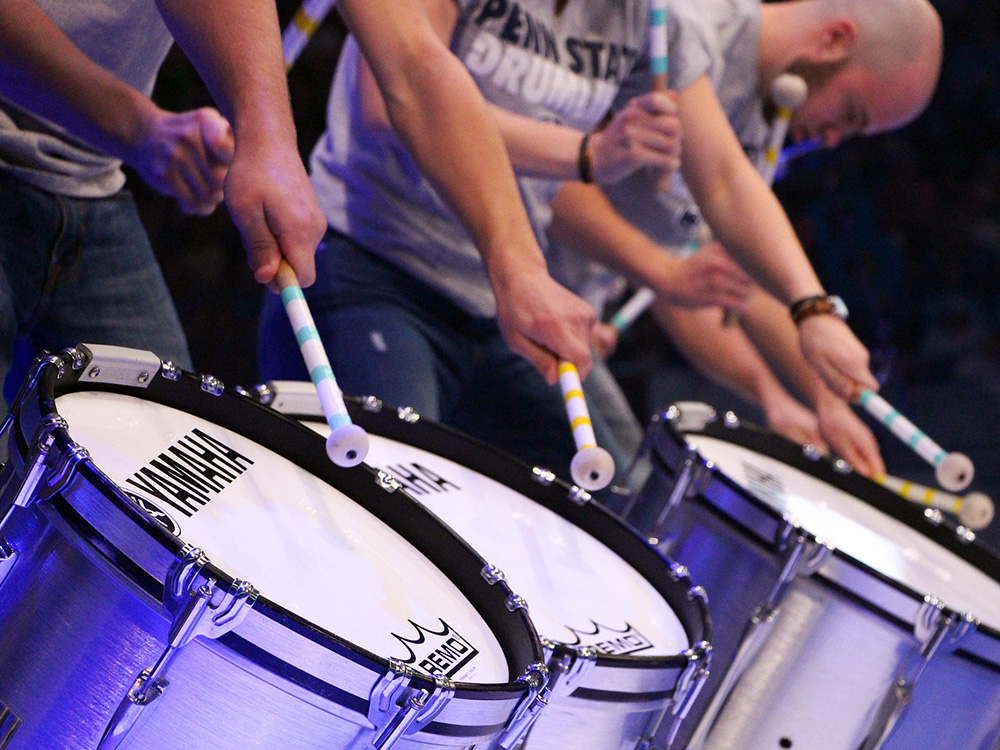
Einem gemeinsamen Rhythmus zu folgen, stärkt den sozialen Zusammenhalt. Das ist das Ergebnis einer Studie der Uni Graz. Foto: Pixabay
Einem gemeinsamen Rhythmus zu folgen, stärkt den sozialen Zusammenhalt. Das ist das Ergebnis einer Studie der Uni Graz. Foto: Pixabay

Studie der Uni Graz zeigt Einfluss von Musik auf soziales Verhalten

Auf dem Tanzparkett, auf dem Fußballplatz, aber auch in dicht bevölkerten Einkaufsstraßen müssen wir unsere Bewegungen auf die anderer Personen abstimmen – und das binnen Millisekunden. Psychologen der Uni Graz haben nun in einer Studie gezeigt, dass Musik dieses Verhalten fördert und den Zusammenhalt verstärkt. Die Untersuchungsergebnisse werden in der September-Ausgabe des Journal of Experimental Social Psychology veröffentlicht.

„Wenn mehrere Personen ihre Bewegungen synchronisieren, wirkt sich das positiv auf die Kooperation und das Zusammengehörigkeitsgefühl aus“, erklärt Dipl.-Psych. Jan Stupacher vom Institut für Psychologie der Uni Graz. In seiner Studie untersuchte er, ob Musik oder der Schlag eines Metronoms diese sogenannten prosozialen Effekte verstärken können. Das Ergebnis: „Die Musik kann diese Wirkung tatsächlich erreichen. Wenn sich die Menschen in deren Takt bewegen, entstehen die intensivsten sozialen Verbindungen“, fasst der Autor zusammen. Anwendbar sind die Erkenntnisse in allen Bereichen, wo Zusammenhalt entstehen soll – von der Kinderkrippe bis ins Seniorenheim. „Speziell für Menschen mit Problemen im sozialen Umgang oder für Gruppen mit starkem Konfliktpotenzial kann die zusammenschweißende Funktion gemeinsamer Bewegung zur Musik genutzt werden. Da die Kommunikation auf nonverbalem Weg stattfindet, gibt es zudem keine sprachlichen Grenzen“, führt Stupacher aus.

Für die Untersuchungen sahen ProbandInnen zwei Strichfiguren nebeneinander gehen und mussten sich vorstellen, selbst eine davon zu sein, während die andere eine unbekannte Person repräsentierte. Diese Videos waren mit Musik, Metronomschlägen oder Stille hinterlegt, wobei sich die Figuren entweder synchron bewegten oder eine aus dem Takt war. Die ProbandInnen bewerteten die Nähe und die Sympathie des Gegenübers sowie das eigene Wohlbefinden. „Alle drei Werte waren bei Musik im Hintergrund höher als mit Metronombegleitung“, so Stupacher. War die andere Figur aus dem Takt, senkte das bei musikalischer Untermalung deren Sympathiewerte. Das Metronom hatte keinen derartigen Einfluss.
„Synchrone Bewegungen mehrerer Menschen erhöhen deren Vertrauen und Zusammenhalt. Sowohl Musik als auch abgestimmte Schritte und Gesten können mit der Ausschüttung gewisser Hormone in Verbindung gebracht werden, die die Bindung untereinander fördern“, erläutert der Psychologe die Hintergründe. Im Gegenzug wird unrhythmisches Verhalten möglicherweise als Verstoß gegen soziale Regeln empfunden. Beides scheint allerdings nur dann zu funktionieren, wenn die Klänge auch gefallen.

Publikation:
Jan Stupacher, Pieter-Jan Maes, Matthias Witte, Guilherme Wood, “Music strengthens prosocial effects of interpersonal synchronization – If you move in time with the beat”, Journal of Experimental Social Psychology, Volume 72, September 2017, Pages 39–44
https://doi.org/10.1016/j.jesp.2017.04.007
http://www.sciencedirect.com/science/article/pii/S0022103117300835

created by Dagmar Eklaude

Related news

In hot water: New Report reveals record losses in glaciers, permafrost and snow cover

Climate change is driving up temperatures not only in summer. Winters are also getting warmer – with dramatic consequences for glaciers, permafrost, snow cover and the freezing of lakes. The recently published cryosphere report provides specific figures for Austria. “Our monitoring shows a clear trend with record losses of ice and snow,” says project leader Wolfgang Schöner from the University of Graz.

Theologian at the University of Graz: What the excommunication of the Society of St Pius X

Following the schism involving the Society of St Pius X, there is a need for discussion. Bernd Hillebrand from the University of Graz explains why the Vatican took this step, what role anti-democratic tendencies play, and why the Society’s sacraments are no longer recognised as valid under canon law for Catholics with immediate effect.

“HeinrichBiCool”: University of Graz demonstrates the effects of green facades and roofs

The University of Graz has launched a pioneering project at the University Centre for Theology. Its name, “HeinrichBiCool”, says it all: a comprehensive system of green facades and roof will cool the building at Heinrichstraße 80 during the summer. At the same time, this will create a new habitat for plants and animals, helping to increase biodiversity. The accompanying monitoring programme will provide detailed data on the impact of the measures on indoor climate, energy consumption and biodiversity. The findings will lay a scientifically sound foundation for further projects aimed at making cities sustainable, climate-resilient and liveable. The partners in this project, funded by the Austrian Research Promotion Agency (FFG), are AEE INTEC – Institute for Sustainable Technologies, Technisches Büro Siegfried Stark, the landscape architecture and urban planning firm “studio boden”, and Ökoteam Graz.

When stress melts away in your mouth: nicotine pouches are widespread among Styrian students

Sociologists at the University of Graz, in collaboration with VIVID – the Centre for Addiction Prevention, have carried out a survey involving more than 600 participants. Around a quarter of them use these products. The ability to use them discreetly and flexibly is a key motivation.

Begin of page section:
Additional information:

University of Graz
Universitaetsplatz 3
8010 Graz
Austria
  • Contact
  • Web Editors
  • Moodle
  • UNIGRAZonline
  • Imprint
  • Data Protection Declaration
  • Accessibility Declaration
Weatherstation
Uni Graz

End of this page section. Go to overview of page sections

End of this page section. Go to overview of page sections

Begin of page section:

End of this page section. Go to overview of page sections