Begin of page section:
Page sections:

  • Go to contents (Accesskey 1)
  • Go to position marker (Accesskey 2)
  • Go to main navigation (Accesskey 3)
  • Go to sub navigation (Accesskey 4)
  • Go to additional information (Accesskey 5)
  • Go to page settings (user/language) (Accesskey 8)
  • Go to search (Accesskey 9)

End of this page section. Go to overview of page sections

Begin of page section:
Page settings:

English en
Deutsch de
Search
Login

End of this page section. Go to overview of page sections

Begin of page section:
Search:

Search for details about Uni Graz
Close

End of this page section. Go to overview of page sections


Search

Begin of page section:
Main navigation:

Page navigation:

  • University

    University
    • About the University
    • Organisation
    • Faculties
    • Library
    • Working at University of Graz
    • Campus
    Developing solutions for the world of tomorrow - that is our mission. Our students and our researchers take on the great challenges of society and carry the knowledge out.
  • Research Profile

    Research Profile
    • Our Expertise
    • Research Questions
    • Research Portal
    • Promoting Research
    • Research Transfer
    • Ethics in Research
    • Commission for Scientific Integrity
    Scientific excellence and the courage to break new ground. Research at the University of Graz creates the foundations for making the future worth living.
  • Studies

    Studies
    • Prospective Students
    • Students
  • Community

    Community
    • International
    • Location
    • Research and Business
    • Alumni
    The University of Graz is a hub for international research and brings together scientists and business experts. Moreover, it fosters the exchange and cooperation in study and teaching.
  • Spotlight
Topics
  • Sustainable University
  • Researchers answer
  • Work for us
Close menu

End of this page section. Go to overview of page sections

Begin of page section:
You are here:

University of Graz News System der Veränderung

End of this page section. Go to overview of page sections

Friday, 25 April 2014

System der Veränderung
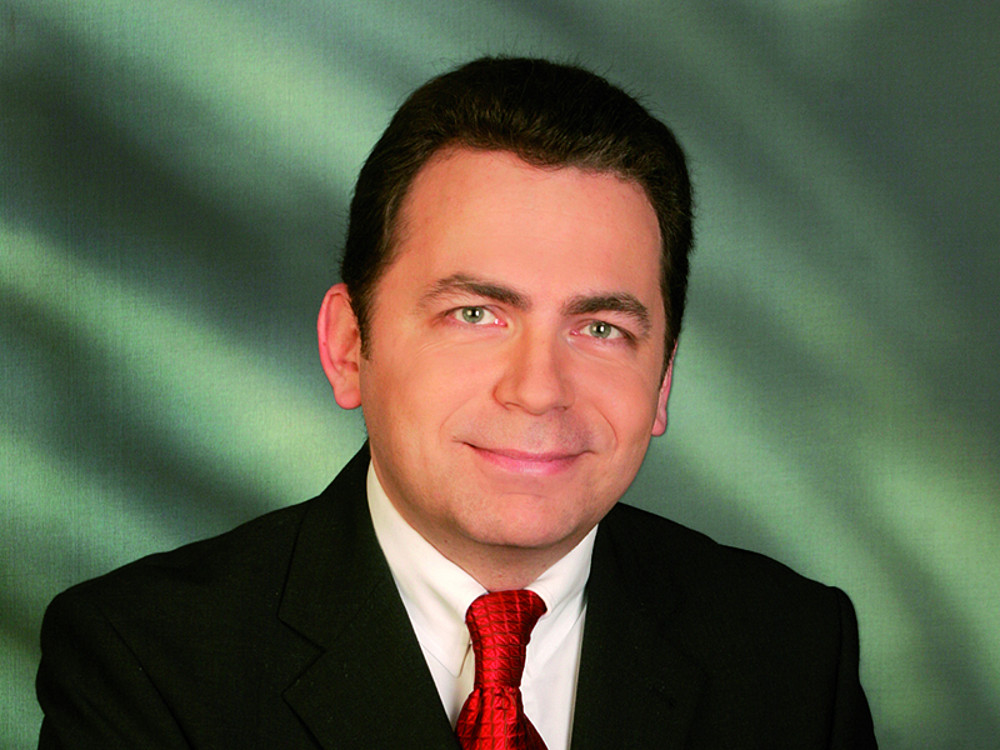
Thomas Foscht

SOWI-Dekan Thomas Foscht über die Schwerpunkte an seiner Fakultät

Als Professor für Marketing ist Univ.-Prof. Dr. Thomas Foscht weit über die Universitätsgrenzen hinaus ein häufig nachgefragter Wissenschafter. Da liegt es auf der Hand, dass er als Dekan der Sozial- und Wirtschaftswissenschaftlichen (SOWI) Fakultät auch deren Wahrnehmung verbessern will.

Als langjähriger Studiendekan der SOWI-Fakultät kennen Sie organisatorische und administrative Abläufe, als Dekan haben sich Ihre Agenden sicher vermehrt. Wie haben Sie den Rollenwechsel von der Wissenschaft ins Uni-Management erlebt?

Es ist ein Riesenvorteil, das System und die Organisation zu kennen. Zu wissen, was den Angehörigen wichtig ist. Es handelt sich bei uns zumeist um eine temporäre Tätigkeit – im Unterschied zu den USA, wo es an den Universitäten vielfach keinen Weg zurück aus der Administration gibt und häufig auch externe Personen Management-Aufgaben übernehmen. Eine befristete Funktion hilft, sowohl den Bezug zum aktuellen Geschehen aufrecht zu erhalten als auch den Wunsch, Vorhaben zügig umzusetzen.

Apropos Umsetzung: Was haben Sie sich für Ihre Dekanatsperiode vorgenommen?
Ich habe in den ersten Wochen in vielen Gesprächen versucht, die Anliegen und Bedarfe der KollegInnen zu sammeln und zu strukturieren. Die Fakultät ist ja ein System, in dem es laufend Veränderungen gibt. Ich sehe vor allem in der Vorbereitung strategischer Angelegenheiten, wie etwa im Personalbereich, auf dem Gebiet der Forschung oder im Bereich Internationalisierung Möglichkeiten, Akzente zu setzen. Es gibt natürlich Rahmenbedingungen, wie den Entwicklungsplan und die Leistungsvereinbarungen, die den Handlungsspielraum klar abstecken.

Worin werden die Schwerpunkte an der Fakultät in der nahen Zukunft liegen?

Es gibt viele Leistungen, die im Alltag oft untergehen. Etwa in den Bereichen der Forschung oder der internationalen Ausrichtung derselben, die auch in den Ziel- und Leistungsvereinbarungen fest verankert sind. Da sollten wir zunächst zeigen, was wir ohnehin schon alles leisten. Zudem müssen wir darüber nachdenken, was wir in der Forschung noch tun können, um weiter attraktive Rahmenbedingungen für die WissenschafterInnen im Hause anbieten zu können sowie für potenzielle ForscherInnen – zum Beispiel im Rahmen von Stellenausschreibungen – auch in Zukunft interessant zu sein.

Spielen bei diesen Überlegungen die Bedürfnisse von Unternehmen eine Rolle?
Natürlich sind für die SOWI-Fakultät die Kontakte zur Wirtschaft und deren Bedarfe sehr wichtig. Ein Großteil unserer AbsolventInnen arbeitet in Unternehmen. Insofern ist es für die Ausrichtung der Fakultät von Bedeutung, was sich insbesondere auch Firmen in der Region im Rahmen der Ausbildung wünschen. Dies kann dann seinen Niederschlag in Lehrangeboten finden. Kontakte spielen aber auch eine Rolle, wenn es um Kooperationsprojekte geht. Nachdem die Fakultät über ein großes Netzwerk an AbsolventInnen in Unternehmen verfügt, sind diese dann häufig unsere PartnerInnen bei Projekten.

created by Andreas Schweiger

Related news

Higher Education Strategy 2040: Austria’s universities on course for the future

Austria has 77 higher education institutions, which is above the EU average – but does this really make sense? The new Higher Education Strategy 2040 focuses on cooperation rather than mergers. As one of the six largest universities in Austria, the University of Graz plays a central role in this.

Climate research in Greenland: Old data provides new insights

The polar explorer and University of Graz professor Alfred Wegener left behind a unique collection of climate data from Greenland. A research team from the University of Graz is now analysing this 100-year-old treasure trove of data and comparing it with current measurements.

Diversity in nature and science: How we talk about plants and each other

Ginkgo, kiwi, hemp: they exist as male and female plants. Anyone who paid attention in biology class will confirm this. But is this categorisation, established by Carl von Linné almost 300 years ago, still valid today? An interdisciplinary team at the University of Graz is questioning these attributions and using this as a starting point to provide food for thought for gender-sensitive interaction between students, scientific and teaching staff.

Around the world in eight stops: the Long Night of Research at the University of Graz

On 24 April from 5 pm, you can take a short trip around the globe at the University of Graz, discovering pecularities of foreign countries or new local features in the entrance hall of the University Library. The itinerary takes you through introduced animal species, political attitudes and the omnipotence of algorithms. There will also be a programme in the historic reading hall, as well as at the UniGraz@Museum and the University Archive.

Begin of page section:
Additional information:

University of Graz
Universitaetsplatz 3
8010 Graz
Austria
  • Contact
  • Web Editors
  • Moodle
  • UNIGRAZonline
  • Imprint
  • Data Protection Declaration
  • Accessibility Declaration
Weatherstation
Uni Graz

End of this page section. Go to overview of page sections

End of this page section. Go to overview of page sections

Begin of page section:

End of this page section. Go to overview of page sections