In 2024, an exhibition on the subject of poverty was held at the Graz Museum of History under the title "Ein gutes Leben für alle". The project, realised by Caritas Steiermark in cooperation with Akademie Graz and other partners, gave people in precarious life situations a chance to be heard. Now the exhibition at the University of Graz is being expanded to give a voice to people affected by poverty in the Middle Ages. The new audio stations are being designed by history students as part of a seminar led by Tanja Skambraks.
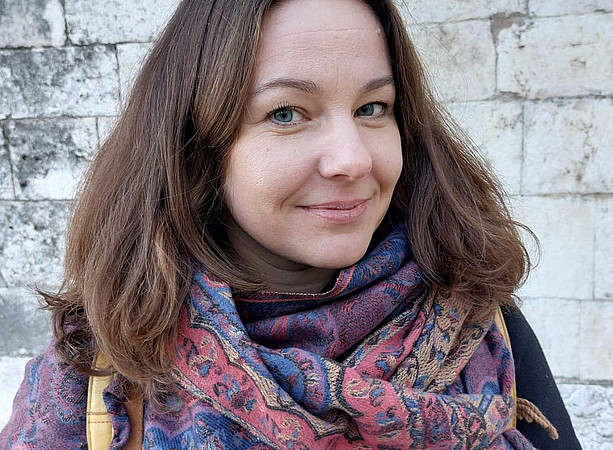
The historian has been researching poverty and poverty reduction in the Middle Ages for over a decade. "What interests me most is people's personal perspectives. When we read or hear about poverty, we often get statistical data, information about low-income groups and different types of poverty. But we learn very little about the inner perspectives of those affected," explains Skambraks.
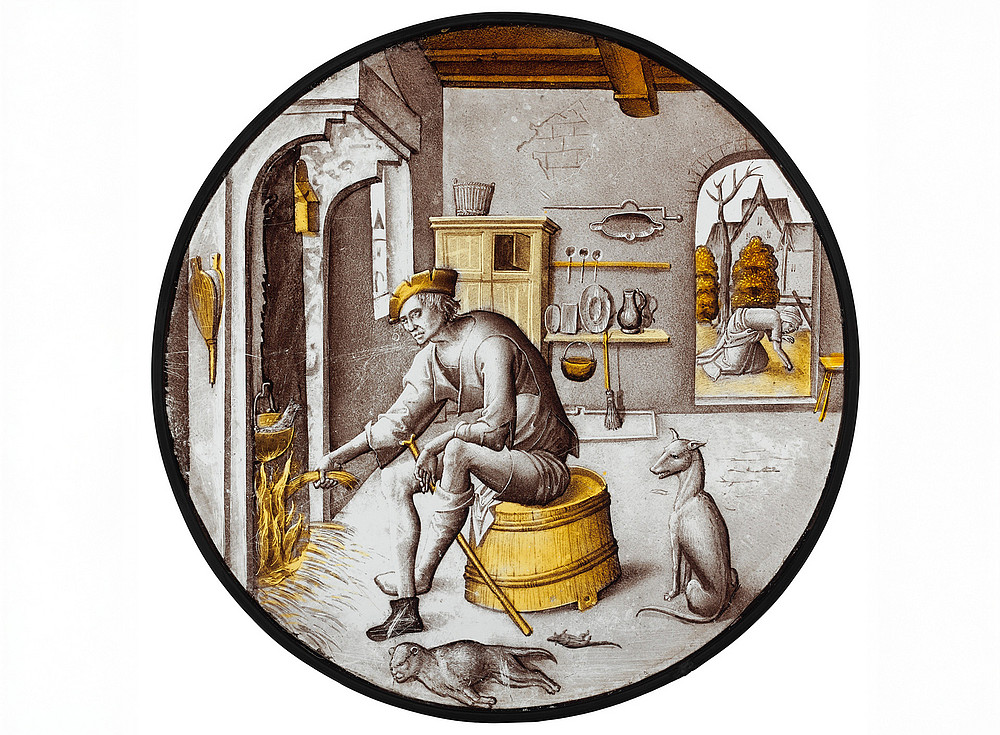
Medieval sources offer a wealth of material that opens up this perspective. Based on various texts, students have created audio stations for the upcoming exhibition "Leben und Überleben in Armut in Mittelalter und Gegenwart" at the University of Graz. These give a voice to those affected, supplemented by interesting facts about the context, so that visitors gain vivid insights. The topics range from the everyday life of the poor, to dealing with beggars, the experiences of sex workers, social ascent and decline, to poverty reduction and voluntary poverty as an ideal in following Christ.
Wars, climate, diseases
"Research on living standards in the Middle Ages assumes that 50 to 70 percent of all people were affected by economic poverty. This means that certain crises, such as wars, epidemics or famines following crop failures due to climatic changes, repeatedly led to supply shortages," says Skambraks. "Especially in cities, where many people lived together in a small space, the majority of residents may have been affected by temporary poverty in times of need," says the researcher.
Hospitals, pensions, pawnbrokers
In the spirit of charity and love for one's neighbour, around 800 years ago it was primarily the Church that attempted to cushion the problem institutionally. Hospitals were welfare institutions for the poor, the elderly, strangers, pilgrims and the sick. Some were run by brotherhoods – communities of lay people and clergy. Monasteries, city churches and even private households were encouraged to give alms.
As a result, these charitable institutions expanded in the late Middle Ages, partly linked to professional groups. "Some of the guilds in the cities also had a duty to care for their elderly members. For example, there was a fund from which a kind of pension could be paid out," reports Skambraks. In addition, the urban pension system developed.
In Italy, the so-called Monti di Pietà were founded in the 15th century. These pawnbrokers granted microloans to working people on behalf of the cities to help them overcome financial difficulties.
The origins of the welfare state
From the causes of poverty, such as crises in life, to personal experiences of existential worries, to rules for begging in cities or institutions such as pawnshops – in many ways, the past is still very close to us today. Researchers see the institutionalisation of poverty alleviation in the Middle Ages as the origin of the welfare state. "Since then, there has been continuity in the will – including the political will – to do something about poverty," says Skambraks, adding: "However, the professionalisation, bureaucratisation and widespread dissemination of institutions only took place in modern times." A key difference between then and now is that our welfare state attempts to take preventive action against poverty for the entire population. "This comprehensive social security system is a great achievement," emphasises the historian.
Students impart history
The Master's programme Historical Science opens doors for graduates to interesting fields of work in the communication of historical knowledge, not only in museums. Skambraks says of the exhibition project: "It is important to me that students learn and practise skills in science communication using a socially relevant topic." In addition to the content of the audio stations, they are producing an exhibition catalogue, which will also be available in digital form.
Leben und Überleben in Armut in Mittelalter und Gegenwart
An exhibition by the University of Graz and Caritas Steiermark in collaboration with Akademie Graz and La Strada
5 to 31 March 2026 in the foyer of the University Library Graz, Universitätsplatz 3a, 8010 Graz
Opening hours: Monday to Friday 8 a.m. to 10 p.m., Saturday 9 a.m. to 10 p.m.
Opening: Thursday, 5 March 2026, 5 p.m.