



Begin of page section:
Page sections:

  • Go to contents (Accesskey 1)
  • Go to position marker (Accesskey 2)
  • Go to main navigation (Accesskey 3)
  • Go to sub navigation (Accesskey 4)
  • Go to additional information (Accesskey 5)
  • Go to page settings (user/language) (Accesskey 8)
  • Go to search (Accesskey 9)

End of this page section. Go to overview of page sections

Begin of page section:
Page settings:

English en
Deutsch de
Search
Login

End of this page section. Go to overview of page sections

Begin of page section:
Search:

Search for details about Uni Graz
Close

End of this page section. Go to overview of page sections


Search

Begin of page section:
Main navigation:

Page navigation:

  • University

    University
    • About the University
    • Organisation
    • Faculties
    • Library
    • Working at University of Graz
    • Campus
    Developing solutions for the world of tomorrow - that is our mission. Our students and our researchers take on the great challenges of society and carry the knowledge out.
  • Research Profile

    Research Profile
    • Our Expertise
    • Research Questions
    • Research Portal
    • Promoting Research
    • Research Transfer
    • Ethics in Research
    • Commission for Scientific Integrity
    Scientific excellence and the courage to break new ground. Research at the University of Graz creates the foundations for making the future worth living.
  • Studies

    Studies
    • Prospective Students
    • Students
    • Registration for Study Programme (Winter semester 2026/27)
    • Welcome Weeks for First Year Students
  • Community

    Community
    • International
    • Location
    • Research and Business
    • Alumni
    The University of Graz is a hub for international research and brings together scientists and business experts. Moreover, it fosters the exchange and cooperation in study and teaching.
Topics
  • Sustainable University
  • Researchers answer
  • Work for us
Close menu

End of this page section. Go to overview of page sections

Begin of page section:
You are here:

University of Graz News Südosteuropa-Experte analysiert Unruhen im Kosovo: "Serbien erkennt Unabhängigkeit des Gebiets nicht an!"

End of this page section. Go to overview of page sections

Wednesday, 31 May 2023

Südosteuropa-Experte analysiert Unruhen im Kosovo: "Serbien erkennt Unabhängigkeit des Gebiets nicht an!"

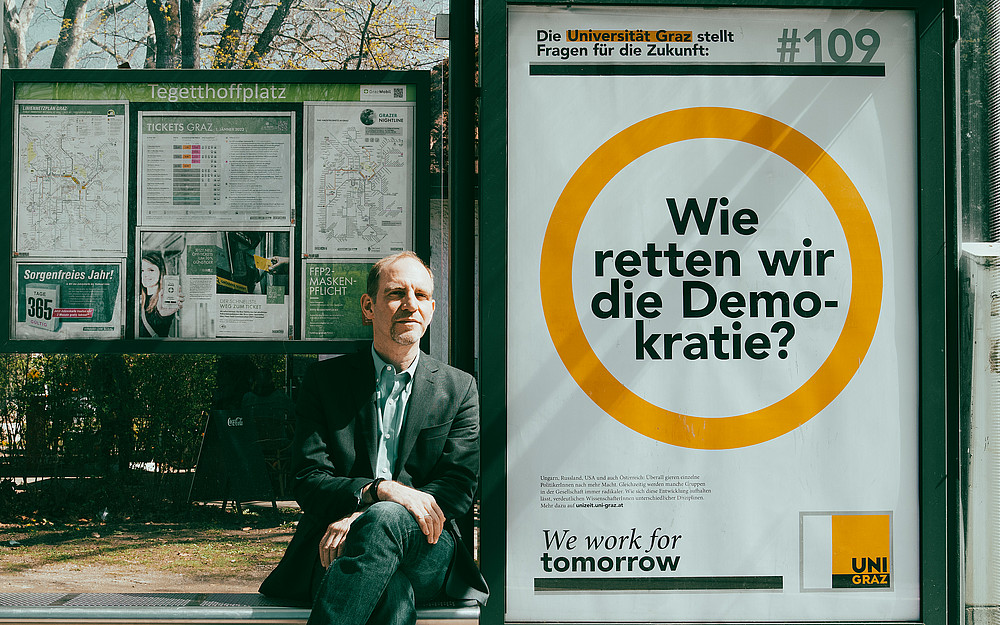
Florian Bieber sitzt auf einer Bank ©Uni Graz/Tzivanopoulos
©Uni Graz/Tzivanopoulos

Südosteuropa-Experte Florian Bieber ist ein international renommierter Experte. Foto: Uni Graz/Tzivanopoulos

Am Südbalkan flammt wieder Gewalt auf. Historiker und Südost-Europa-Spezialist Florian Bieber weiß über die historisch gewachsenen Umstände im Kosovo gut Bescheid. In der Online-Ausgabe der Washington Post äußert sich der Wissenschaftler zu den Unruhen.

Der Kosovo kommt nicht zur Ruhe. Mehr als zwei Dutzend NATO-Soldaten wurden bei Auseinandersetzungen mit serbischen Demonstranten in dieser Woche verletzt. Dies führte dazu, dass der NATO-Generalsekretär Jens Stoltenberg die Entsendung von zusätzlichen 700 Soldaten zur Aufrechterhaltung des Friedens in einer Region mit einer belasteten Geschichte ethnischer Konflikte ankündigte. Österreich schickt weitere KFOR-Soldaten und stärkt den Truppenschutz. 

Die Gewalt entflammte, als neu gewählte, ethnisch-albanische Bürgermeister in serbisch geprägten Gebieten im Norden Kosovos ihr Amt antraten. Die Serben, die die im April abgehaltenen Wahlen boykottiert hatten, waren darüber verärgert. Der Uni-Graz-Historiker und Balkan-Kenner Florian Bieber klärt über die historische Genese des Konflikts in der Washington Post auf. 

created by Konstantin Tzivanopoulos

Related news

Researchers at the University of Graz impress with their AI expertise

A total of 170 entries were submitted to the Austrian Academy of Sciences’ essay competition on the topic of artificial intelligence and science. Both first and second place went to researchers from the University of Graz.

Wie aus Abgasen Rohstoff werden soll

Kohlendioxid gilt als Klimaproblem. Es kann aber auch Rohstoff sein. Der Grazer Chemiker Johann Hlina untersucht, wie sich Kohlenoxide wieder in Kohlenwasserstoffe verwandeln lassen – also in Ausgangsmaterial für Treibstoffe, Kunststoffe und Medikamente. Helfen sollen dabei Seltenerdmetalle

The Arctic up close: ORF special feature on the University of Graz’s research station in S

Students from the University of Graz are spending two weeks conducting research at the Univerisity of Graz research station at the Sermilik Fjord in Greenland, which has been operational for three years. They are measuring glacial runoff, tracking ice melt in real time and installing weather stations. ORF is following the expedition and will be reporting on the special feature ‘Arctic Adventure’ across its various channels from 20 July.

Chemical crash: Researchers at the University of Graz are investigating the reactions in detail for the first time

Matthew Timm and Leonhard Grill have, for the first time, succeeded in unravelling how fundamental chemical processes take place and how new molecules are formed. The findings of this study have just been published in the journal Science.

Begin of page section:
Additional information:

University of Graz
Universitaetsplatz 3
8010 Graz
Austria
  • Contact
  • Web Editors
  • Moodle
  • UNIGRAZonline
  • Imprint
  • Data Protection Declaration
  • Accessibility Declaration
Weatherstation
Uni Graz

End of this page section. Go to overview of page sections

End of this page section. Go to overview of page sections

Begin of page section:

End of this page section. Go to overview of page sections