Begin of page section:
Page sections:

  • Go to contents (Accesskey 1)
  • Go to position marker (Accesskey 2)
  • Go to main navigation (Accesskey 3)
  • Go to sub navigation (Accesskey 4)
  • Go to additional information (Accesskey 5)
  • Go to page settings (user/language) (Accesskey 8)
  • Go to search (Accesskey 9)

End of this page section. Go to overview of page sections

Begin of page section:
Page settings:

English en
Deutsch de
Search
Login

End of this page section. Go to overview of page sections

Begin of page section:
Search:

Search for details about Uni Graz
Close

End of this page section. Go to overview of page sections


Search

Begin of page section:
Main navigation:

Page navigation:

  • University

    University
    • About the University
    • Organisation
    • Faculties
    • Library
    • Working at University of Graz
    • Campus
    Developing solutions for the world of tomorrow - that is our mission. Our students and our researchers take on the great challenges of society and carry the knowledge out.
  • Research Profile

    Research Profile
    • Our Expertise
    • Research Questions
    • Research Portal
    • Promoting Research
    • Research Transfer
    • Ethics in Research
    • Commission for Scientific Integrity
    Scientific excellence and the courage to break new ground. Research at the University of Graz creates the foundations for making the future worth living.
  • Studies

    Studies
    • Prospective Students
    • Students
    • Registration for Study Programme (Winter semester 2026/27)
  • Community

    Community
    • International
    • Location
    • Research and Business
    • Alumni
    The University of Graz is a hub for international research and brings together scientists and business experts. Moreover, it fosters the exchange and cooperation in study and teaching.
Topics
  • Sustainable University
  • Researchers answer
  • Work for us
Close menu

End of this page section. Go to overview of page sections

Begin of page section:
You are here:

University of Graz News Studierende und Spitzen-ManagerInnen im Dialog

End of this page section. Go to overview of page sections

Friday, 23 November 2018

Studierende und Spitzen-ManagerInnen im Dialog

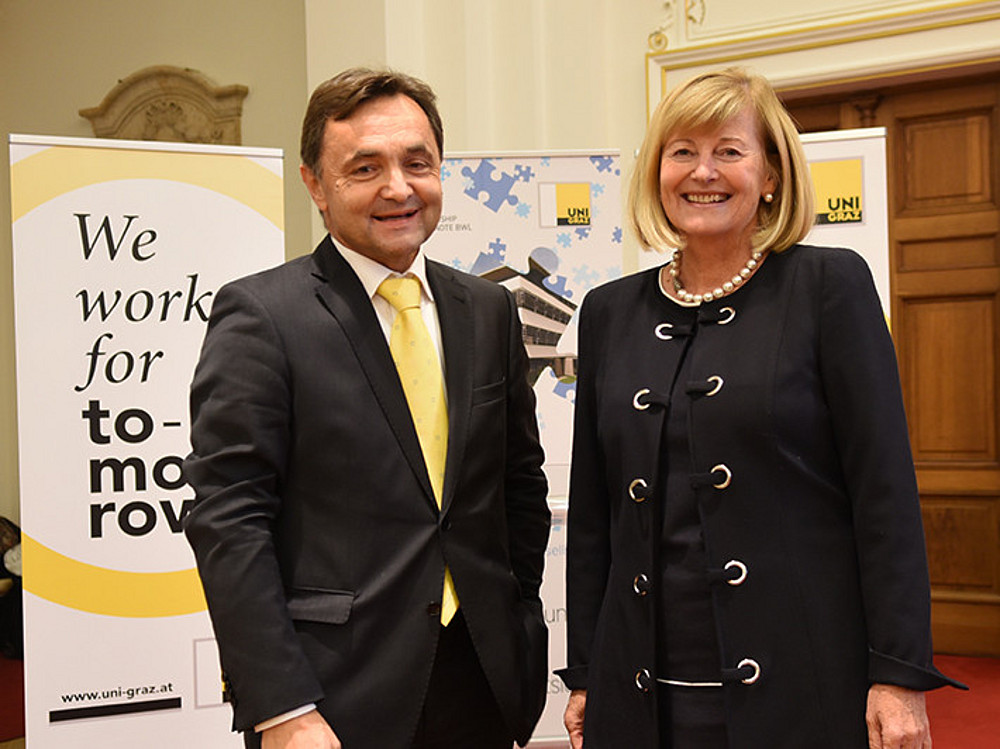
Rektorin Christa Neuper und Alfred Gutschelhofer gaben den Startschuss. Fotos: Uni Graz/Schweiger

Rektorin Christa Neuper und Alfred Gutschelhofer gaben den Startschuss. Fotos: Uni Graz/Schweiger

Kompetenzorientierte Plattform KLUG mit dem Styrian Strategy Summit gestartet

Mit „KLUG – Kompetenzen lernen Uni Graz“ hat die Universität Graz ein Angebot für Studienrede gestartet, um den Erwerb von Schlüsselkompetenzen für die berufliche Karriere zu fördern. Zum Auftakt ging mit dem Styrian Strategy Summit am 22. November 2018 ein erstes Leitevent in der Aula über die Bühne. Renommierte Gäste, darunter Medien-Manager Horst Pirker, Post-Vorstand Georg Pölzl, Energie-Experte Karl Rose, die Mobilitäts-Profis Walter Slupetzky und Patrizia Valentini sowie Google-Managerin Stefanie Teichmann, stellten ihre Strategien für die Wirtschaft der Zukunft vor. 

„Ziel ist es, unseren Studierenden jene Fähigkeiten zu vermitteln, die es ihnen ermöglichen, sich als Gestalterinnen und Gestalter der Zukunft aktiv in gesellschaftliche Themen einzubringen“, betonte Rektorin Christa Neuper. „Daher will die Universität Graz neben dem wissenschaftlichen Know-how den Erwerb von Schlüsselkompetenzen noch stärker betonen.“ Die Plattform KLUG bringt Studierende mit der Wirtschaft zusammen und baut eine wichtige Brücke zwischen Studium und Beruf. 

Dialog zwischen Wissenschaft und Praxis

Alfred Gutschelhofer, Co-Initiator von KLUG, gab den Startschuss für die Workshops zu den Themen Ressource & Globalisierung, Mobilität & Logistik sowie Politik & Kommunikation. Die Gesprächsrunden vernetzten zum einen die Studierenden mit den WirtschaftsvertreterInnen, gaben zum anderen wertvollen Input zu künftigen Entwicklungen. Gutschelhofer: „Die hochkarätigen Vortragenden, die hier auch lehren, beweisen ihr Commitment zur Universität Graz.“ Die Veranstaltung sei zudem ein starkes Zeichen, dass der Dialog zwischen Wissenschaft und Praxis ausgezeichnet funktioniere. 

Diesen Dialog führten: 

Horst Pirker, CEO VGN, News, Styria Media Group, lehrt an der Uni Graz

Georg Pölzl, CEO Österreichische Post, Deutsche Telekom, lehrt an der Universität Graz

Karl Rose, Group Chief Strategist of Abu Dhabi National Oil Company, OMV, Shell, lehrt an der Universität Graz

Walter Slupetzky, CEO Quintessenz, Mobilitätsexperte

Stefanie Teichmann, Director at Google EMEA, Coca Cola, lehrt an der Universität Graz
Patrizia Valentini, E-Mobility Renault Österreich

Trendbrüche

Den Abschluss bildeten zwei Impuls-Vorträge – moderiert von SOWI-Dekan Thomas Foscht. Georg Pölzl, Generaldirektor der Post, und Energie-Experte Karl Rose lieferten spannende Einblicke in die Welt von morgen. Pölzl sah als eine der großen Herausforderungen die Digitalisierung: „Sie Freund und Feind zugleich.“ Denn auf der einen Seite zerstören die neuen Kommunikationsformen das Kerngeschäft, auf der anderen trage die Digitalisierung dazu bei, ein besserer und effizienterer Dienstleister zu werden sowie in neue Geschäftsfelder vorzudringen. 

Karl Rose bestätigte, dass die Unsicherheiten groß und Trendbrüche schwer vorherzusagen seien. „Wir sind in der Welt der Dilemmas“, fasste er die Komplexität zusammen. Die Energiewende werde aber kommen, wenn auch nicht 2050, sondern 20 Jahre später, wie Rose vermutet: „Die Transformation von Geschäftsmodellen im Energiebereich ist voll im Gange.“ Und der Fokus ist auf den Einsatz neuer Technologien gerichtet. 

klug.uni-graz.at
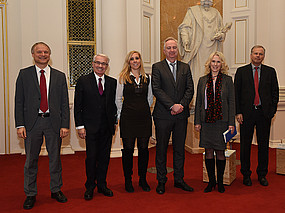
Walter Slupetzky, Georg Pölzl, Patrizia Valentini, Karl Rose, Stefanie Teichmann, Horst Pirker (v. l.)
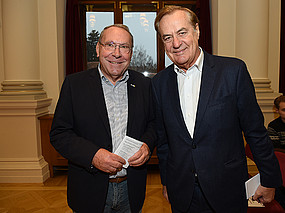
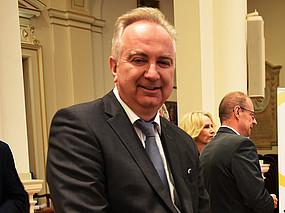
Uni-Förderer Günther Witamwas (l.) und Rudi Roth
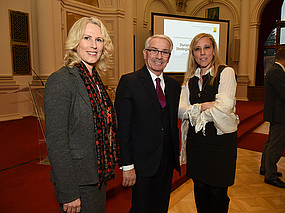
Stefanie Teichmann, Georg Pölzl und Patrizia Valentini (v. l.)
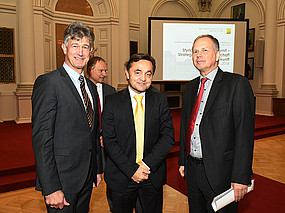
Walter Slupetzky (l.) und Thomas Krautzer, Leiter des Instituts für Wirtschafts-, Sozial- und Unternehmensgeschichte
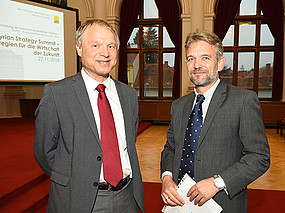
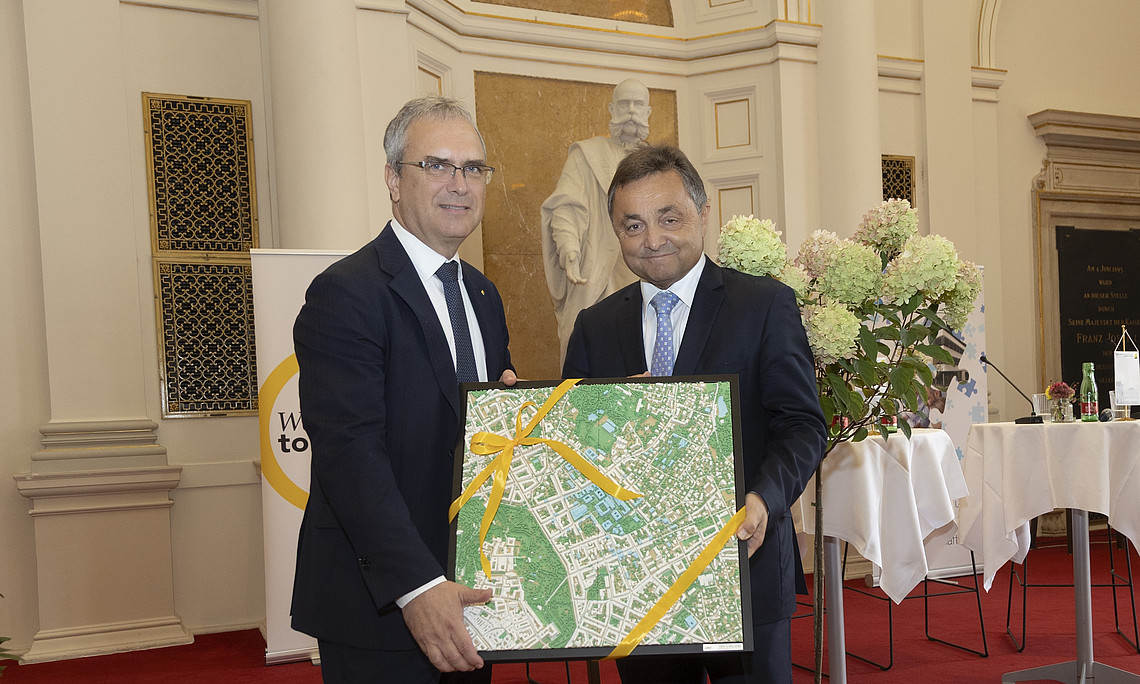
TU Graz-Rektor Harald Kainz, Alfred Gutschelhofer und Horst Pirker (v. l.)
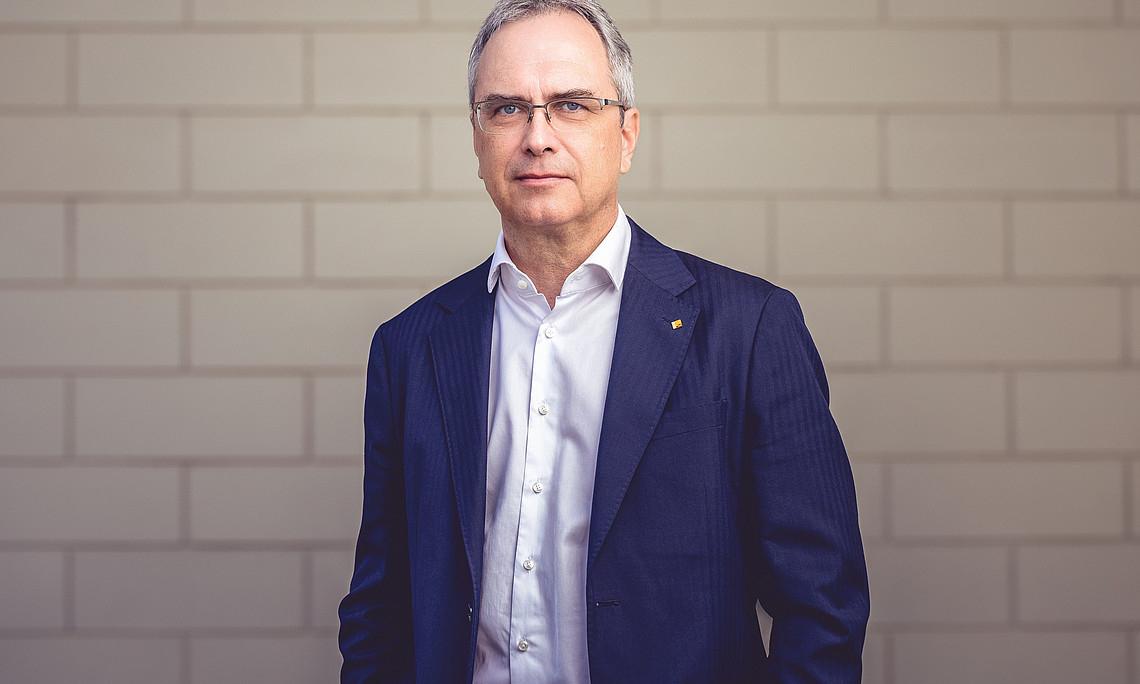
Karl Rose gab spannende Einblick in die Welt von morgen.
created by Andreas Schweiger

Related news

Desert sand, microplastics, cancer cells: David Clases awarded ERC grant for analytical method

Nanoparticles trapped in polar ice can reveal a great deal about the climate 100,000 years ago. Chemist David Clases is developing unique methods to analyse them in detail. He will now adapt these methods for use with larger particles in order to glean even more information about Earth’s history. The method can be used for a wide range of other purposes – for example, in medical diagnostics or the investigation of environmental pollution. Clases has been awarded a Proof-of-Concept Grant by the European Research Council (ERC) for this work.

Staying fit during the holidays: summer sports on the University of Graz campus

The Kleeblattlauf is not the end of the fitness term. Following last year’s successful launch, the University of Graz is once again offering summer sports on campus this year. From 30 June to 16 July 2026, there will be a free exercise programme in the open air. On the shady Südwiese (between the main building and Universitätsplatz 2), anyone interested can get in shape in the afternoons with body workouts, fascia training and yoga.

Getting even hotter: Researchers predict global warming of 1.7 degrees by 2027

While Europe is currently sweltering in the heat, global temperatures are also rising towards concerning record levels. In 2026, Earth’s surface air temperature is expected to reach 1.62 degrees, and in 2027 even 1.71 degrees Celsius above pre-industrial levels. The long-term temperature rise – an average over a 20-year period – is predicted to exceed the 1.5-degree threshold of the Paris Agreement as of 2026 already. For the first time, researchers at the University of Graz have been able to make such a forecast so far in advance. The intensifying El Niño climate event favors forecast skill and thereby facilitates a reliable computation.

Forest fire at Rosenhain: Volunteer fire brigade carried out an evacuation drill at the Jesuit refectory

Thick smoke in the stairwell, flames at the edge of the forest, people missing in the Jesuit refectory at the University of Graz: at Rosenhain, the Graz Volunteer Fire Brigade carried out a drill simulating a scenario that is becoming increasingly realistic given the heat and drought

Begin of page section:
Additional information:

University of Graz
Universitaetsplatz 3
8010 Graz
Austria
  • Contact
  • Web Editors
  • Moodle
  • UNIGRAZonline
  • Imprint
  • Data Protection Declaration
  • Accessibility Declaration
Weatherstation
Uni Graz

End of this page section. Go to overview of page sections

End of this page section. Go to overview of page sections

Begin of page section:

End of this page section. Go to overview of page sections